Bald Eagle in Angola, NY
The Reemergence of the Bald Eagle in Angola, New York
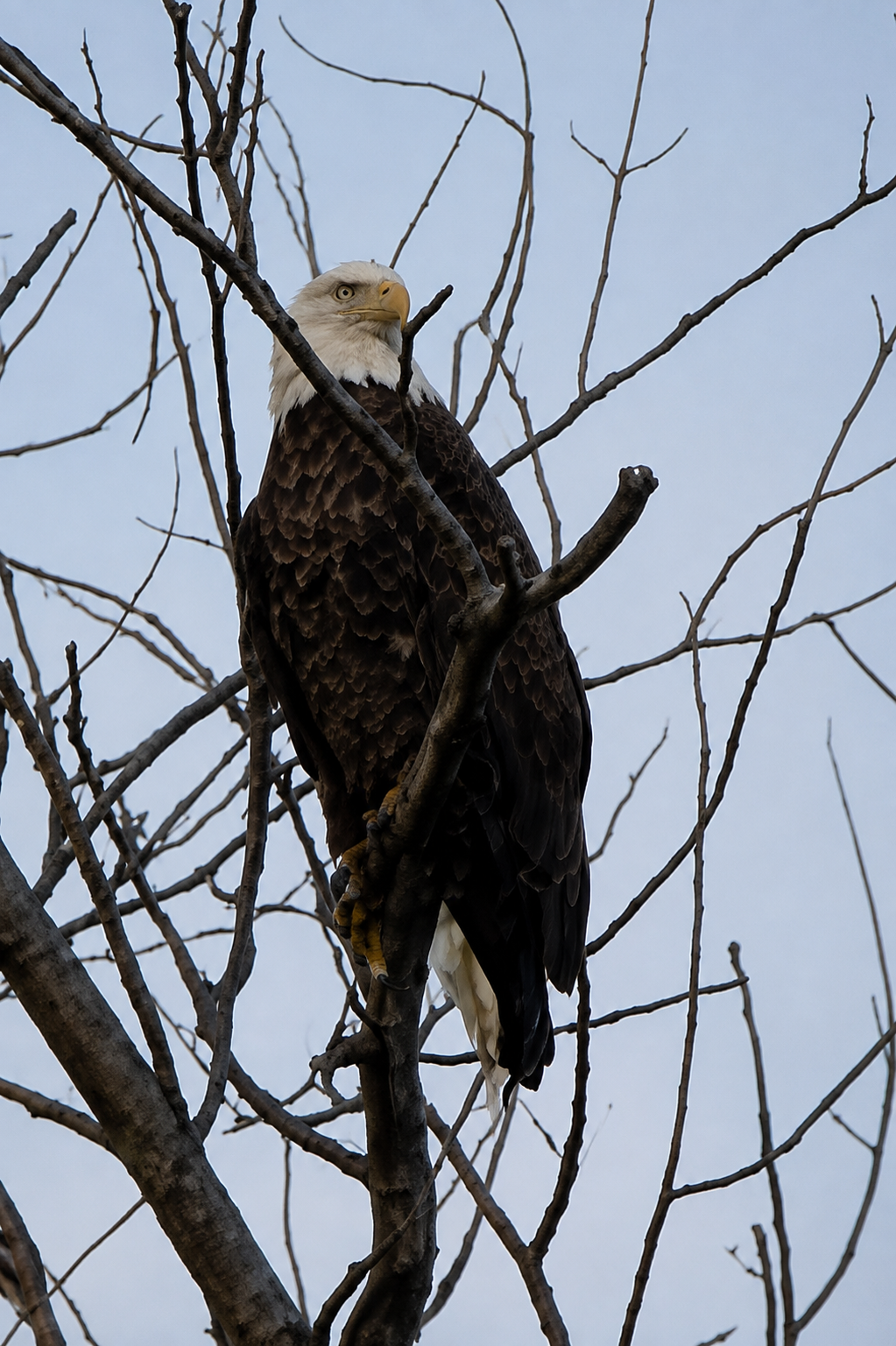
The reemergence of the Bald Eagle in Angola, New York, is one of the most inspiring wildlife stories along the Lake Erie shoreline. Today, residents and visitors may see these powerful birds soaring above the water, traveling along the wooded bluffs, or resting in mature trees near the beaches of Angola on the Lake. Their presence has become an increasingly memorable part of the natural landscape, but only a few decades ago, seeing a Bald Eagle in Western New York would have been extremely rare.
The return of the Bald Eagle represents far more than the recovery of a single bird species. It reflects decades of conservation work, stronger environmental protections, cleaner waterways, healthier fish populations, and the preservation of important shoreline habitats. Every Bald Eagle seen near Angola, Evangola State Park, Sturgeon Point, Cattaraugus Creek, or the eastern basin of Lake Erie is a living reminder of the remarkable changes that have taken place throughout the region.
For travelers exploring Angola and the Lake Erie coast, the possibility of seeing a Bald Eagle adds another dimension to the experience. A peaceful beach walk, fishing trip, boating excursion, or morning spent watching the lake can unexpectedly become an unforgettable wildlife encounter.
A Bald Eagle Encounter Along the Beach in Angola
During a walk along the beach in Angola on the Lake, an adult Bald Eagle was spotted perched high in the bare branches of a shoreline tree. Its dark brown body blended with the limbs surrounding it, but its bright white head and large yellow beak stood out against the pale sky.
From its elevated position, the eagle could watch the shoreline, nearby woods, and open waters of Lake Erie. It remained still and alert, occasionally turning its head while surveying the landscape below. The encounter was quiet, but the size and presence of the bird made it impossible to overlook.
The photograph taken during that walk captures more than a single wildlife sighting. It documents the continuing reemergence of the Bald Eagle around Angola and the southeastern Lake Erie shoreline. A bird that had nearly vanished from New York has returned to the same lakes, rivers, creeks, forests, and coastal habitats that supported its ancestors.
Why the Term Reemergence Is Appropriate
The word reemergence describes the return of something that had largely disappeared from view. Bald Eagles once occupied waterways and forested shorelines throughout Western New York, but their numbers declined so severely during the twentieth century that they became almost absent from the region.
Their presence today is not the introduction of a completely new species. It is the reappearance of a native bird reclaiming suitable parts of its historic range. The reemergence of the Bald Eagle around Angola reflects both the species' natural resilience and the success of long-term conservation efforts.
Although the word reemergence accurately describes the broader environmental story, the word return remains useful throughout the article because it feels more immediate and familiar to readers. Together, the two terms explain both the scientific recovery of the species and the emotional experience of seeing eagles along Lake Erie once again.
Bald Eagles in Western New York Before Their Decline
Before extensive shoreline development and industrialization, Bald Eagles occupied lakes, rivers, wetlands, and wooded waterways throughout Western New York. Lake Erie supplied fish, waterfowl, and open water, while large shoreline trees provided places to perch, roost, and construct nests.
The region's forests included mature oak, maple, cottonwood, sycamore, and pine trees. Waterways such as Cattaraugus Creek, Eighteenmile Creek, the Buffalo River, Tonawanda Creek, and the Niagara River created additional feeding corridors and nesting habitat.
Bald Eagles are closely associated with large bodies of water because fish make up an important part of their diet. They prefer tall trees with open flight paths and commanding views of lakes, rivers, marshes, and reservoirs. The Lake Erie shoreline once provided these conditions across a much broader and less developed landscape.
What Caused the Bald Eagle Population to Collapse?
The decline of the Bald Eagle resulted from several overlapping threats. Shoreline forests were cleared, wetlands were drained, and mature nesting trees were lost to development. Eagles were also shot because they were incorrectly viewed as threats to livestock, fish, and game animals.
Industrial pollution contaminated waterways and damaged aquatic ecosystems throughout the Great Lakes. Pollutants entered fish populations and moved through the food chain, affecting birds and other wildlife that depended on the water.
The pesticide DDT became one of the most serious threats. After entering the environment, DDT accumulated in fish and other prey. Bald Eagles received increasingly concentrated amounts of the chemical when they consumed contaminated animals.
DDT interfered with calcium metabolism and caused female eagles to produce dangerously thin eggshells. Adult eagles continued to build nests, mate, lay eggs, and incubate them, but many eggs cracked or collapsed beneath the weight of the parents before they could hatch.
By the middle of the twentieth century, Bald Eagle populations had declined across much of the United States. The situation in New York became especially severe. By 1976, the state had only one known nesting pair remaining, and that pair was unable to produce surviving young.
The Fight to Prevent the Bald Eagle's Disappearance
The movement to restore Bald Eagles gained momentum as the environmental effects of DDT, pollution, habitat destruction, and illegal killing became better understood. The United States banned most uses of DDT in 1972, removing one of the greatest barriers to successful eagle reproduction.
The Endangered Species Act of 1973 provided stronger federal protection for Bald Eagles and other wildlife facing extinction. Additional laws protected the birds, their nests, and their eggs from killing, capture, harassment, and disturbance.
These protections created the foundation for recovery, but the remaining eagle population was too small to rebuild quickly without assistance. Wildlife biologists began developing restoration methods that could return young eagles to appropriate habitat while limiting their contact with humans.
New York's Bald Eagle Restoration Program
New York began its Bald Eagle Restoration Project in 1976. Wildlife biologists brought young eagles from healthier populations and placed them in elevated artificial nesting structures located in suitable habitat.
This restoration technique was known as hacking. Young eagles were raised in protected towers until they were old enough to fly. Caretakers supplied food from concealed locations so the birds would not associate people with feeding.
When the young eagles were ready, the enclosures were opened and the birds were allowed to begin flying. Biologists monitored their movements as they learned to hunt, travel, and survive independently.
Many of these eagles later returned to New York and established breeding territories. Over the course of the restoration program, nearly 200 young Bald Eagles were released in the state. By 1989, New York had reached its initial recovery goal of establishing 10 breeding pairs.
The release phase ended, but conservation work continued through nest monitoring, habitat protection, environmental regulation, public education, and the rehabilitation of injured birds.
The Reemergence Spreads Across New York
Once Bald Eagles began reproducing successfully, their numbers expanded steadily. New generations established territories near lakes, rivers, reservoirs, wetlands, and other productive fishing waters.
The population benefited from cleaner water, healthier fish communities, protected wetlands, and the preservation of mature trees near waterways. Public attitudes also changed as Bald Eagles became widely recognized as an important part of America's natural heritage.
In 2007, the Bald Eagle was removed from the federal threatened and endangered species list after its dramatic national recovery. The species remains protected by federal laws, including the Bald and Golden Eagle Protection Act and the Migratory Bird Treaty Act.
The Reemergence of Bald Eagles Along Lake Erie
As eagle populations grew in New York, Pennsylvania, Ohio, Michigan, and Ontario, the birds gradually reclaimed habitat throughout the Lake Erie region. The Great Lake once again offered the combination of open water, fish, tributaries, wetlands, and shoreline forests needed to support them.
Lake Erie is particularly valuable because it supports large fish populations and concentrations of migratory waterfowl. Eagles may catch fish near the surface, feed on injured waterfowl, scavenge naturally occurring remains, or take food from other birds.
During colder weather, Bald Eagles often gather near open water. Rivers, creek mouths, harbors, and areas with moving water can remain ice-free even when parts of Lake Erie freeze. These locations may concentrate fish, ducks, and other possible food sources.
Why Bald Eagles Are Returning to Angola
The Angola area contains several features that make it suitable for Bald Eagles. Lake Erie provides open water and fish, while wooded bluffs, creeks, wetlands, beaches, and mature trees offer additional opportunities for feeding, traveling, resting, and observing the shoreline.
Tall trees are especially important. Bald Eagles use elevated branches as lookout points where they can remain relatively undisturbed while watching the water. Mature trees may also provide roosting habitat and, in quieter areas, possible nesting locations.
The Lake Erie shoreline between Angola, Evangola State Park, Sturgeon Point, and Cattaraugus Creek connects several types of habitat. Eagles can travel along the coast while searching for food and secure places to rest.
Lake Erie also serves as a natural migration and movement corridor. Eagles and many other birds follow shorelines because they offer recognizable routes, dependable food sources, and places to stop along the way.
Where to See Bald Eagles Near Angola, New York
Angola on the Lake
The beaches and wooded shoreline around Angola on the Lake can provide memorable eagle sightings. Visitors should scan tall branches overlooking the water, especially during the early morning and late afternoon.
Eagles may also fly parallel to the shoreline or pass overhead while traveling between feeding and resting areas. The quietest times of day generally provide the best opportunity to observe wildlife without disturbance.
Evangola State Park
Evangola State Park protects a scenic section of Lake Erie shoreline south of Angola. Its beach, wooded areas, bluffs, open spaces, and elevated lake views make it one of the area's best places to watch for Bald Eagles and other birds.
Visitors should scan the shoreline trees, open water, and sky while walking established trails or enjoying the park's beach and picnic areas.
Sturgeon Point
Sturgeon Point provides broad views across Lake Erie north of Angola. The marina, breakwalls, open water, and nearby shoreline habitat attract fish-eating birds and seasonal waterfowl.
Bald Eagles may pass through the area, fly along the shoreline, or perch in mature trees farther inland.
Cattaraugus Creek
The mouth of Cattaraugus Creek creates a productive transition between river and lake habitat. Fish, waterfowl, open water, and wooded surroundings can attract Bald Eagles, particularly during migration and colder periods.
Buffalo Harbor and the Outer Harbor
Buffalo Harbor, the Outer Harbor, Times Beach Nature Preserve, and surrounding waterfront parks provide additional eagle-viewing opportunities. Protected water, wetlands, fish populations, and restored coastal habitat support many species of birds.
The Niagara River
The Upper and Lower Niagara River provide some of Western New York's most productive Bald Eagle habitat. Fast-moving water can remain open throughout much of the winter, while abundant fish and waterfowl create dependable feeding opportunities.
Grand Island
Grand Island is surrounded by the Upper Niagara River and includes forests, wetlands, parks, and quiet shoreline areas. Beaver Island State Park and Buckhorn Island State Park can provide opportunities to see eagles and other birds of prey.
Best Seasons to See Bald Eagles Near Angola
Winter
Winter is one of the best seasons for Bald Eagle viewing. Leafless trees make perched birds easier to locate, and open sections of water may concentrate fish and waterfowl.
Visitors should scan creek mouths, harbors, rivers, breakwalls, and tall shoreline trees from safe public locations.
Early Spring
Spring brings increased nesting activity and the return of migratory birds. Adult eagles may become more active as they maintain territories, repair nests, and gather food.
Observers should remain far from any active nest and avoid behavior that causes an eagle to leave its perch or nesting territory.
Summer
Bald Eagles remain in the Lake Erie region during summer, although dense foliage can make perched birds harder to locate. Boaters, anglers, beach visitors, and paddlers may see eagles flying over the water.
Fall
Autumn brings another period of bird movement through the Great Lakes region. Young eagles and nonbreeding adults may travel widely while searching for food and suitable habitat.
Fall foliage also creates a beautiful setting for wildlife observation and photography along the Angola shoreline.
How to Identify a Bald Eagle
An adult Bald Eagle has a dark brown body and wings, a bright white head and tail, yellow feet, and a large hooked yellow bill. Adults commonly have a wingspan of approximately six to seven feet.
When soaring, Bald Eagles usually hold their broad wings nearly level. Turkey Vultures, which are sometimes mistaken for eagles, tend to hold their wings in a shallow V and rock slightly while gliding.
Young Bald Eagles do not have the familiar white head and tail. Juveniles are primarily dark brown with irregular white mottling. Their feathers change gradually over several years before they develop full adult plumage.
Bald Eagle Nests
Bald Eagles construct some of the largest nests built by any North American bird. A pair may return to the same nest each year and add new sticks and other materials every season.
Over time, a nest can grow several feet across, become several feet deep, and weigh hundreds of pounds. Nests are generally located high in strong trees near open water.
The location must provide access to food, strong support, clear flight paths, and protection from excessive human disturbance. Both adults participate in nest building, incubation, protection, and feeding their young.
What Bald Eagles Eat Around Lake Erie
Fish are an important part of the Bald Eagle's diet and one of the main reasons Lake Erie provides excellent habitat. Eagles may watch the water from a high perch before swooping down and seizing a fish near the surface with their talons.
They also eat waterfowl, small mammals, and other available prey. Bald Eagles are opportunistic scavengers and may feed on dead fish or wildlife. They sometimes take fish from Ospreys, gulls, and other birds.
This adaptable feeding behavior has helped Bald Eagles recolonize many types of habitat, including large lakes, reservoirs, rivers, harbors, wetlands, and Great Lakes shorelines.
The Bald Eagle as a Symbol of Lake Erie Recovery
The reemergence of the Bald Eagle is closely connected to the broader environmental recovery of Lake Erie. Because eagles sit near the top of the food chain, their health and reproductive success depend on the condition of the water, fish, wetlands, and shoreline habitats beneath them.
Cleaner water supports healthier fish populations. Protected wetlands provide habitat for waterfowl and other prey. Mature shoreline trees offer places to perch, roost, and nest. Each part of the ecosystem contributes to the eagle's continued success.
A Bald Eagle sighting can therefore be viewed as more than an isolated wildlife encounter. It is a visible result of pollution reduction, habitat protection, environmental regulation, scientific research, and public support for conservation.
Other Birds Seen Around Angola on the Lake
Bald Eagles are part of a much larger bird community found around Angola, Lake Erie, and Western New York. The beaches, forests, creeks, wetlands, and open waters attract resident birds and seasonal migrants throughout the year.
- Osprey
- Great Blue Heron
- Great Egret
- Belted Kingfisher
- Double-crested Cormorant
- Red-tailed Hawk
- Cooper's Hawk
- American Kestrel
- Turkey Vulture
- Canada Goose
- Mallard
- Common Merganser
- Bufflehead
- Common Goldeneye
- Ring-billed Gull
- Herring Gull
- Caspian Tern
- Baltimore Oriole
- American Goldfinch
- Cedar Waxwing
- Yellow Warbler
- Red-winged Blackbird
Responsible Bald Eagle Photography
Photographing a Bald Eagle can provide a meaningful record of a visit to Angola on the Lake. Responsible photography begins with giving the bird enough distance to continue behaving naturally.
- Use binoculars or a telephoto lens rather than approaching the eagle.
- Remain on public property and designated trails.
- Avoid standing directly beneath a perched bird.
- Do not call, whistle, wave, or make noises to attract its attention.
- Never fly a drone near an eagle or active nest.
- Use a fast shutter speed when photographing an eagle in flight.
- Visit during early morning or late afternoon for softer light.
- Do not publicly reveal the exact location of an active nest.
- Move away if the eagle becomes restless or changes its behavior.
Watching Bald Eagles Responsibly
Bald Eagles are no longer federally classified as endangered, but they remain protected under federal wildlife laws. These protections cover the birds, their eggs, and their nests.
Visitors should always maintain a respectful distance. If an eagle begins calling repeatedly, shifting position, spreading its wings, leaving a perch, or flying away because of an observer, that person is too close.
Nesting areas require particular care. Disturbance can prevent adults from incubating eggs, feeding young, or protecting eaglets from weather and predators. Observe from a distant public location and follow all posted restrictions.
How Visitors Can Support the Bald Eagle's Continued Reemergence
The recovery of the Bald Eagle demonstrates that conservation can succeed, but the species still faces threats from habitat loss, disturbance, pollution, lead exposure, fishing tackle, vehicle collisions, and shoreline development.
- Keep Lake Erie beaches, parks, and waterways free of litter.
- Dispose of fishing line and hooks properly.
- Respect wetlands, nesting areas, and wildlife closures.
- Remain on designated trails.
- Protect mature native trees near waterways.
- Report injured eagles to qualified wildlife authorities.
- Support habitat restoration, parks, and conservation organizations.
- Teach children to observe wildlife without chasing or disturbing it.
Frequently Asked Questions About Bald Eagles in Angola, New York
Are Bald Eagles found in Angola, New York?
Yes. Bald Eagles are observed around Angola, Angola on the Lake, Evangola State Park, Sturgeon Point, Cattaraugus Creek, and other locations along the eastern Lake Erie shoreline.
Why are Bald Eagles reemerging around Angola?
Their reemergence is connected to the banning of DDT, stronger legal protections, cleaner waterways, recovering fish populations, habitat conservation, and successful Bald Eagle restoration programs.
Are Bald Eagles common around Lake Erie?
Sightings have become increasingly common as the population has recovered. Their local presence varies by season, food availability, nesting activity, weather, and the availability of suitable shoreline habitat.
When is the best time to see a Bald Eagle?
Bald Eagles may be seen throughout the year. Winter and early spring can be especially productive because leafless trees make perched birds easier to locate.
Where should visitors look for eagles?
Scan tall trees near beaches, wooded bluffs, creek mouths, marinas, breakwalls, rivers, and stretches of open water. Eagles may also soar overhead or travel parallel to the Lake Erie shoreline.
Do Bald Eagles nest near Lake Erie?
Lake Erie provides suitable nesting habitat where mature trees, dependable food, and relatively undisturbed shoreline areas remain. Exact nest locations should not be publicly shared.
How large is a Bald Eagle?
An adult Bald Eagle is approximately 30 inches tall and may have a wingspan of six to seven feet. Females are generally larger than males.
Why do young Bald Eagles not have white heads?
Juvenile Bald Eagles have mostly dark brown plumage with scattered white markings. The white head and tail develop gradually as the bird reaches maturity.
Can visitors approach an eagle for a photograph?
No. Use binoculars or a telephoto lens and remain far enough away that the eagle does not change its natural behavior. Never approach an active nest.
Are Bald Eagles still endangered?
Bald Eagles were removed from the federal list of threatened and endangered species in 2007 after their population recovered. They remain protected under other federal wildlife laws.
A Timeline of the Bald Eagle's Reemergence
- Before the twentieth century: Bald Eagles occupy waterways and forested shorelines throughout New York and the Great Lakes region.
- Mid-1900s: Habitat loss, pollution, shooting, and DDT cause a severe population decline.
- 1972: The United States bans most uses of DDT.
- 1973: The Endangered Species Act strengthens federal wildlife protection.
- 1976: Only one nesting pair remains in New York, and the state begins its Bald Eagle Restoration Project.
- 1976 to 1989: New York releases nearly 200 young Bald Eagles through its restoration program.
- 1989: The state reaches its initial goal of establishing 10 breeding pairs.
- 1995: The Bald Eagle's federal status improves from endangered to threatened in much of the lower United States.
- 2007: The Bald Eagle is removed from the federal threatened and endangered species list.
- Today: Bald Eagles once again occupy lakes, rivers, reservoirs, wetlands, and Great Lakes shorelines throughout New York.
Experience the Reemergence of the Bald Eagle in Angola
The reemergence of the Bald Eagle in Angola, New York, is one of Western New York's most inspiring environmental stories. A bird that had nearly disappeared from the state is once again feeding, resting, nesting, and traveling through the lakes, rivers, forests, wetlands, and coastal habitats of the region.
For visitors, the possibility of seeing an eagle adds something extraordinary to an Angola vacation. A beach walk may become an unexpected wildlife encounter. A boating or fishing trip may include the sight of an eagle flying above Lake Erie. A quiet morning at Evangola State Park may reveal a broad-winged silhouette soaring over the shoreline.
The adult Bald Eagle photographed from the beach in Angola on the Lake represents this remarkable reemergence. Its presence in a shoreline tree overlooking Lake Erie would have been almost unimaginable during the lowest point of the species' decline. Today, it stands as a symbol of resilience, cleaner water, healthier habitat, and the impact of long-term conservation.
When visiting Angola, look beyond the beach and toward the open sky, shoreline trees, and waters of Lake Erie. A white head among the branches or a broad-winged silhouette overhead may reveal one of North America's greatest wildlife recovery stories unfolding directly in front of you.
*The historical restoration details are supported by the New York State Department of Environmental Conservation, which documents New York’s single remaining nesting pair in 1976, the use of fostering and hacking, the release of 198 nestlings, and the program reaching 10 breeding pairs in 1989. The U.S. Fish and Wildlife Service identifies DDT contamination, habitat degradation, legal protection, and conservation programs as central to the eagle’s decline and recovery, and confirms federal delisting in 2007 while other protections remain in force
Additional Find Rentals Articles

 BOOK DIRECT
 Connect with a Manager