Birdwatching in South Padre Island
Birdwatching in South Padre Island, Texas: Birds, Birding Spots & Seasonal Guide
South Padre Island is one of the premier birdwatching destinations on the Texas Gulf Coast. Its location at the southern tip of Texas places the island along an important migration corridor between North America, Mexico, Central America and South America. Each spring and fall, migrating birds travel through the region and use South Padre Island as a place to rest, feed and recover before continuing their journeys.
The island's beaches, dunes, tidal flats, freshwater wetlands, native vegetation and the shallow waters of the Laguna Madre support an impressive variety of birds throughout the year. Depending on the season, visitors may encounter colorful migrating songbirds, large wading birds, coastal shorebirds, ducks, raptors, gulls, terns and seabirds.
You do not need to be an experienced birder to enjoy birdwatching on South Padre Island. Some of the island's most recognizable birds can be seen simply by walking the beach, visiting a nature trail or spending time along the Laguna Madre. Serious birders, however, can spend days exploring South Padre Island and the surrounding Lower Rio Grande Valley in search of migrating birds and South Texas specialties.
Best Birds to See on South Padre Island
Roseate Spoonbill
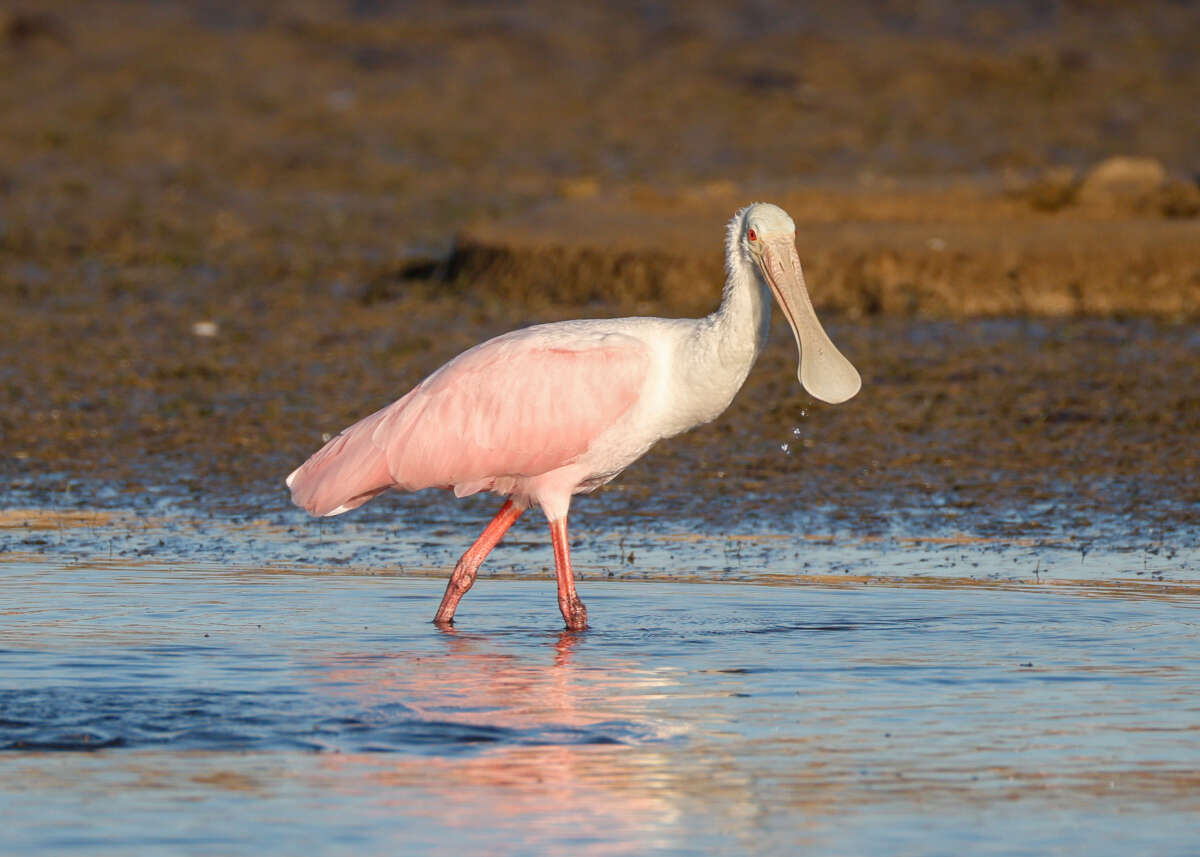
Few South Padre Island birds attract attention as quickly as the Roseate Spoonbill. This large wading bird is known for its brilliant pink plumage, long reddish legs and unusual spoon-shaped bill. Adults can develop especially vibrant pink and red coloring across their wings and shoulders.
Roseate Spoonbills feed by walking through shallow water while sweeping their partly opened bills from side to side. When the sensitive bill touches a small fish, shrimp, crustacean or other aquatic animal, it quickly snaps shut.
Look for Roseate Spoonbills around shallow marshes, tidal flats and wetlands along the Laguna Madre. They are frequently seen feeding alongside herons, egrets and ibises and are among the most photogenic birds on South Padre Island.
Great Blue Heron
The Great Blue Heron is one of the largest and most recognizable birds found around South Padre Island. Standing roughly four feet tall, it has extremely long legs, a long neck, blue gray plumage and a large pointed bill.
Great Blue Herons are patient hunters. They often stand nearly motionless in shallow water before suddenly striking at fish. Their diet can also include frogs, crustaceans, snakes and other small animals.
Great Blue Herons can be found around Laguna Madre wetlands, marshes, quiet shorelines, fishing areas and shallow water throughout much of the year.
When flying, Great Blue Herons fold their necks into an S shape and extend their long legs behind them. This distinguishes them from cranes, which generally fly with their necks extended.
Reddish Egret
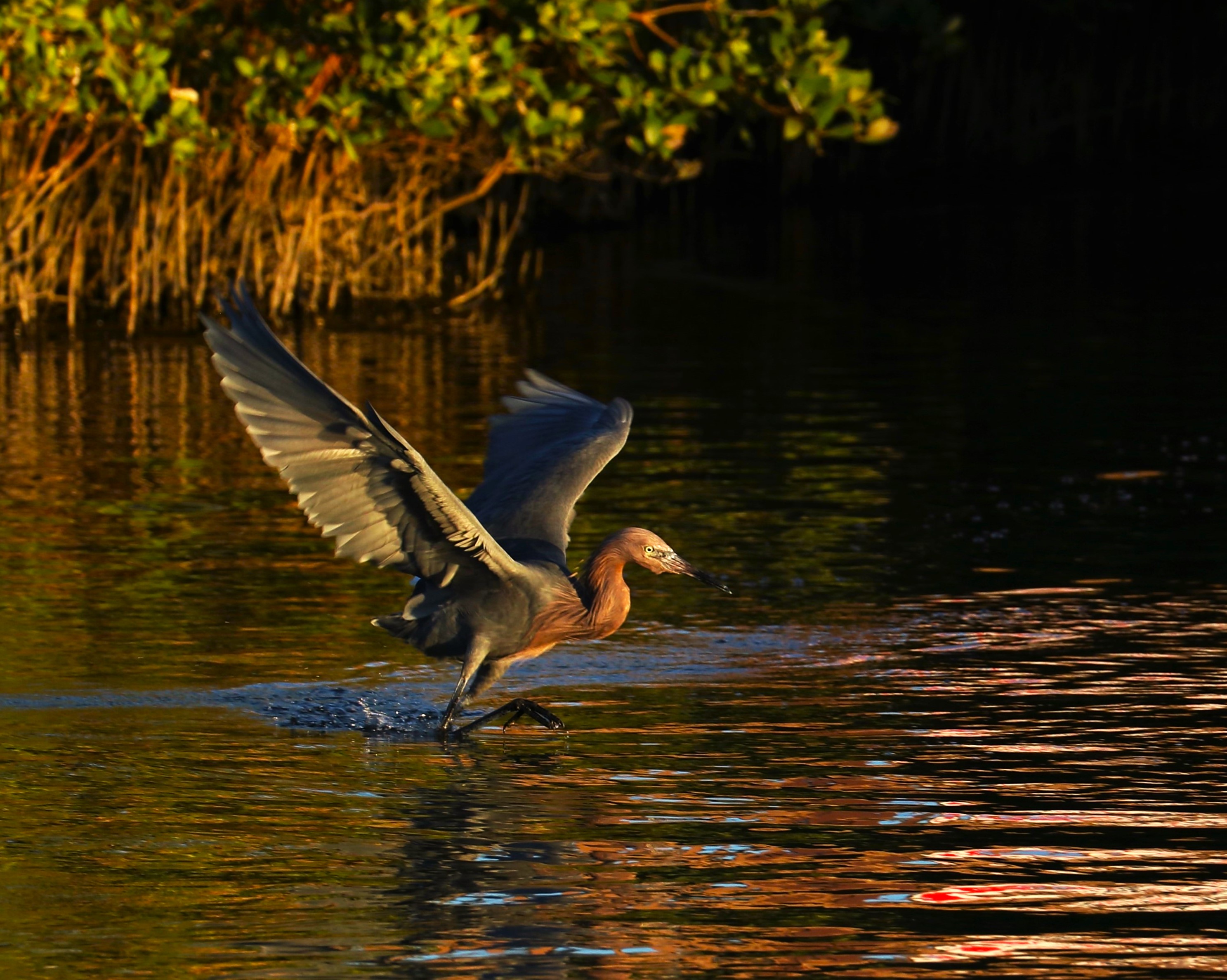
The Reddish Egret is one of the most entertaining birds to watch on the South Texas coast. Instead of standing still while hunting, it frequently runs through shallow water, suddenly changes direction, jumps, spins and spreads its wings while chasing fish.
The dark form of the Reddish Egret has a gray body with a reddish or rusty colored head and neck. A less common white form is almost completely white.
Reddish Egrets favor shallow coastal environments such as lagoons, tidal flats and protected bays. The Laguna Madre provides excellent habitat for these energetic hunters.
They sometimes spread their wings over the water while feeding, creating shade that can reduce glare and make fish easier to see.
Snowy Egret
The Snowy Egret is a smaller and more delicate white egret. It has completely white plumage, a slender black bill, black legs and distinctive bright yellow feet.
Those yellow feet are one of the easiest ways to distinguish a Snowy Egret from other white herons and egrets.
Snowy Egrets often shuffle their feet through shallow water to disturb small fish, shrimp and aquatic animals. They may also run quickly through the water while chasing prey.
Look for them around ponds, marshes, tidal areas and shallow sections of the Laguna Madre.
Great Egret
The Great Egret is a large white wading bird with a long yellow bill, black legs and an extremely long neck. It can commonly be seen walking slowly through shallow wetlands or standing quietly while waiting for a fish to approach.
When prey comes within range, the Great Egret quickly extends its neck and strikes with its pointed bill.
During breeding season, adults develop long ornamental feathers called plumes. Great Egrets were once heavily hunted for these decorative feathers, but conservation efforts helped their populations recover.
Tricolored Heron
The Tricolored Heron is a slender coastal heron with a blue gray back, purplish or reddish neck and a noticeably white belly.
It is often more active while feeding than a Great Blue Heron. Tricolored Herons may quickly walk or run through shallow water before extending their necks to capture small fish.
They are regularly associated with coastal marshes, tidal lagoons and shallow wetlands throughout South Texas.
Little Blue Heron
Adult Little Blue Herons have slate blue bodies and purplish necks. Juvenile Little Blue Herons look completely different because young birds are almost entirely white.
As they mature, juvenile birds develop a patchwork combination of blue and white feathers before eventually becoming completely dark.
Little Blue Herons feed slowly and deliberately in shallow water, capturing fish, insects, crustaceans and other small aquatic animals.
Green Heron
The Green Heron is much smaller and more secretive than many of the island's larger herons. Adults have a dark greenish back, chestnut colored neck and relatively short legs.
They usually remain close to marsh vegetation, pond edges and protected shoreline where they hunt small fish, insects and amphibians.
Green Herons are particularly interesting because they have been observed using bait. A bird may drop an insect, feather or other small object onto the surface of the water and wait for a curious fish to approach.
Black Crowned Night Heron
Black Crowned Night Herons are stockier than many other herons. Adults have gray wings, a black crown and back, red eyes and a thick dark bill.
As their name suggests, these birds become especially active during the evening, nighttime and early morning. During the day they may remain quietly hidden in shrubs, trees or marsh vegetation.
Juvenile Black Crowned Night Herons are mostly brown with pale spots and look considerably different from adults.
Yellow Crowned Night Heron
The Yellow Crowned Night Heron is another coastal species that is particularly well adapted for feeding on crabs and crustaceans.
Adults have gray bodies, dark faces, white cheek markings and a pale yellow crown. Their strong, thick bills are capable of capturing and breaking apart crabs.
Look for Yellow Crowned Night Herons around marsh edges, tidal areas and shallow coastal environments, especially early or late in the day.
White Ibis
White Ibises are recognizable by their mostly white bodies, long downward curving reddish bills and reddish legs. When flying, black wing tips become especially noticeable.
Rather than visually stalking prey like a heron, a White Ibis repeatedly probes soft mud and shallow water with its curved bill while searching for insects, crustaceans and other small aquatic animals.
Groups of White Ibises may move methodically together across shallow wetlands and tidal flats.
White Faced Ibis
The White Faced Ibis has dark iridescent plumage that can appear bronze, green, purple or almost black depending on the light.
Breeding adults develop reddish facial skin surrounded by a thin white border. Like other ibises, they use long curved bills to probe mud and shallow water for aquatic invertebrates.
Binoculars are particularly helpful for identifying these birds because their colorful iridescence can be difficult to see from a distance.
Brown Pelican
Brown Pelicans are among the signature birds of South Padre Island and the Gulf Coast. These large seabirds have broad wings, long bills and expandable throat pouches used when capturing fish.
Brown Pelicans frequently hunt by flying above the Gulf or Laguna Madre and plunging headfirst into the water after fish.
They can also be seen gliding only a few feet above Gulf waves, sometimes traveling in a line with several other pelicans.
Docks, piers, jetties, channel markers and sandbars are other excellent places to watch resting Brown Pelicans.
American White Pelican
The American White Pelican is considerably larger than the Brown Pelican and has an enormous orange bill, white body and black flight feathers that become particularly visible when its wings are spread.
Unlike Brown Pelicans, American White Pelicans normally do not plunge into the water from the air. Instead, they swim along the surface and scoop fish from the water.
Groups may cooperate while feeding by surrounding fish and directing them toward shallower areas.
Large flocks can be spectacular in flight as the birds circle high above the coast on rising currents of warm air.
Double Crested Cormorant
Double Crested Cormorants are dark, long necked water birds that often swim with much of their body sitting low in the water.
They pursue fish underwater and frequently perch on pilings, docks, channel markers and other structures after feeding.
Cormorants are often seen holding their wings open while perched, a characteristic posture associated with drying their feathers.
Neotropic Cormorant
The Neotropic Cormorant is generally smaller and more slender than the Double Crested Cormorant. South Texas is one of the best regions in the United States to observe this species.
Neotropic Cormorants have proportionately long tails and may show a thin white border around the throat during breeding season.
They dive underwater to catch fish and can be found around ponds, bays, channels and wetlands.
Black Skimmer
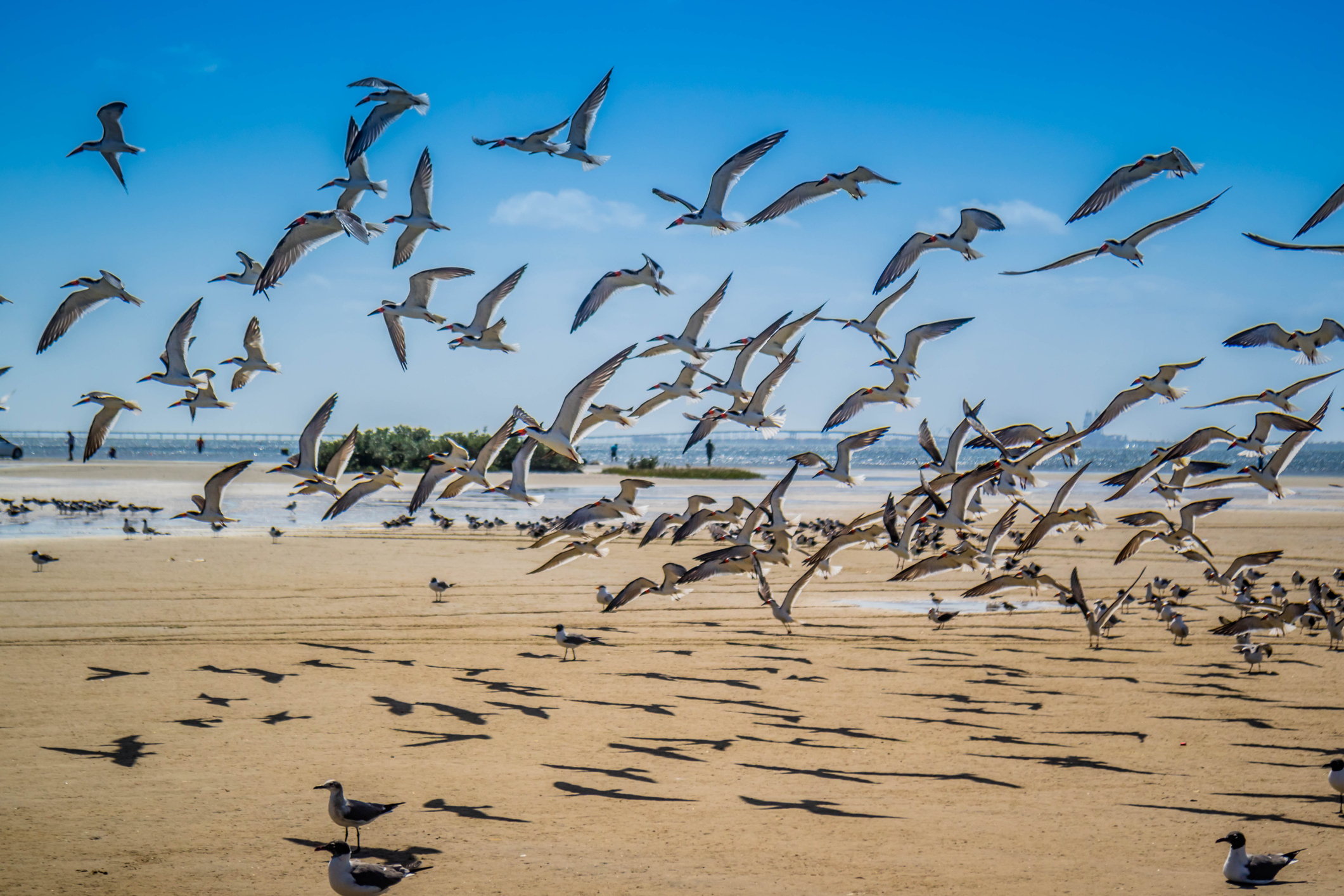
The Black Skimmer has one of the most unusual bills of any bird found on South Padre Island. The lower half of its bill extends farther than the upper half.
While hunting, the Black Skimmer flies extremely low over calm water with its lower bill cutting through the surface. When the bill touches a fish, the bird quickly snaps its jaws shut.
Adults have black backs, white underparts and distinctive red and black bills.
Black Skimmers frequently rest together on beaches, sandbars and small coastal islands.
Laughing Gull
The Laughing Gull is one of the most familiar gulls around South Padre Island. Breeding adults have dark heads, white eye markings and reddish bills.
The species gets its name from its loud call, which can sound surprisingly similar to laughter.
Laughing Gulls are highly adaptable and can be found around beaches, fishing areas, marinas, bays and developed areas throughout the island.
Royal Tern
Royal Terns are large, elegant seabirds with long orange bills, pale gray wings and dark markings on the head.
They frequently gather in groups along beaches, sandbars and shorelines and are often mixed with gulls and other species of terns.
Royal Terns hunt by flying above the water before diving after small fish.
Least Tern
The Least Tern is one of the smallest terns in North America. Adults have pale gray wings, white underparts, black caps, white foreheads and yellow bills.
These small birds often hover above shallow water before quickly diving to capture tiny fish.
Least Terns frequently nest directly on open sand or shell, making nesting colonies vulnerable to disturbance from people, vehicles and dogs. Visitors should always remain outside designated nesting areas.
Forster's Tern
Forster's Terns are graceful birds frequently observed around the Laguna Madre, coastal wetlands and shallow bays.
During breeding season they have dark caps, orange red bills with darker tips and pale gray wings. During winter, much of the dark cap disappears and a distinctive dark patch remains around the eye.
Forster's Terns hover above the water before diving for small fish.
American Oystercatcher
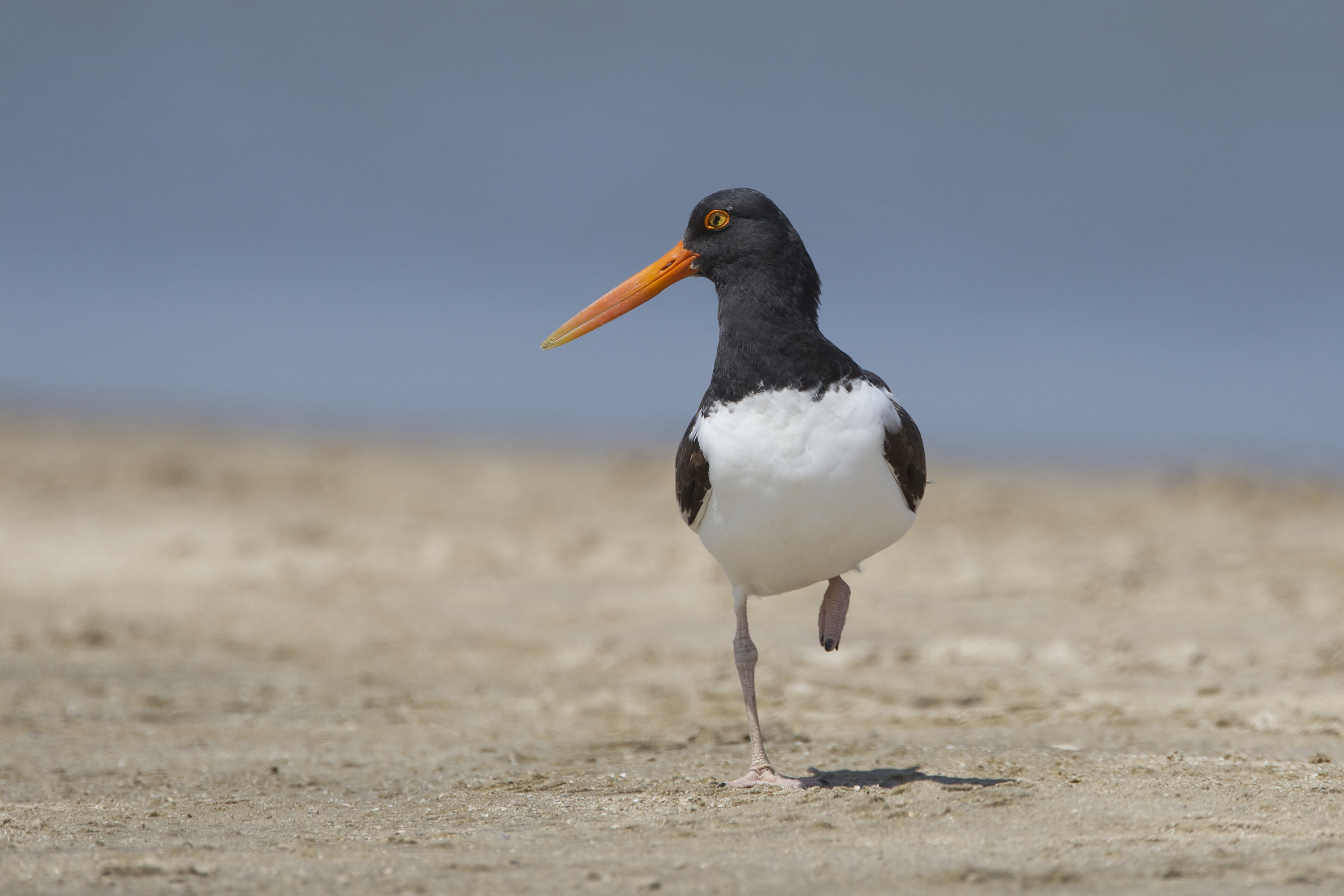
The American Oystercatcher is one of the easiest South Padre Island shorebirds to identify. It has a black head, brown back, white belly, pink legs and an extremely noticeable orange red bill.
The strong bill is specially adapted for opening oysters, clams and other shellfish.
American Oystercatchers favor beaches, shell banks, tidal flats and exposed coastal islands.
Black Necked Stilt
The Black Necked Stilt has extremely long pink legs and sharply contrasting black and white plumage. Its unusually long legs make the bird appear almost delicate as it moves through shallow wetlands.
Black Necked Stilts feed on insects and aquatic organisms found in shallow water and mud.
Their loud calls often reveal their presence before visitors notice them.
American Avocet
The American Avocet is another striking long legged shorebird. Its most recognizable feature is a slender bill that curves upward.
Rather than repeatedly poking into the mud, an avocet often sweeps its bill from side to side through shallow water while searching for aquatic organisms.
Breeding adults develop rusty orange coloration around the head and neck. Winter birds are much paler with mostly gray and white plumage.
Long Billed Curlew
The Long Billed Curlew possesses one of the longest bills of any North American shorebird. The extremely long downward curved bill allows it to reach worms, crabs and other animals buried beneath mud and sand.
The bird has mottled cinnamon and brown plumage that can provide excellent camouflage in coastal grasslands and tidal environments.
Look for Long Billed Curlews around tidal flats, beaches, marsh edges and open coastal areas.
Willet
The Willet is a common medium to large shorebird found throughout the South Padre Island coastline.
When standing, Willets have relatively plain gray brown plumage, long legs and a substantial straight bill.
When they take flight, however, their wings reveal a bold black and white pattern that makes identification much easier.
Willets walk through shallow water and along shorelines searching for crabs, insects and other small marine animals.
Ruddy Turnstone
The Ruddy Turnstone gets its name from its unusual feeding behavior. It uses its short, strong bill to turn over shells, stones, seaweed and beach debris while searching for insects, crustaceans and other small animals underneath.
Breeding adults have striking combinations of black, white and rusty colored plumage. Winter birds are less colorful but retain their sturdy bodies and orange legs.
Look for Ruddy Turnstones along beaches, jetties and rocky shoreline.
Sanderling
Sanderlings are the small shorebirds frequently seen racing back and forth along the edge of the Gulf surf.
As waves move out, Sanderlings quickly run toward the water and probe wet sand for tiny crustaceans. When another wave arrives, the birds rapidly run back toward the beach.
Their constant movement makes them one of the most entertaining birds to watch during a South Padre Island beach walk.
Piping Plover
The Piping Plover is a small, pale shorebird with sandy colored plumage, orange legs and a short bill. Its coloration provides excellent camouflage along beaches and tidal flats.
The Texas Gulf Coast provides important winter habitat for Piping Plovers.
Because these birds are small and easily disturbed, visitors should observe them from a respectful distance and avoid entering protected nesting or resting areas.
Snowy Plover
Snowy Plovers are tiny pale shorebirds associated with sandy beaches, tidal flats and sparsely vegetated coastal habitat.
They have dark legs, short dark bills and subtle dark markings around the forehead and sides of the breast.
Snowy Plovers frequently move in short bursts before stopping to search for insects and small invertebrates.
Their nests can consist of little more than shallow depressions in the sand and can be extremely difficult to see.
Semipalmated Plover
The Semipalmated Plover is a small shorebird with a single dark band across its chest. It resembles a smaller relative of the Killdeer.
These plovers stop along coastal mudflats, beaches and shallow wetlands during migration, where they feed on worms, insects and small crustaceans.
Killdeer
Killdeer can be found around beaches, open fields, parking areas and disturbed ground. They have two dark bands across the breast and are known for their loud, distinctive calls.
When predators approach a nest, adult Killdeer may perform a dramatic broken wing display. The bird pretends to be injured and attempts to lure the threat away from its eggs or chicks.
Red Knot
Red Knots are extraordinary long distance migrants that may appear along South Padre Island beaches and tidal flats during migration and winter.
Breeding birds have rusty red underparts, while winter birds become mostly gray.
Red Knots depend heavily on productive coastal feeding areas where they can quickly rebuild the energy reserves needed for extremely long migrations.
Marbled Godwit
The Marbled Godwit is a large cinnamon brown shorebird with an exceptionally long bill that curves slightly upward.
The bird uses its bill to probe deeply into mud and sand for marine worms, crustaceans and other small animals.
Tidal flats, shallow bays and exposed mud provide excellent habitat for Marbled Godwits.
Black Bellied Plover
The Black Bellied Plover is a sturdy shorebird frequently found on beaches and tidal flats around the Texas coast.
Breeding males develop dramatic black faces and underparts, while winter plumage becomes considerably more subdued and gray.
The species has a fairly heavy bill and upright posture compared with many smaller plovers.
Redhead
The Laguna Madre is exceptionally important winter habitat for Redhead ducks.
Male Redheads have rusty red heads, dark chests and pale gray bodies. Females are primarily warm brown.
Large groups feed on submerged aquatic vegetation in the Laguna Madre, particularly seagrass. Seeing large concentrations of Redheads can be one of the most impressive winter birdwatching experiences in South Texas.
Northern Pintail
Northern Pintails are elegant wintering ducks with slender bodies and relatively long necks.
Adult males have chocolate brown heads, white neck markings, gray bodies and extremely long pointed tail feathers.
Females have mottled brown plumage but share the species' slender profile.
Northern Pintails prefer shallow wetlands, marshes and protected coastal waters.
Blue Winged Teal
Blue Winged Teal are small ducks frequently seen around South Padre Island during migration and winter.
Adult males have blue gray heads with bold white crescent shaped markings in front of the eyes.
Both males and females have powder blue patches across the upper wings that become particularly visible during flight.
They typically feed in shallow marshes, ponds and wetlands.
Mottled Duck
Mottled Ducks are resident birds of Gulf Coast wetlands and can be seen throughout much of the year.
They resemble female Mallards, with both males and females showing rich mottled brown plumage.
They are strongly associated with coastal marshes, ponds and freshwater or brackish wetlands.
Osprey
Ospreys are large fish eating raptors commonly seen around South Padre Island and the Laguna Madre.
They have dark brown wings, white underparts and a distinctive dark stripe extending through the eye.
An Osprey may hover momentarily above the water before plunging feet first to capture a fish with its powerful talons.
Look for Ospreys perched on utility poles, nesting platforms, channel markers and other elevated structures overlooking the water.
Peregrine Falcon
The Peregrine Falcon is one of the fastest animals on Earth and an exciting bird to encounter along the coast.
These powerful falcons have pointed wings and strong dark facial markings. They hunt other birds in flight and may be attracted to coastal areas where large concentrations of shorebirds provide abundant prey.
Peregrine Falcons are particularly worth watching for during migration and winter.
White Tailed Kite
The White Tailed Kite is an elegant raptor with a mostly white body, pale gray wings and distinctive dark shoulder patches.
These birds frequently hover above open fields, marsh edges and grasslands while searching for rodents and other prey.
They are more commonly associated with open mainland habitat than with the beach itself but can be encountered while exploring the wider South Padre Island and Lower Rio Grande Valley region.
Crested Caracara
The Crested Caracara is one of the most distinctive birds of prey in South Texas. It has a black cap, pale neck, orange facial skin and a heavy bill.
Unlike many raptors, caracaras spend considerable time walking on the ground. They feed on carrion, insects, reptiles and small animals.
When traveling between South Padre Island and mainland birding areas, watch open fields, fence posts and utility poles for Crested Caracaras.
Colorful Migrating Birds of South Padre Island
South Padre Island becomes especially exciting during spring and fall migration when songbirds moving between North America and tropical regions stop on the island. Many of these birds spend most of their lives far from the coast, making their temporary appearances especially rewarding for birdwatchers.
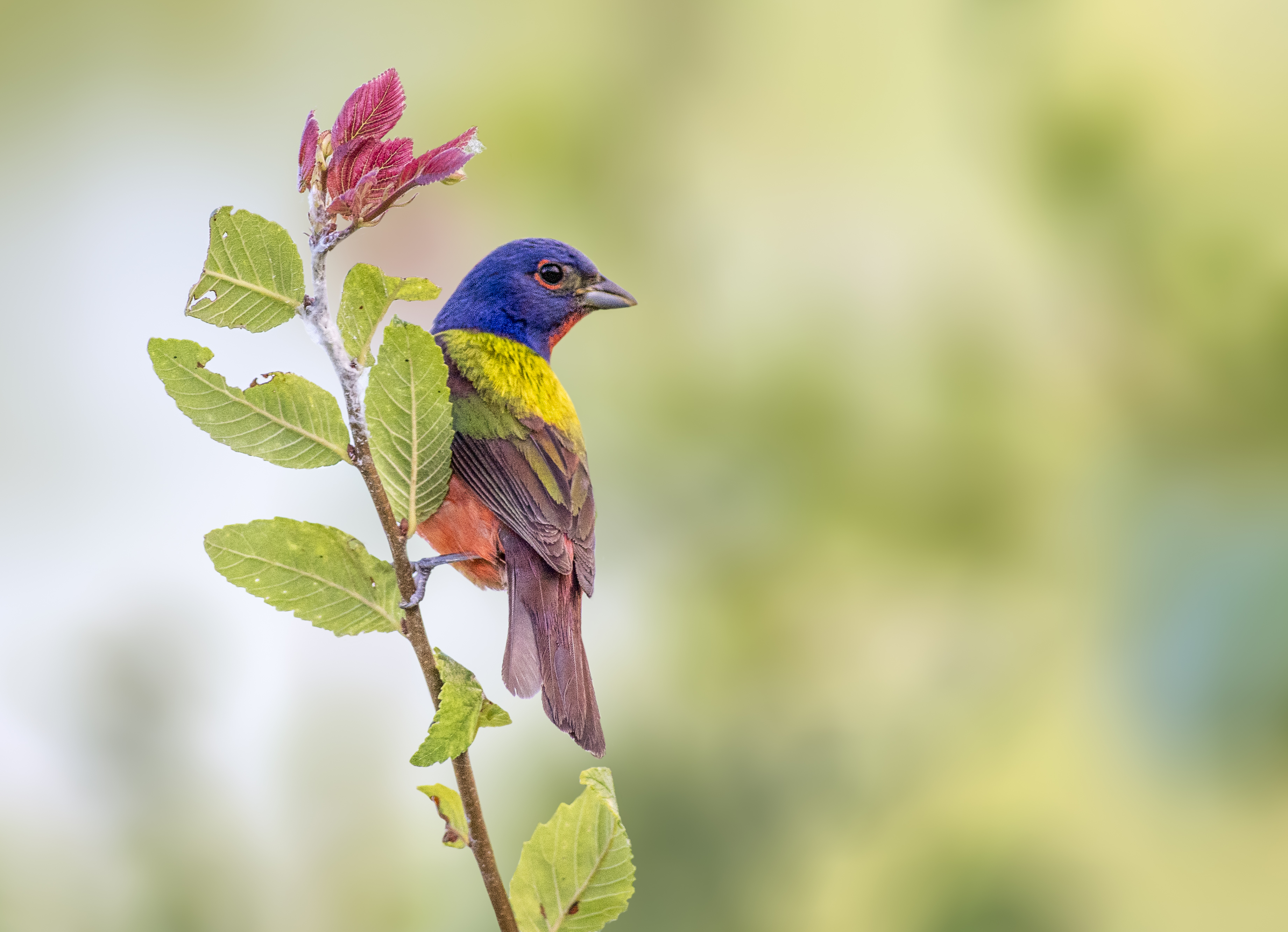
Painted Bunting
The male Painted Bunting is one of the most colorful birds in North America, combining a deep blue head, red underparts and a green back.
Females and immature birds are primarily bright green.
Painted Buntings may appear around native shrubs, brush and vegetated areas during migration and the warmer months. Despite the male's brilliant colors, the birds can be surprisingly difficult to locate when hidden among dense vegetation.
Indigo Bunting
Male Indigo Buntings develop brilliant blue breeding plumage, while females are primarily brown.
These small birds migrate between North American breeding areas and wintering grounds farther south. During migration, they may stop in vegetated areas on South Padre Island to feed and recover.
Scarlet Tanager
Male Scarlet Tanagers have spectacular red bodies and contrasting black wings during breeding season. Females are yellow green.
Scarlet Tanagers are normally associated with forests rather than beaches, but that is precisely what makes seeing one on South Padre Island so exciting.
During migration, weather conditions can force woodland birds to stop along the Gulf Coast, temporarily concentrating numerous species into small patches of trees and shrubs.
Summer Tanager
Adult male Summer Tanagers are almost completely red, while females range from yellow to yellow orange.
These birds feed heavily on insects and are particularly well known for eating bees and wasps.
During migration they may appear in trees, shrubs and landscaped areas around South Padre Island.
Baltimore Oriole
Baltimore Orioles are colorful spring migrants. Adult males have orange underparts with black heads and backs, while females and younger birds generally have yellow orange coloring.
They feed on insects, fruit and nectar and may visit flowering vegetation during migration.
Rose Breasted Grosbeak
Male Rose Breasted Grosbeaks have bold black and white plumage with a distinctive rose red patch across the chest.
Females are streaked brown and white.
Their large bills allow them to crush seeds, although they also feed on insects and fruit. These long distance migrants may stop on South Padre Island after traveling across or around the Gulf of Mexico.
Ruby Throated Hummingbird
Ruby Throated Hummingbirds are tiny migrants capable of traveling remarkable distances during migration.
Adult males have brilliant red throats that may appear dark when they are not reflecting direct sunlight. Females lack the red throat.
Flowering native vegetation and hummingbird gardens can attract these birds when they move through South Padre Island.
Warblers
Spring migration can bring numerous species of warblers to South Padre Island. Depending on weather and migration conditions, birdwatchers may encounter Yellow Warblers, Black and White Warblers, Tennessee Warblers, Nashville Warblers, Common Yellowthroats, Northern Waterthrushes and many other species.
Many warblers are extremely small despite completing migrations covering thousands of miles.
Strong winds, storms and passing weather fronts can sometimes force migrating birds down onto South Padre Island. During these migration events, known among birders as fallouts, small areas containing trees and shrubs can suddenly become filled with warblers, buntings, orioles, vireos, tanagers, grosbeaks, thrushes and flycatchers.
Magnificent Frigatebird
The Magnificent Frigatebird is one of the most dramatic birds that may be seen above South Padre Island.
These large seabirds have extremely long narrow wings and deeply forked tails. They are exceptionally efficient fliers and can remain airborne for long periods with very little wing movement.
Adult males are mostly black and possess inflatable red throat pouches used during courtship.
Frigatebirds are most often observed soaring high above the coastline, particularly during warmer weather.
South Texas Birds to Look for Near South Padre Island
South Padre Island also provides convenient access to the Lower Rio Grande Valley, one of the most distinctive birding regions in the United States. Travelers willing to explore the mainland can add several subtropical species that are difficult or impossible to find across most of the country.
Green Jay
The Green Jay looks almost tropical, with a vivid green back, blue green tail, black head and bright blue markings around the face.
Green Jays are primarily associated with the brushlands and wooded habitats of the Lower Rio Grande Valley rather than the open beaches of South Padre Island.
Visitors exploring mainland wildlife areas may have excellent opportunities to observe these colorful birds.
Great Kiskadee
The Great Kiskadee is another unmistakable South Texas specialty. It has bright yellow underparts, brown wings and a bold black and white pattern across the head.
Its loud call frequently makes the bird easier to locate than its appearance alone.
Great Kiskadees eat insects, fruit and small animals and can occasionally capture small fish.
Plain Chachalaca
The Plain Chachalaca is a large, long tailed subtropical bird commonly associated with dense brush and wooded areas of the Lower Rio Grande Valley.
Its brown plumage is relatively understated, but its loud repetitive calls make this bird difficult to ignore.
Mainland nature preserves near South Padre Island offer better opportunities to see Plain Chachalacas than the island's beaches and open wetlands.
Altamira Oriole
The Altamira Oriole is among the most spectacular birds found in South Texas. Adults have brilliant orange bodies combined with black wings, backs and throat markings.
Altamira Orioles build distinctive hanging nests woven from plant material and suspended from tree branches.
The Lower Rio Grande Valley is one of the few areas in the United States where visitors can regularly search for this largely tropical species.
Best Places for Birdwatching on South Padre Island
South Padre Island Birding, Nature Center & Alligator Sanctuary
The South Padre Island Birding, Nature Center & Alligator Sanctuary is one of the best places to begin a birdwatching trip on the island. Located along the Laguna Madre, the nature center provides access to important coastal wetland habitat and outstanding opportunities to observe birds at relatively close range.
Visitors can explore elevated boardwalks extending across the wetlands, observation areas, bird blinds, native gardens and elevated viewpoints overlooking the surrounding environment.
The combination of open water, mudflats, marsh vegetation and nearby coastal habitat can produce an impressive mixture of Roseate Spoonbills, Reddish Egrets, Great Blue Herons, Snowy Egrets, ibises, ducks, shorebirds, pelicans and migrating songbirds.
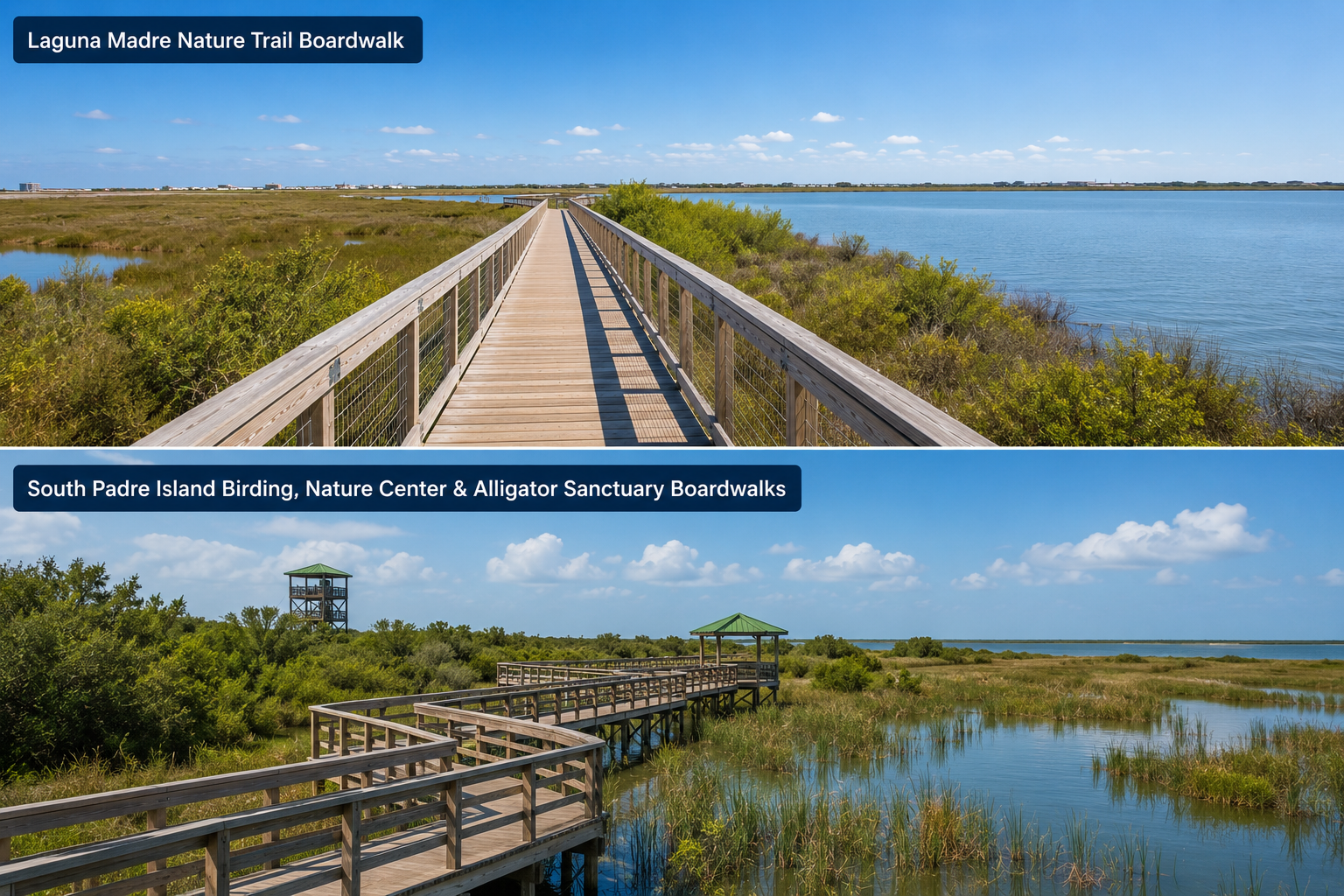
Laguna Madre Nature Trail
The Laguna Madre Nature Trail provides another convenient place to experience the island's bay side wetlands. The boardwalk extends into coastal habitat overlooking the Laguna Madre and provides opportunities to watch wading birds, shorebirds and waterfowl.
Look for Great Blue Herons, Snowy Egrets, Tricolored Herons, Black Necked Stilts, ibises, ducks and other birds feeding among the shallow wetlands.
Early morning and late afternoon can provide particularly pleasant temperatures, favorable lighting and active bird behavior.
South Padre Island Beaches
Excellent birdwatching can take place directly along South Padre Island's Gulf beaches.
Walk the shoreline and watch for Sanderlings racing along the surf, Willets walking through shallow water, Ruddy Turnstones searching around shells and debris and plovers feeding along quieter stretches of sand.
Look toward the water for Brown Pelicans, Laughing Gulls, Royal Terns and other seabirds.
Birdwatchers should remain a respectful distance from resting flocks and avoid entering marked nesting areas.
Isla Blanca Park and the South Padre Island Jetties
Isla Blanca Park at the southern end of South Padre Island provides access to Gulf, beach, channel and jetty habitat within a relatively small area.
The jetties provide an excellent location for scanning the water for Brown Pelicans, cormorants, gulls, terns and other coastal birds.
The mixture of habitats can also produce interesting sightings during spring and fall migration.

Laguna Madre
The Laguna Madre is one of the defining natural features of South Padre Island and one of the most productive bird habitats in South Texas.
Its extensive seagrass beds, shallow water, tidal flats, marshes and protected shoreline provide feeding and resting habitat for large populations of ducks, shorebirds, wading birds, pelicans and terns.
Winter can be especially rewarding when large numbers of Redheads and other waterfowl arrive in the region.
Laguna Atascosa National Wildlife Refuge
Birdwatchers interested in exploring beyond South Padre Island should consider a trip to Laguna Atascosa National Wildlife Refuge on the mainland.
The refuge protects an exceptional mixture of coastal prairie, wetlands, brushland and other South Texas habitats. More than 400 bird species have been documented within the refuge, making it one of the most productive birdwatching destinations in the country.
A visit can add raptors, waterfowl, shorebirds and Lower Rio Grande Valley specialties to a South Padre Island birding vacation.
Best Time of Year for Birdwatching on South Padre Island
Spring Birdwatching: March Through May
Spring is one of the most exciting times of year for birdwatching on South Padre Island. Migrating songbirds travel north from Mexico, Central America, South America and other wintering areas toward breeding grounds across North America.
April can be particularly productive for birds crossing or following the Gulf Coast.
Weather conditions play an important role. Strong winds or passing weather fronts can force tired migrating birds to land on the island, occasionally creating spectacular concentrations of songbirds within relatively small areas.
Warblers, vireos, tanagers, Painted Buntings, Indigo Buntings, orioles, grosbeaks, thrushes and flycatchers may all appear during spring migration.
Summer Birdwatching: June Through August
Summer provides excellent opportunities to see resident coastal birds and nesting species. Herons, egrets, Roseate Spoonbills, pelicans, terns, Black Skimmers and other coastal birds remain active throughout the warmer months.
Magnificent Frigatebirds may occasionally be seen soaring above the coastline.
Early morning is often the most comfortable time for summer birdwatching before afternoon temperatures increase.
Fall Birdwatching: September Through November
Fall migration brings birds moving south toward Mexico, Central America, the Caribbean and South America.
Shorebirds, songbirds and raptors move through South Texas during this period.
Migration timing differs considerably between species, meaning the assortment of birds on the island can change from one week to another.
Winter Birdwatching: December Through February
Winter is an outstanding birdwatching season on South Padre Island and around the Laguna Madre.
Large numbers of waterfowl arrive in coastal South Texas, including impressive concentrations of Redheads along with Northern Pintails, Blue Winged Teal and other ducks.
Wintering shorebirds including Piping Plovers, Long Billed Curlews, Marbled Godwits, Sanderlings and other species also make this an excellent season for exploring beaches and tidal flats.
Spring Migration and Bird Fallouts on South Padre Island
One of the most exciting birding experiences on South Padre Island can occur during spring migration when weather conditions create what birdwatchers call a fallout.
Many migrating birds cross enormous stretches of the Gulf of Mexico. When they encounter unfavorable winds, storms or weather fronts near the Texas coast, exhausted birds may rapidly descend onto the first suitable habitat they encounter.
South Padre Island's trees, shrubs, native plants and freshwater sources can become critical places for these migrating birds to rest and replenish their energy.
During a significant fallout, areas that appeared relatively quiet the previous day can suddenly contain numerous warblers, Painted Buntings, Indigo Buntings, Baltimore Orioles, Scarlet Tanagers, Summer Tanagers, Rose Breasted Grosbeaks, vireos, thrushes, flycatchers and hummingbirds.
The number and variety of birds present during migration can change dramatically within hours, making spring one of the most unpredictable and exciting times for birdwatching on South Padre Island.
Birdwatching Tips for South Padre Island
Bring binoculars even if you are only casually interested in birdwatching. Birds may appear relatively close along boardwalks and wetlands, but binoculars reveal feather patterns, colors and identifying features that cannot always be seen with the naked eye.
A spotting scope can be particularly useful when searching for distant ducks, shorebirds and wading birds across the Laguna Madre and extensive tidal flats.
Visit wetlands early in the morning when temperatures are cooler and many birds are actively feeding.
Explore both the Gulf and Laguna Madre sides of South Padre Island because they provide very different habitats and attract different species.
During spring and fall migration, pay attention to weather conditions. Changing winds and approaching fronts can dramatically influence the number of migrating birds present.
Never approach nests, chicks or resting birds simply to get a closer photograph. Use binoculars or a telephoto lens instead.
Remain on designated trails and boardwalks when visiting sensitive wetland habitat and always respect protected nesting areas along the beach.
Bird Photography on South Padre Island
South Padre Island is an exceptional destination for bird and wildlife photography because boardwalks, observation platforms, beaches and wetlands can provide unobstructed views of birds in natural environments.
Morning and late afternoon light can be especially effective for photographing Roseate Spoonbills, Reddish Egrets, Great Blue Herons and other wading birds.
Photographers interested in birds in flight should watch for Brown Pelicans gliding above Gulf waves, Royal Terns diving for fish, Ospreys carrying prey and Black Skimmers flying just above the surface of calm water.
Reddish Egrets are particularly entertaining photographic subjects because of their energetic hunting behavior.
A telephoto lens allows photographers to capture detailed images while remaining far enough away to avoid disturbing birds.
Why South Padre Island Is Important to Migrating Birds
South Padre Island is more than an interesting place for people to watch birds. Its remaining natural habitat can provide essential food, water and shelter for birds completing extraordinary migrations.
Some tiny songbirds arrive on the Texas coast after long flights across or around the Gulf of Mexico. Coastal trees, shrubs, native vegetation, freshwater and insect rich habitat can allow these birds to regain critical energy before continuing their journeys north.
The nearby Laguna Madre supports an entirely different bird community. Its shallow water, tidal flats, seagrass beds and marshes provide important habitat for ducks, shorebirds, wading birds, gulls, terns and pelicans.
The close proximity of Gulf beaches, dunes, tidal flats, wetlands, bay environments and subtropical vegetation helps explain why such an extraordinary variety of birds can be seen around South Padre Island.
Make Birdwatching Part of Your South Padre Island Vacation
Birdwatching is one of the best ways to experience the natural side of South Padre Island. Visitors can begin the morning watching Sanderlings race along the Gulf shoreline, see Brown Pelicans gliding above the waves and later walk a Laguna Madre boardwalk in search of Roseate Spoonbills, Reddish Egrets, Great Blue Herons and Black Necked Stilts.
During migration season, even a small patch of trees and shrubs can produce a completely different experience as Painted Buntings, orioles, tanagers, grosbeaks, hummingbirds and colorful warblers stop on the island.
Experienced birdwatchers can spend days searching the island and surrounding Lower Rio Grande Valley for resident birds, migrants and South Texas specialties. Families and casual visitors can enjoy many of the same birds simply by visiting the beach, walking the Laguna Madre Nature Trail or exploring the South Padre Island Birding, Nature Center & Alligator Sanctuary.
For travelers interested in wildlife, nature photography and the natural character of the Texas Gulf Coast, birdwatching provides another compelling reason to explore South Padre Island and the Laguna Madre.
Stay on South Padre Island with SPI Rentals
Turn your birdwatching adventure into a South Padre Island vacation by staying close to the beaches, boardwalks, Laguna Madre and the island's many attractions. SPI Rentals offers more than 200 professionally managed South Padre Island vacation rentals, with options ranging from beachfront condos and walk-to-beach properties to private vacation homes and bayfront rentals.
Booking direct with SPI Rentals connects you with a local South Padre Island team that knows the destination and its vacation properties. You can explore rentals with private pools, hot tubs, Gulf or bay views, private beach access, boat slips and other amenities while receiving local assistance before and during your stay.
When you're ready to plan your trip, book directly with SPI Rentals to find a South Padre Island vacation rental that puts you close to the beaches, wildlife, outdoor activities and experiences that make the island such a memorable Texas Gulf Coast destination.
Additional Find Rentals Articles

 BOOK DIRECT
 Connect with a Manager