The Laguna Madre
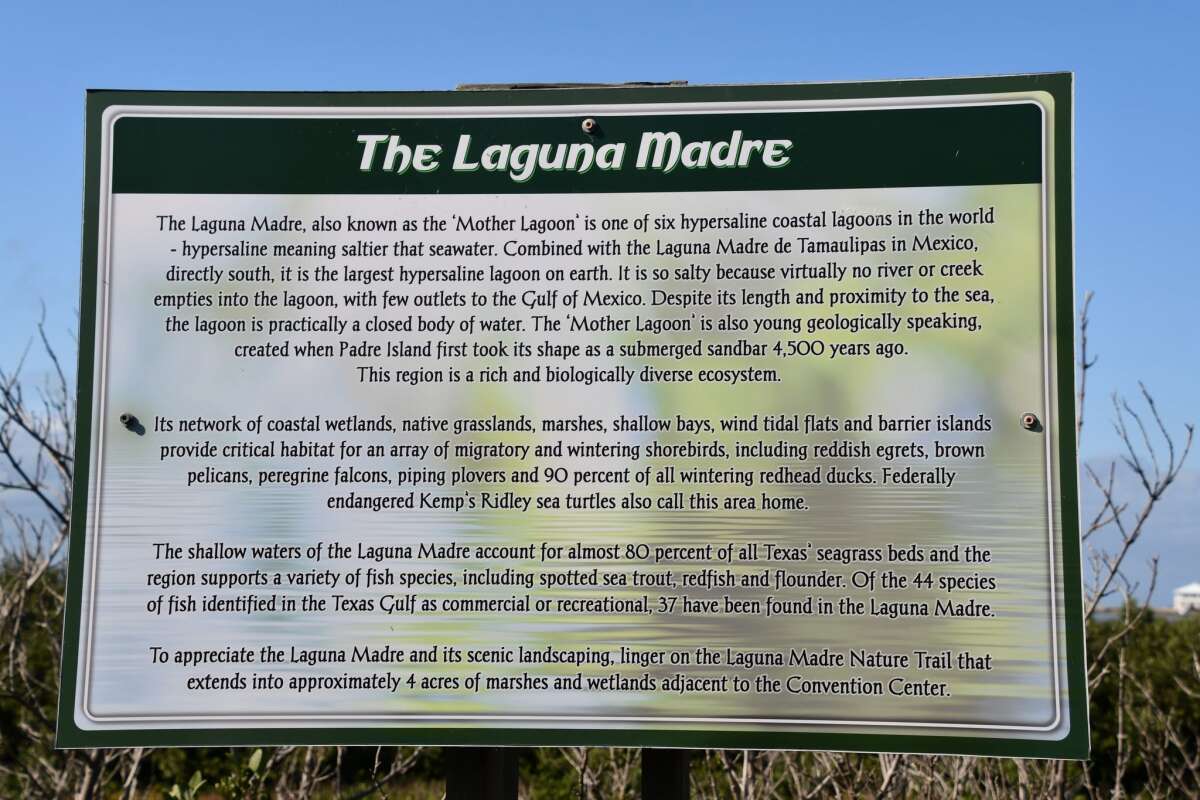
The Laguna Madre, also known as the “Mother Lagoon” is one of six hypersaline coastal lagoons in the world - hypersaline meaning saltier than seawater. Combined with the Laguna Madre de Tamaulipas in Mexico, directly south, it is the largest hypersaline lagoon on earth. It is so salty because virtually no river or creek empties into the lagoon, with few outlets to the Gulf of Mexico. Despite its length and proximity to the sea, the lagoon is practically a closed body of water. The “Mother Lagoon” is also young geologically speaking, created when Padre Island first took its shape as a submerged sandbar 4,500 years ago. This region is a rich and biologically diverse ecosystem.
Its network of coastal wetlands, native grasslands, marshes, shallow bays, wind tidal flats and barrier islands provide critical habitat for an array of migratory and wintering shorebirds, including reddish egrets, brown pelicans, peregrine falcons, piping plovers and 90 percent of all wintering redhead ducks. Federally endangered Kemp’s Ridley sea turtles also call this area home.
The shallow waters of the Laguna Madre account for almost 80 percent of all Texas’ seagrass beds and the region supports a variety of fish species, including spotted sea trout, redfish and flounder. Of the 44 species of fish identified in the Texas Gulf as commercial or recreational, 37 have been found in the Laguna Madre.
To appreciate the Laguna Madre and its scenic landscaping, linger on the Laguna Madre Nature Trail that extends into approximately 4 acres of marshes and wetlands adjacent to the Convention Center.
On one side of South Padre Island stretches the open Gulf of Mexico. On the other lies an entirely different world: the Laguna Madre. Calm, shallow and remarkably rich in wildlife, this expansive coastal lagoon helps define the landscape, recreation and natural character of South Padre Island. Its wetlands, seagrass beds, tidal flats and protected waters provide habitat for fish, birds and other wildlife while creating exceptional opportunities for fishing, kayaking, paddleboarding, boating, birdwatching and sunset cruises.
Laguna Madre means "Mother Lagoon" in Spanish, an appropriate name for an ecosystem that supports an extraordinary amount of life. The lagoon extends along the western side of Padre Island, separating the barrier island from mainland South Texas. Around South Padre Island, its protected waters provide a striking contrast to the surf and waves of the Gulf. Travelers can watch sunrise over the Gulf in the morning and then cross to the western side of the island to watch sunset over the Laguna Madre that evening.
But the Laguna Madre is much more than a scenic backdrop for a South Padre Island vacation. It is a rare hypersaline lagoon, an important nursery and feeding ground for marine life, a nationally significant bird habitat and one of the defining natural features of the Texas Gulf Coast.
What Is the Laguna Madre?
The Laguna Madre is a long, shallow lagoon running behind Padre Island along the South Texas coast. Padre Island acts as a barrier between the lagoon and the Gulf of Mexico, protecting much of the Laguna Madre from the waves and currents of the open Gulf.
The lagoon is traditionally divided into the Upper Laguna Madre and Lower Laguna Madre. South Padre Island, Port Isabel and the surrounding communities sit along the Lower Laguna Madre near the southern end of the system. The upper and lower sections were historically separated by extensive mud and sand flats known as the Saltillo Flats or Land Bridge. Construction of the Gulf Intracoastal Waterway created a permanent navigable connection through this area.
Despite its enormous size, much of the Laguna Madre is surprisingly shallow. Vast areas consist of shallow water, seagrass meadows, marshes, mudflats and wind-driven tidal flats rather than deep open water. This unusual geography is one of the reasons the lagoon is so biologically productive.
One of the World's Rare Hypersaline Lagoons
What makes the Laguna Madre especially unusual is its hypersalinity. A hypersaline lagoon contains water that can be saltier than normal seawater. Very little freshwater flows directly into the Laguna Madre, and its exchange with the Gulf of Mexico is limited compared with many other coastal bays and estuaries. South Texas also experiences high rates of evaporation, which can further concentrate salt in portions of the lagoon.
Only a small number of major hypersaline lagoon systems exist around the world, making the Laguna Madre an unusual natural environment. Plants and animals living here have adapted to conditions that can be challenging for species found in more typical coastal bays.
The result is a fascinating ecosystem that may look quiet from the surface but supports an enormous amount of life beneath the water and throughout the surrounding wetlands.
The Laguna Madre and South Padre Island
The Laguna Madre forms the western boundary of South Padre Island and influences nearly every aspect of island life. While visitors often arrive thinking primarily about the Gulf beaches, many of South Padre Island's most memorable experiences actually take place on or beside the Laguna Madre.
Fishing boats leave local marinas for the shallow bay. Kayakers and paddleboarders explore protected waters. Dolphin and eco tours travel through the Lower Laguna Madre. Birdwatchers walk boardwalks extending across coastal wetlands. Restaurants and bayside venues fill in the evening as visitors gather to watch the sunset.
The lagoon is also the body of water crossed by the Queen Isabella Memorial Causeway connecting South Padre Island with neighboring Port Isabel. Driving across the causeway provides one of the easiest opportunities to appreciate the scale of the Lower Laguna Madre and understand the geography separating the barrier island from mainland Texas.
Laguna Madre Seagrass Meadows
Some of the most important features of the Laguna Madre are hidden beneath its shallow water. Extensive underwater seagrass meadows provide food, shelter and nursery habitat for an extraordinary variety of marine life.
Seagrasses are flowering plants adapted to living underwater. Their submerged meadows help stabilize sediments while providing habitat for small fish, shrimp, crabs and other organisms. Juvenile fish can use the grass for protection from predators while feeding on the abundant life found within these underwater environments.
The Laguna Madre contains the majority of Texas' coastal seagrass habitat, making protection of these underwater meadows especially important. Although visitors may never see the full ecosystem beneath their boat or kayak, these seagrass beds are one of the primary reasons the lagoon supports such productive fisheries and abundant wildlife.
Fish of the Laguna Madre
Fishing is one of the activities most closely associated with the Laguna Madre. Its shallow flats, channels, seagrass beds and tidal areas provide habitat for many of the fish species sought by South Texas anglers.
Spotted seatrout, commonly called speckled trout, and red drum, better known as redfish, are two of the lagoon's signature gamefish. Anglers may also encounter black drum, flounder and other inshore species depending on location, season and water conditions.
The shallow nature of the Lower Laguna Madre creates a particularly interesting style of fishing. Instead of simply targeting deep channels, anglers often search grass flats, drop-offs, potholes and subtle changes in water depth. Experienced local guides understand how wind, water temperature, tides and seasonal movements influence where fish are likely to concentrate.
Fishing the Lower Laguna Madre
South Padre Island and Port Isabel are major starting points for Lower Laguna Madre fishing trips. Numerous local guides and charter captains operate from marinas on both sides of the Queen Isabella Causeway, giving visitors access to one of South Texas' best-known inshore fisheries.
Guided trips can range from relaxed family fishing excursions to specialized outings targeting trophy redfish or speckled trout. A local captain can be particularly valuable for first-time visitors because navigating a shallow bay requires knowledge of channels, seagrass beds and changing water conditions.
Anglers should always check current Texas fishing license requirements, seasons, size limits and bag limits before fishing.
Birdwatching Along the Laguna Madre
The Laguna Madre is equally impressive above the water. Its wetlands, tidal flats, islands, shorelines and shallow waters provide important feeding and resting habitat for an extraordinary variety of birds.
Visitors may encounter great blue herons, great egrets, snowy egrets, reddish egrets, roseate spoonbills, brown pelicans, American white pelicans, ibis, rails, plovers, terns, gulls and numerous species of ducks and shorebirds. Some remain in the region for extended periods while others appear primarily during migration or winter.
Redhead ducks are particularly associated with the Laguna Madre for birdwatching. Large numbers winter in the region, attracted in part by the lagoon's extensive seagrass habitat. During the appropriate season, concentrations of waterfowl can provide an impressive reminder of the ecological importance of this seemingly quiet body of water.
A Major Stop for Migratory Birds
South Padre Island occupies an important position along the Texas Gulf Coast for migrating birds. During spring and fall, birds moving between North America and more southerly wintering areas use the coast as a migration corridor and stopping point.
The Laguna Madre's marshes, tidal flats and surrounding vegetation provide places where birds can rest and feed. Weather can make migration particularly exciting. Changes in wind and storms may cause migrating birds to stop along the coast, occasionally producing remarkable concentrations of birds within a relatively small area.
For this reason, the Laguna Madre should be considered an essential part of a South Padre Island birdwatching trip rather than simply scenery behind the island's nature attractions.
Laguna Madre Nature Trail
One of the easiest ways to experience the lagoon's wetlands without getting into a boat is the Laguna Madre Nature Trail near the South Padre Island Convention Centre. An approximately 1,500-foot boardwalk extends across marsh and wetland habitat toward the Laguna Madre, allowing visitors to walk above an environment that would otherwise be difficult to explore.
The boardwalk provides opportunities to watch birds moving between marsh vegetation, shallow water and open areas. Herons, egrets, rails and other wetland species may be encountered depending on the season and conditions.
The Laguna Madre Nature Trail is free to visit and is particularly enjoyable during the cooler hours of early morning or late afternoon. Bring binoculars and take time to stop along the boardwalk rather than simply walking from one end to the other.
South Padre Island Birding, Nature Center & Alligator Sanctuary
Adjacent to the Laguna Madre Nature Trail is the South Padre Island Birding, Nature Center & Alligator Sanctuary, a separate attraction offering an even more extensive way to explore the wetlands.
More than 3,300 feet of boardwalks travel through wetland habitat, with shaded bird blinds positioned along the route for wildlife observation and photography. Visitors can look for shorebirds, wading birds and other wildlife while exploring the marsh at a relaxed pace.
A five-story observation tower provides a completely different perspective, with panoramic views across the Laguna Madre and surrounding wetlands. The center also includes native gardens, educational exhibits and an alligator sanctuary, making it one of South Padre Island's most substantial nature attractions.
Kayaking the Laguna Madre
Kayaking is one of the most intimate ways to explore the Laguna Madre. Because much of the lagoon is shallow and protected from Gulf surf, paddlers can experience areas of seagrass, wetlands and open water at a slower pace than they would from a powerboat.
Quiet paddling can also improve opportunities for wildlife observation. Birds can often be watched feeding along shallow flats, while fish and other marine life may be visible beneath the water when conditions are clear.
Wind is an important consideration on the Laguna Madre. Even though the water is shallow, strong coastal winds can make paddling considerably more difficult. Less experienced visitors may prefer a guided kayak tour that provides equipment, local knowledge and assistance selecting an appropriate route.
Stand-Up Paddleboarding
The protected waters along portions of the Laguna Madre also make South Padre Island popular for stand-up paddleboarding. Calm mornings can be especially enjoyable, providing smooth water and cooler temperatures before afternoon winds develop.
Paddleboarding provides a high vantage point for looking into shallow water and is a relaxing way to experience the bay when conditions cooperate. Beginners should choose protected areas and pay close attention to wind direction before traveling far from shore.
Windsurfing and Kiteboarding
The same wind that can challenge casual paddlers has helped make the Laguna Madre a destination for wind-powered watersports. Its combination of consistent coastal wind and shallow water creates conditions suited to windsurfing and kiteboarding.
South Padre Island has developed a strong watersports community, and local instructors can introduce beginners to the fundamentals while helping experienced riders understand local conditions. Lessons are strongly recommended for anyone new to kiteboarding.
Dolphin Watching on the Lower Laguna Madre
Bottlenose dolphins are another highlight of the waters surrounding South Padre Island. Dolphin-watching excursions regularly travel through the Lower Laguna Madre and nearby channels in search of these intelligent marine mammals.
Many trips combine dolphin watching with information about the lagoon, marine wildlife and local ecology. This makes an eco cruise a good introduction for families and travelers who want to experience the Laguna Madre without participating in fishing or watersports.
Wild dolphins should always be observed responsibly from an appropriate distance and should never be fed or intentionally disturbed.
Boating on the Laguna Madre
Boating is deeply connected to life around South Padre Island and Port Isabel. Recreational boats, fishing vessels, excursion boats and sailing trips regularly travel the Lower Laguna Madre.
The lagoon's shallow water means boaters need to understand marked channels and submerged seagrass habitat. Responsible boating is particularly important because boat propellers can damage seagrass beds when vessels travel through water that is too shallow.
Visitors without boating experience can still enjoy the lagoon through fishing charters, eco tours, dolphin cruises and sunset excursions operated by local captains.
Sunset on the Laguna Madre
One of the simplest Laguna Madre experiences may also be one of the most memorable. Because the lagoon lies west of South Padre Island, it provides the setting for the island's spectacular evening sunsets.
As the sun drops toward mainland South Texas, the shallow water can reflect shades of orange, gold, pink and purple. Bayside restaurants, marinas, docks and boat cruises provide excellent places to watch the changing sky.
This creates one of South Padre Island's signature daily experiences: watch sunrise over the Gulf of Mexico in the morning and sunset over the Laguna Madre that evening.
Laguna Madre and Port Isabel
The Laguna Madre also connects South Padre Island with nearby Port Isabel. Located across the Queen Isabella Memorial Causeway, Port Isabel developed around fishing, maritime activity and its relationship with the surrounding waters.
Fishing charters, dolphin cruises and boating excursions operate from the Port Isabel waterfront, while restaurants and marinas overlook the bay. Visiting Port Isabel provides another perspective on the lagoon and its importance to the history and economy of the region.
The historic Port Isabel Lighthouse adds a cultural dimension to the trip, making it possible to combine maritime history, local dining and a day on the Laguna Madre.
Wildlife Beyond the Birds
Although birdlife is especially visible, the Laguna Madre supports a much broader food web. Shrimp, crabs and small fish live among its seagrass beds and provide food for larger fish, birds and other predators.
The wider South Padre Island and Laguna Madre region also supports sea turtles and other protected wildlife. The connection between healthy seagrass, abundant fish and larger animals demonstrates why protecting the entire ecosystem is important rather than focusing on any single species.
Why the Laguna Madre Is So Important
The Laguna Madre is valuable because several important habitats exist together within the same ecosystem. Seagrass meadows provide nursery areas for marine life. Wind-tidal flats provide feeding habitat for shorebirds. Marshes support birds, fish and invertebrates, while the barrier island protects the lagoon from the direct force of the Gulf.
These habitats also support the human communities surrounding the lagoon. Recreational fishing, boating, birdwatching, ecotourism and other outdoor activities are important parts of the South Padre Island experience and local economy.
Protecting water quality, wetlands and seagrass therefore benefits both wildlife and the people who depend on the Laguna Madre for recreation and livelihoods.
Protecting the Laguna Madre
The unusual characteristics that make the Laguna Madre special also make responsible recreation important. Seagrass beds can be damaged by boat propellers, wildlife can be disturbed when approached too closely and trash left along shorelines can enter the marine ecosystem.
Visitors can help by properly disposing of fishing line and trash, respecting wildlife, avoiding sensitive nesting areas and following boating regulations. Kayakers and paddleboarders should avoid unnecessarily disturbing birds gathered on shallow flats or islands.
Photographers and birdwatchers should use binoculars and telephoto lenses rather than approaching wildlife simply to get a closer view.
Best Ways to Experience the Laguna Madre
There is no single best way to explore the Laguna Madre because each activity reveals something different about the ecosystem. Birdwatchers can explore boardwalks and wetlands, anglers can spend a morning fishing shallow flats, paddlers can move quietly along protected water and families can join a dolphin or eco tour.
Some of the best Laguna Madre experiences on a South Padre Island vacation include:
- Walking the Laguna Madre Nature Trail boardwalk
- Exploring the boardwalks at the South Padre Island Birding, Nature Center & Alligator Sanctuary
- Watching migratory and coastal birds
- Booking a Lower Laguna Madre fishing charter
- Kayaking or paddleboarding calm sections of the bay
- Taking a dolphin-watching or eco cruise
- Trying windsurfing or kiteboarding
- Exploring the Port Isabel waterfront
- Taking a sunset cruise
- Watching sunset from the western side of South Padre Island
Best Time to Explore the Laguna Madre
The Laguna Madre can be enjoyed throughout the year, but the experience changes with the seasons. Spring and fall can be especially rewarding for birdwatchers because of migration. Summer brings warm conditions and a full range of boating, fishing and watersports, although visitors should plan around the heat and sun.
Winter brings its own wildlife opportunities, including concentrations of wintering waterfowl. Fishing also changes throughout the year as water temperatures, wind and seasonal fish movements influence the lagoon.
Regardless of season, early morning and late afternoon are often particularly pleasant. Temperatures are typically more comfortable, wildlife can be active and the low-angle sunlight creates beautiful conditions for photography.
Experience the Other Side of South Padre Island
The Gulf of Mexico may provide South Padre Island with its famous beaches, but the Laguna Madre provides much of the island's wildlife, fishing culture and quieter natural character. It is a place where shallow water stretches toward the horizon, birds gather over tidal flats, anglers search seagrass beds for redfish and speckled trout, and kayakers can explore an ecosystem that exists in very few places on Earth.
Spend time on both sides of South Padre Island to understand what makes the destination special. Walk the Laguna Madre boardwalks, watch birds from the wetlands, take a fishing or dolphin-watching trip, paddle the shallow water and make time for at least one sunset overlooking the bay.
The Laguna Madre is not simply the water behind South Padre Island. It is one of the defining natural features of the South Texas coast and an essential part of experiencing the wildlife, outdoor recreation and natural beauty of South Padre Island.
Additional Find Rentals Articles

 BOOK DIRECT
 Connect with a Manager