Fill out your information below to send us your rental request. We will review your travel dates
and occupancy and find great rentals to discuss with you before contacting you directly via email or phone.
Land of Waterfalls in the Blue Ridge Mountains of North Carolina
The Blue Ridge Mountains of North Carolina are home to some of the most spectacular waterfalls in the eastern United States. Known as the “Land of Waterfalls,” Western North Carolina features more than 250 waterfalls scattered throughout the region, including Pisgah National Forest, Nantahala National Forest, DuPont State Recreational Forest, the Blue Ridge Parkway, and the surrounding mountain communities. From powerful cascades surrounded by old-growth forests to hidden waterfalls tucked away along scenic mountain trails, the Blue Ridge Mountains offer endless opportunities to experience the beauty, tranquility, and natural power of moving water.
The incredible number of waterfalls throughout Western North Carolina is the result of the region’s unique mountain landscape, abundant rainfall, and ancient geological history. The Blue Ridge Mountains are among the oldest mountain ranges in the world, and over millions of years, rivers and streams have carved deep valleys, dramatic gorges, and rugged rock formations throughout the landscape. As water flows down from the higher elevations, it creates thousands of streams and countless waterfalls. Areas such as Highlands and Cashiers receive some of the highest rainfall levels east of the Mississippi River, helping maintain these beautiful waterfalls throughout the year.
Whether you are searching for an easy roadside waterfall near Asheville, a family-friendly hike near Brevard, a scenic waterfall overlook along the Blue Ridge Parkway, or a secluded mountain adventure near Highlands and Cashiers, North Carolina’s Blue Ridge Mountains offer unforgettable waterfall experiences for every type of traveler. This complete guide explores the best waterfalls throughout the region, including where to find them, what makes each waterfall unique, hiking difficulty, the best times to visit, nearby attractions, and helpful tips to plan your perfect Blue Ridge Mountains waterfall adventure.
Because Western North Carolina covers a large mountain area, the best way to explore waterfalls is by area or region. Each area offers a unique collection of waterfalls, landscapes, hiking experiences, and nearby attractions.
Pisgah National Forest Waterfalls
Located near Asheville and Brevard, Pisgah National Forest is one of the premier waterfall destinations in North Carolina. Covering more than 500,000 acres of mountains, rivers, and forests, Pisgah is home to some of the most famous waterfalls in the Blue Ridge Mountains.
The area surrounding Brevard is often called the "Land of Waterfalls" because of the incredible concentration of waterfalls found throughout Transylvania County.
Visitors can combine waterfall adventures with scenic drives, hiking trails, mountain biking, fishing, camping, and nearby attractions including the Blue Ridge Parkway and the town of Brevard.
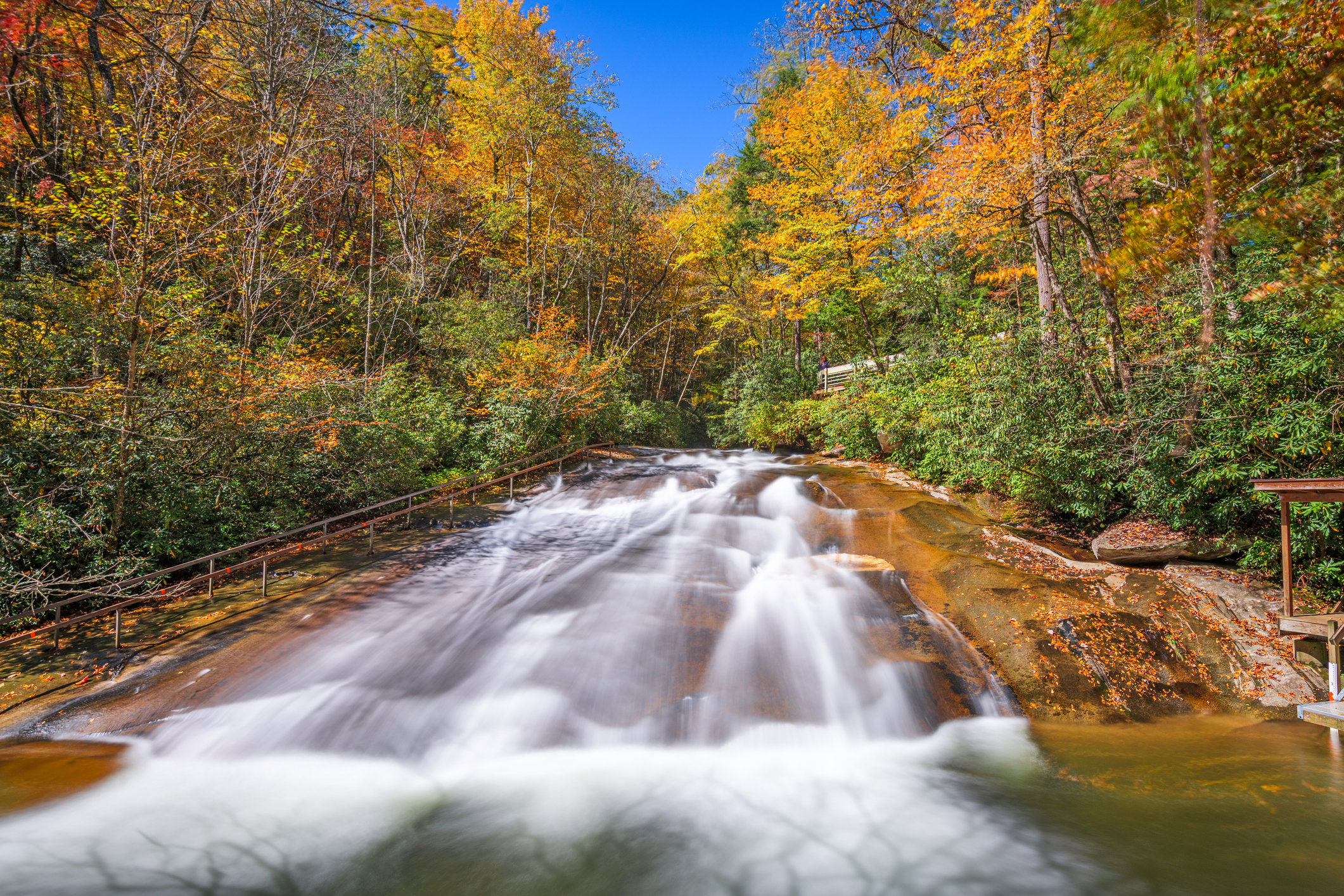
Sliding Rock
Located near Brevard in Pisgah National Forest, Sliding Rock is one of North Carolina's most iconic natural attractions. This unique 60-foot natural waterslide sends visitors gliding down smooth granite into a refreshing mountain plunge pool, making it a favorite summer destination for families and outdoor enthusiasts. Just minutes from Looking Glass Falls and the Blue Ridge Parkway, Sliding Rock offers the perfect combination of adventure, scenic beauty, and unforgettable mountain fun.
Location: Near Brevard, North Carolina, in Pisgah National Forest, approximately seven miles from the Blue Ridge Parkway along U.S. Highway 276.
What It Is: Sliding Rock is a 60-foot natural rock waterslide where cold mountain water flows over smooth granite into an approximately eight-foot-deep plunge pool.
Why It Is Famous: Sliding Rock is one of the most popular outdoor attractions in the Blue Ridge Mountains, giving visitors the opportunity to slide down the natural rock formation into refreshing mountain water.
Nearby Attractions: Sliding Rock is located just minutes from Looking Glass Falls, making the two destinations easy to combine during a waterfall and outdoor adventure near Brevard.
Access: A short paved walkway leads from the parking area to an observation platform, with additional access available for visitors who plan to use the natural waterslide.
Season: Sliding Rock may be visited throughout the year when weather, road, and water conditions allow. Lifeguards are typically present during the main summer season, but visitors should confirm current operating conditions before traveling.
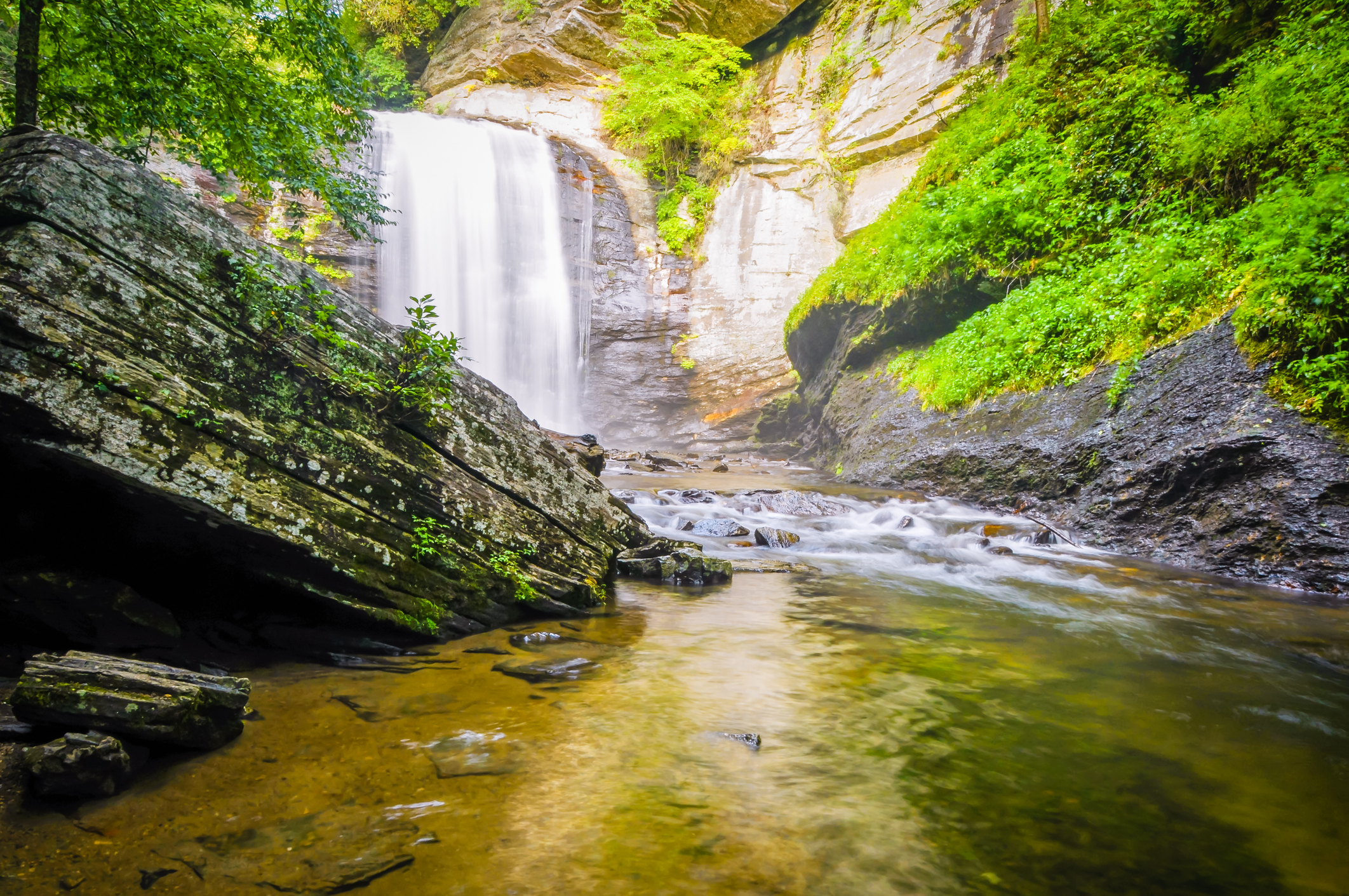
One of the most iconic and photographed waterfalls in North Carolina, Looking Glass Falls is a must-visit destination in Pisgah National Forest. The approximately 60-foot waterfall cascades down Looking Glass Creek and is easily accessible from U.S. Highway 276.
Unlike many mountain waterfalls that require a challenging hike, Looking Glass Falls can be viewed from a roadside overlook, making it one of the best waterfalls for visitors of all ages. A short staircase leads down toward the base of the falls, where visitors can enjoy impressive views and photography opportunities.
The waterfall is beautiful year-round. Spring brings powerful water flow, summer attracts visitors looking to cool off near the creek, fall creates a colorful mountain backdrop, and winter occasionally transforms the falls into a dramatic frozen landscape.
Nearby: Combine your visit with Sliding Rock, Moore Cove Falls, Davidson River, and the scenic roads of Pisgah National Forest.
Hidden within Pisgah National Forest, Moore Cove Falls offers a more peaceful waterfall experience compared to some of the area's more popular destinations. The short forest trail leads visitors through a beautiful mountain landscape before reaching the 50-foot waterfall.
One of the unique features of Moore Cove Falls is that visitors can walk behind the waterfall, creating a memorable experience and excellent photo opportunity.
The trail is relatively easy, making it a great choice for families and travelers looking for a short adventure surrounded by the beauty of the Blue Ridge Mountains.
Nearby: Located close to Looking Glass Falls, Moore Cove Falls is easy to include on a Pisgah National Forest waterfall tour.
While Looking Glass Falls, Sliding Rock, and Moore Cove Falls are among the most well-known waterfalls in Pisgah National Forest, they represent only a small part of what this incredible mountain wilderness has to offer. Throughout Pisgah National Forest, visitors can discover dozens of waterfalls ranging from easy roadside stops to secluded waterfalls reached by peaceful forest trails.
Many of these waterfalls are located near the mountain town of Brevard, which serves as the gateway to some of the best waterfall adventures in North Carolina. The combination of scenic drives, hiking trails, mountain streams, and nearby attractions makes Pisgah National Forest one of the best destinations for waterfall lovers.
Daniel Ridge Falls
Located in the heart of Pisgah National Forest, Daniel Ridge Falls is a beautiful multi-tiered waterfall surrounded by a peaceful mountain forest. Also known as Tom's Spring Falls, this waterfall is located along Daniel Ridge Creek and offers a more secluded experience than some of the easily accessible waterfalls nearby.
The hike to Daniel Ridge Falls takes visitors through a scenic forest landscape with views of rushing streams, moss-covered rocks, and towering hardwood trees. The waterfall itself features a series of cascades flowing over rock ledges, creating a picturesque setting that feels removed from the busier tourist areas.
Daniel Ridge Falls is an excellent choice for hikers who want to experience the quieter side of Pisgah National Forest. The trail can be combined with longer hikes in the Daniel Ridge area, making it a great option for visitors looking to spend several hours exploring the mountains.
Daniel Ridge Falls Quick Facts
Location: Pisgah National Forest
Nearest Town: Brevard
Experience: Forest hike and scenic waterfall
Difficulty: Moderate
Best For: Hiking, photography, solitude
Nearby: Combine your visit with Looking Glass Falls, Sliding Rock, and the Davidson River area.
Courthouse Falls
Courthouse Falls is one of the hidden gems of Pisgah National Forest. Located along Courthouse Creek, this beautiful waterfall features a powerful cascade dropping into a deep blue-green pool surrounded by rugged mountain scenery.
The waterfall is reached by a moderate forest hike that follows a scenic creek through the Nantahala Ranger District area of Pisgah National Forest. The trail provides a true wilderness experience, with moss-covered rocks, flowing streams, and dense mountain forest creating a peaceful atmosphere.
Courthouse Falls is especially popular during warmer months when visitors enjoy the refreshing mountain environment. The pool at the base of the waterfall is scenic, although visitors should always use caution around slippery rocks and changing water conditions.
Courthouse Falls Quick Facts
Location: Pisgah National Forest
Nearest Town: Brevard
Trail: Moderate forest hike
Best For: Adventure seekers, photographers, nature lovers
Scenery: Mountain creek, forest, swimming hole atmosphere
Cove Creek Falls
Cove Creek Falls is a beautiful waterfall located in the northern section of Pisgah National Forest near Brevard. The waterfall is part of the Cove Creek area, which offers peaceful hiking trails, mountain streams, and excellent opportunities to experience the natural beauty of Western North Carolina.
The hike to Cove Creek Falls follows a forest trail through a quiet mountain landscape. Along the way, hikers encounter flowing streams, wildflowers, and the peaceful sounds of the surrounding forest.
Unlike some of the more crowded waterfalls in the region, Cove Creek Falls offers a more relaxed and natural experience. It is a great option for visitors who want to spend time hiking through the Blue Ridge Mountains while discovering a lesser-known waterfall.
Cove Creek Falls Quick Facts
Location: Pisgah National Forest
Nearest Town: Brevard
Experience: Scenic waterfall hike
Difficulty: Moderate
Best For: Hiking and nature photography
Log Hollow Falls
Log Hollow Falls is a peaceful waterfall destination tucked away in Pisgah National Forest. This lesser-known waterfall rewards visitors with a quiet forest experience away from some of the busier attractions in the area.
The short hike to Log Hollow Falls follows a beautiful mountain stream through a lush forest setting. The waterfall features a series of cascades flowing over rocks surrounded by ferns, rhododendron, and native mountain vegetation.
Because it receives fewer visitors than nearby attractions such as Looking Glass Falls, Log Hollow Falls is a wonderful choice for travelers seeking solitude and a more authentic Blue Ridge Mountain experience.
Log Hollow Falls Quick Facts
Location: Pisgah National Forest
Nearest Town: Brevard
Experience: Quiet forest waterfall
Best For: Photography and peaceful hiking
Pink Beds Falls
Located near one of Pisgah National Forest's most scenic areas, Pink Beds Falls offers visitors a peaceful waterfall experience surrounded by one of the most beautiful forest landscapes in the region.
The Pink Beds area is known for its unique mountain ecosystem, open forests, wildflowers, and scenic hiking trails. The waterfall itself is smaller than some of the famous falls nearby, but the surrounding landscape makes it a worthwhile stop for nature lovers.
This area is especially beautiful during spring when wildflowers bloom and during fall when the surrounding forest turns brilliant shades of red, orange, and gold.
Pink Beds Falls Quick Facts
Location: Pisgah National Forest
Nearest Town: Brevard
Best For: Nature walks, photography, fall foliage
Experience: Peaceful forest setting
Planning a Pisgah National Forest Waterfall Tour
One of the best ways to experience the waterfalls of Pisgah National Forest is to create a full-day waterfall adventure. Many of the most popular waterfalls are located within a relatively short drive of one another, allowing visitors to experience several different waterfalls in a single trip.
Afternoon: Visit Sliding Rock or Daniel Ridge Falls
Evening: Enjoy the scenic roads through Pisgah National Forest
Brevard is the perfect basecamp for exploring Pisgah National Forest waterfalls. The town offers restaurants, breweries, shops, lodging, and easy access to some of the most scenic areas in the Blue Ridge Mountains.
DuPont State Recreational Forest Waterfalls
Located between Hendersonville and Brevard, DuPont State Recreational Forest is one of the most popular waterfall destinations in North Carolina. This 12,500-acre forest is famous for its collection of spectacular waterfalls, scenic lakes, hiking trails, and mountain landscapes.
DuPont State Recreational Forest gained national attention after several waterfalls were featured in the movie The Hunger Games, helping introduce this incredible natural area to visitors around the world.
Unlike many mountain waterfall destinations that require difficult hikes, DuPont offers a network of well-maintained trails that allow visitors to experience multiple waterfalls in a single day.
The most famous waterfall loop includes:
Hooker Falls
Triple Falls
High Falls
Bridal Veil Falls
The combination of accessibility, scenery, and multiple waterfalls makes DuPont State Recreational Forest one of the best destinations in the Blue Ridge Mountains for families, photographers, and outdoor enthusiasts.
Hooker Falls
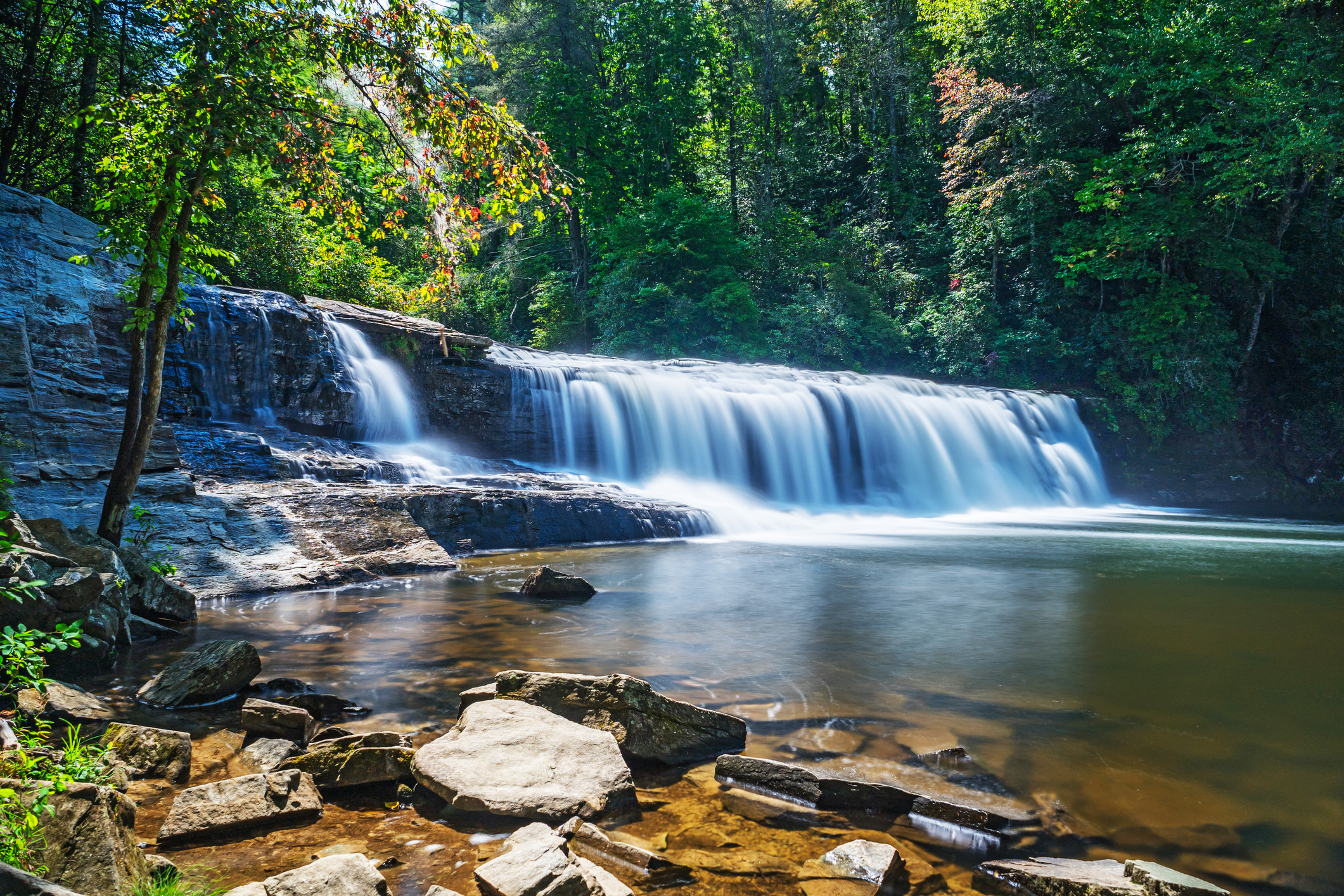
Hooker Falls is often the first waterfall visitors experience when exploring DuPont State Recreational Forest. Located along the Little River, this 12-foot waterfall may not be the tallest waterfall in the park, but its accessibility, scenic setting, and swimming opportunities make it one of the most popular.
The short, easy walk from the parking area makes Hooker Falls an excellent choice for families, older travelers, and visitors who want to enjoy a beautiful waterfall without a strenuous hike.
The waterfall flows over a wide rock ledge into a large pool surrounded by forest. During warmer months, the area becomes a popular spot for visitors looking to relax near the water and enjoy the peaceful mountain setting.
Hooker Falls Quick Facts
Location: DuPont State Recreational Forest
Nearest Town: Brevard / Hendersonville
Height: Approximately 12 feet
Trail Distance: Less than 1 mile round trip
Difficulty: Easy
Best For: Families, swimming, photography
Why Visit Hooker Falls?
Hooker Falls is a great introduction to DuPont State Recreational Forest. It is easy to reach, beautiful throughout the year, and offers a relaxing place to enjoy the scenery of the Blue Ridge Mountains.
Many visitors combine Hooker Falls with Triple Falls and High Falls to create one of the most memorable waterfall hikes in North Carolina.
Triple Falls is one of the most impressive and recognizable waterfalls in DuPont State Recreational Forest. As its name suggests, the waterfall features three separate cascades flowing over a dramatic rock staircase along the Little River.
The combined height and powerful flow of Triple Falls create a spectacular mountain scene, especially after periods of rainfall when the river is running strong. The overlook provides one of the best waterfall views in the entire Blue Ridge Mountains.
The hike to Triple Falls includes a short but steep climb, rewarding visitors with multiple viewpoints along the way. The upper overlook provides a panoramic view of all three sections of the waterfall and is one of the most photographed locations in DuPont.
Triple Falls was featured in The Hunger Games, helping make it one of the most recognized waterfalls in North Carolina.
Triple Falls Quick Facts
Location: DuPont State Recreational Forest
Height: Approximately 120 feet combined
Trail Distance: About 1 mile round trip
Difficulty: Moderate
Best For: Photography, hiking, scenic overlooks
Best Time to Visit Triple Falls
Triple Falls is beautiful in every season. Spring provides strong water flow, summer offers lush green surroundings, fall creates a colorful forest backdrop, and winter reveals the structure of the falls more clearly through bare trees.
High Falls
High Falls is considered by many visitors to be the centerpiece of DuPont State Recreational Forest. This powerful waterfall drops approximately 150 feet over a series of granite ledges along the Little River, creating one of the most dramatic waterfall scenes in Western North Carolina.
A covered bridge near the base of High Falls adds to the scenic beauty and creates one of the most photographed locations in DuPont. The combination of rushing water, mountain forest, and historic-style architecture makes this one of the most memorable waterfall destinations in the region.
Visitors can view High Falls from multiple overlooks, including viewpoints above the waterfall and near the covered bridge below.
High Falls Quick Facts
Location: DuPont State Recreational Forest
Height: Approximately 150 feet
Trail Distance: Approximately 1.2 miles round trip from the visitor area
Difficulty: Moderate
Best For: Photography, sightseeing, scenic walks
Photography Tips for High Falls
Visit early morning for fewer crowds.
Fall foliage creates an incredible backdrop.
After rainfall, the waterfall is especially powerful.
Bridal Veil Falls is one of the most unique waterfalls in DuPont State Recreational Forest. Unlike the powerful cascades of Triple Falls and High Falls, Bridal Veil Falls features a wide, graceful flow of water sliding over a large granite rock face.
The waterfall's name comes from its delicate appearance, resembling a flowing bridal veil as water spreads across the smooth rock surface.
One of the unique features of Bridal Veil Falls is that visitors can walk across the top of the waterfall area and experience the surrounding granite landscape. The open rock formations provide beautiful views of the forest and surrounding mountains.
Bridal Veil Falls Quick Facts
Location: DuPont State Recreational Forest
Height: Approximately 120 feet
Trail Distance: About 4 miles round trip depending on route
Difficulty: Moderate
Best For: Photography, scenic hiking, unique landscapes
Things to Know Before Visiting
The road leading closer to Bridal Veil Falls has limited vehicle access, so many visitors reach the falls by hiking or biking. The journey is part of the experience, with beautiful forest scenery along the way.
Wintergreen Falls
Wintergreen Falls provides a quieter and more secluded waterfall experience compared to the famous waterfalls along DuPont's main waterfall loop. Located in a more remote section of the forest, this waterfall rewards visitors with peaceful surroundings and fewer crowds.
The trail travels through beautiful mountain forest before reaching Wintergreen Creek and the cascading waterfall. The peaceful atmosphere makes this a favorite among hikers who want to enjoy nature away from the busier areas of DuPont.
Wintergreen Falls Quick Facts
Location: DuPont State Recreational Forest
Experience: Quiet forest waterfall
Difficulty: Easy to moderate
Best For: Hiking, solitude, nature photography
Grassy Creek Falls
Grassy Creek Falls is another beautiful waterfall hidden within DuPont State Recreational Forest. Located near Bridal Veil Falls, this smaller cascade offers visitors a peaceful stop along the trail system.
While not as large as High Falls or Triple Falls, Grassy Creek Falls showcases the natural beauty that makes DuPont special flowing mountain streams, moss-covered rocks, and a quiet forest environment.
Grassy Creek Falls Quick Facts
Location: DuPont State Recreational Forest
Experience: Scenic mountain cascade
Best For: Relaxed hiking and photography
Planning Your DuPont State Recreational Forest Waterfall Adventure
DuPont State Recreational Forest is one of the easiest places in North Carolina to create a full-day waterfall adventure. Visitors can experience multiple waterfalls, scenic trails, lakes, and mountain views without traveling long distances between destinations.
Lunch Break: Enjoy a picnic or visit nearby Brevard
Afternoon: Explore High Falls and Bridal Veil Falls
Optional: Add Wintergreen Falls for a quieter hike
For visitors staying in Brevard, Hendersonville, Asheville, or the surrounding Blue Ridge Mountain communities, DuPont State Recreational Forest is one of the top waterfall destinations to include on any itinerary.
Blue Ridge Parkway Waterfalls
The Blue Ridge Parkway is one of the most scenic drives in America and provides access to some of the most beautiful waterfalls in North Carolina. Stretching for 469 miles through the Appalachian Mountains, the Parkway connects Shenandoah National Park in Virginia with Great Smoky Mountains National Park in North Carolina and Tennessee.
The North Carolina section of the Blue Ridge Parkway offers an incredible variety of waterfall experiences. Some waterfalls are located just a short walk from parking areas, while others require hiking through forests, meadows, and mountain terrain.
One of the best ways to explore Blue Ridge Parkway waterfalls is to combine them with scenic overlooks, hiking trails, nearby mountain towns, and other attractions. Destinations such as Asheville, Boone, Blowing Rock, Linville, and Brevard provide excellent home bases for exploring the waterfalls along this iconic mountain road.
From the dramatic gorge of Linville Falls to the peaceful cascades of Graveyard Fields, the Blue Ridge Parkway offers some of the most memorable waterfall adventures in the Blue Ridge Mountains.
Linville Falls
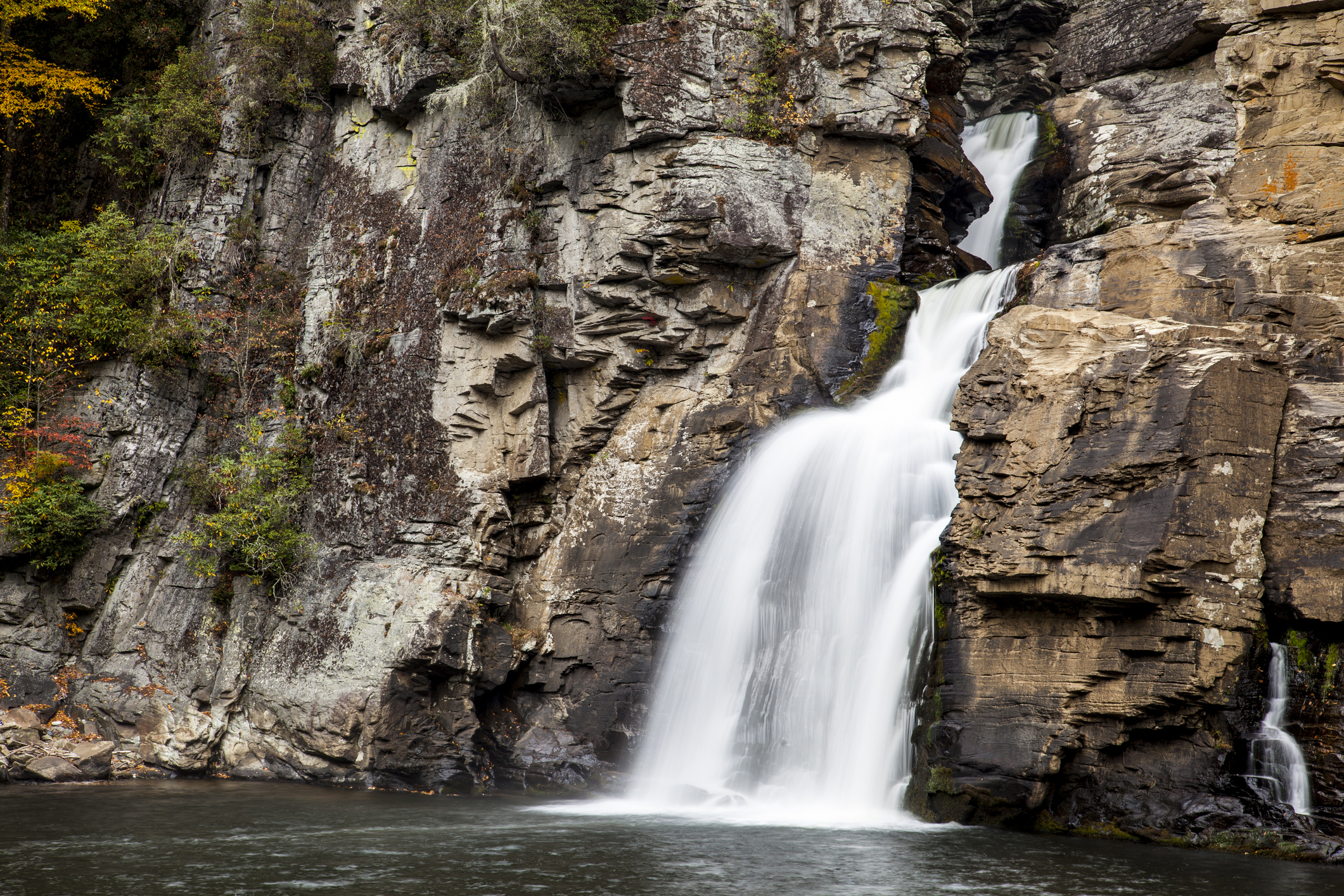
Linville Falls is one of the most famous and impressive waterfalls in the Blue Ridge Mountains of North Carolina. Located along the Blue Ridge Parkway near the towns of Linville and Banner Elk, this powerful waterfall drops through a dramatic gorge carved by the Linville River.
Unlike many waterfalls that feature a single drop, Linville Falls consists of several sections, including an upper cascade, a powerful lower falls, and a deep gorge surrounded by steep mountain cliffs. The combination of rushing water, rugged rock formations, and surrounding forest makes Linville Falls one of the most spectacular waterfall destinations in the state.
Visitors can explore several hiking trails and viewpoints, including the Erwins View Trail, which provides multiple overlooks of the falls and the surrounding Linville Gorge Wilderness.
Linville Falls Quick Facts
Location: Blue Ridge Parkway / Pisgah National Forest
Nearest Town: Linville
Height: Approximately 90 feet
Trail Distance: Multiple options from easy to moderate
Difficulty: Easy to moderate depending on overlook
Best For: Families, photography, scenic hiking
Best Ways to Experience Linville Falls
The Erwins View Trail is the most popular route and offers several viewpoints, including:
Upper Falls View: A close look at the river rushing over the upper cascades.
Chimney View: A dramatic perspective looking into the Linville Gorge.
Erwins View: The classic panoramic view of the waterfall.
For a quieter experience, visitors can explore the Linville Falls Plunge Basin Trail, which provides a closer look at the lower sections of the waterfall.
Crabtree Falls is one of the most beautiful waterfall hikes along the Blue Ridge Parkway. Located near Milepost 339.5, this 70-foot waterfall is surrounded by lush forest, mountain laurel, and rhododendron, making it especially beautiful during spring and summer.
The Crabtree Falls Trail is a rewarding loop hike that takes visitors through a peaceful mountain forest before arriving at the base of the waterfall. The trail includes some elevation changes, but the scenery along the way makes the effort worthwhile.
During autumn, Crabtree Falls becomes one of the most photographed waterfalls on the Parkway as colorful foliage surrounds the cascading water.
Crabtree Falls Quick Facts
Location: Blue Ridge Parkway Milepost 339.5
Nearest Town: Little Switzerland
Height: Approximately 70 feet
Trail Distance: About 2.5 miles loop
Difficulty: Moderate
Best For: Hiking, photography, fall foliage
Tips for Visiting Crabtree Falls
Wear sturdy hiking shoes because the trail can be rocky and slippery.
Visit early in the day during peak fall season.
Allow extra time to enjoy the surrounding Crabtree Meadows area.
Glassmine Falls
Glassmine Falls is one of the most unique waterfalls visible from the Blue Ridge Parkway. Unlike many waterfalls that require a hike, Glassmine Falls can be viewed from a scenic overlook near Milepost 361.2.
The waterfall drops approximately 800 feet down a steep mountain cliff, making it one of the tallest waterfalls in the region. During periods of heavy rainfall, the thin ribbon of water becomes dramatically visible against the dark forest-covered mountainside.
The waterfall gets its name from nearby Glassmine Mountain, which historically contained mica deposits that resembled pieces of glass.
Glassmine Falls Quick Facts
Location: Blue Ridge Parkway Milepost 361.2
Nearest Town: Asheville
Height: Approximately 800 feet
Access: Scenic overlook
Difficulty: Easy
Best For: Scenic views and photography
Best Time to See Glassmine Falls
Because Glassmine Falls is a narrow mountain cascade, it is most impressive after periods of rainfall. A pair of binoculars or a camera with a zoom lens can provide a better view from the overlook.
Skinny Dip Falls
Despite its playful name, Skinny Dip Falls is one of the most scenic waterfall destinations along the Blue Ridge Parkway. Located near Graveyard Fields, this series of cascades along Looking Glass Creek creates a beautiful mountain swimming area surrounded by forest.
The waterfall is reached by a short hike from the Blue Ridge Parkway and features several small cascades, natural pools, and smooth rock formations. During summer, it is a popular destination for visitors looking to cool off in the mountain water.
The trail is especially beautiful during fall when the surrounding mountains display brilliant autumn colors.
Skinny Dip Falls Quick Facts
Location: Near Blue Ridge Parkway Milepost 417
Nearest Town: Asheville / Brevard
Trail Distance: Approximately 1 mile round trip
Difficulty: Moderate
Best For: Swimming, summer hikes, families
Important Safety Note
The rocks around Skinny Dip Falls can become extremely slippery. Visitors should use caution and avoid climbing on wet rocks.
Graveyard Fields Waterfalls
Graveyard Fields is one of the most unique landscapes along the Blue Ridge Parkway. Located near Milepost 418, this high-elevation valley features open meadows, mountain streams, wildflowers, and several waterfalls.
The area received its unusual name because a massive windstorm centuries ago destroyed much of the forest, leaving behind tree stumps that resembled a graveyard. Today, it is one of the most popular hiking destinations in the region.
The two primary waterfalls in Graveyard Fields are:
Second Falls
Upper Falls
Second Falls
Second Falls is the most visited waterfall in Graveyard Fields. A short trail leads from the parking area to a beautiful cascade surrounded by mountain scenery.
The waterfall is especially popular during summer because visitors can enjoy the cool mountain environment and explore nearby streams and trails.
Second Falls Quick Facts
Location: Blue Ridge Parkway Milepost 418
Trail Distance: Approximately 1 mile round trip
Difficulty: Easy to moderate
Best For: Families, photography, summer visits
Upper Falls
Upper Falls requires a longer hike but rewards visitors with a peaceful mountain waterfall experience away from the crowds. The trail passes through open meadows and beautiful high-elevation scenery.
Graveyard Fields Tips
Visit early because the parking area fills quickly.
Bring layers because temperatures are cooler at elevation.
Allow extra time to explore the surrounding trails.
Douglas Falls
Douglas Falls is a hidden gem near the northern section of the Blue Ridge Parkway. Located in the Pisgah National Forest near Asheville, this waterfall offers a more adventurous experience compared to many easily accessible Parkway waterfalls.
The waterfall drops through a beautiful forest setting surrounded by moss-covered rocks and mountain vegetation. The journey to Douglas Falls provides visitors with a true backcountry waterfall experience.
Douglas Falls Quick Facts
Location: Pisgah National Forest near Asheville
Experience: Remote mountain waterfall
Difficulty: Moderate
Best For: Adventure hikers and photographers
Planning Your Blue Ridge Parkway Waterfalls Adventure
The Blue Ridge Parkway offers one of the most scenic waterfall road trips in the United States. Stretching 469 miles through Virginia and North Carolina, the Parkway passes countless waterfalls, hiking trails, scenic overlooks, and mountain landscapes. Whether you're planning a short day trip or a week-long adventure, exploring the waterfalls along the Blue Ridge Parkway is one of the best ways to experience the beauty of the Blue Ridge Mountains.
Recommended Blue Ridge Parkway Waterfall Itinerary
Morning: Start your day with an easy hike to Linville Falls, two of the Parkway's most iconic waterfalls.
Late Morning: Continue to nearby waterfalls such as Crabtree Falls, Glassmine Falls Overlook, or Skinny Dip Falls, depending on your location along the Parkway.
Lunch: Enjoy a picnic at one of the Parkway's scenic overlooks or visit a nearby mountain town like Brevard, Blowing Rock, Asheville, or Little Switzerland for local dining.
Afternoon: Explore another waterfall or combine your visit with a hike, scenic overlook, or visitor center to experience more of the Blue Ridge Mountains.
Sunset: End your adventure at one of the Parkway's breathtaking overlooks, where panoramic mountain views provide the perfect conclusion to your day.
Many travelers choose to spend several days exploring the Blue Ridge Parkway, allowing time to visit multiple waterfalls while enjoying charming mountain towns, scenic drives, hiking trails, wildlife viewing, and local attractions. Whether you're traveling from Asheville, Boone, Blowing Rock, Brevard, Cherokee, or other nearby Blue Ridge Mountain communities, the Parkway provides easy access to some of the most spectacular waterfalls in the Southeast. Plan extra time for frequent photo stops, short hikes, and scenic overlooks you'll quickly discover that the journey along the Blue Ridge Parkway is every bit as memorable as the waterfalls themselves.
Highlands and Cashiers Waterfalls
The Highlands and Cashiers area of North Carolina is one of the most spectacular waterfall destinations in the Blue Ridge Mountains. Located in the southwestern corner of the state, this region is known for its dramatic mountain landscapes, deep river gorges, scenic drives, and some of the highest rainfall totals in the eastern United States.
The abundance of rainfall combined with steep mountain terrain creates the perfect environment for waterfalls. In fact, the Highlands-Cashiers Plateau is often considered one of the best places in North Carolina to experience waterfalls because visitors can find everything from roadside waterfalls to hidden gems requiring scenic hikes.
Many of the waterfalls in this region can be explored along the famous Waterfall Byway, a scenic route through Jackson and Macon counties that connects some of the area's most impressive waterfalls.
The towns of Highlands and Cashiers make excellent bases for exploring waterfalls, offering charming downtown areas, restaurants, lodging, hiking trails, golf courses, and easy access to the surrounding Nantahala National Forest and Nantahala River Gorge.
From the easily accessible beauty of Dry Falls to the powerful cascade of Whitewater Falls, the Highlands-Cashiers area offers some of the most memorable waterfall experiences in the Blue Ridge Mountains.
Dry Falls
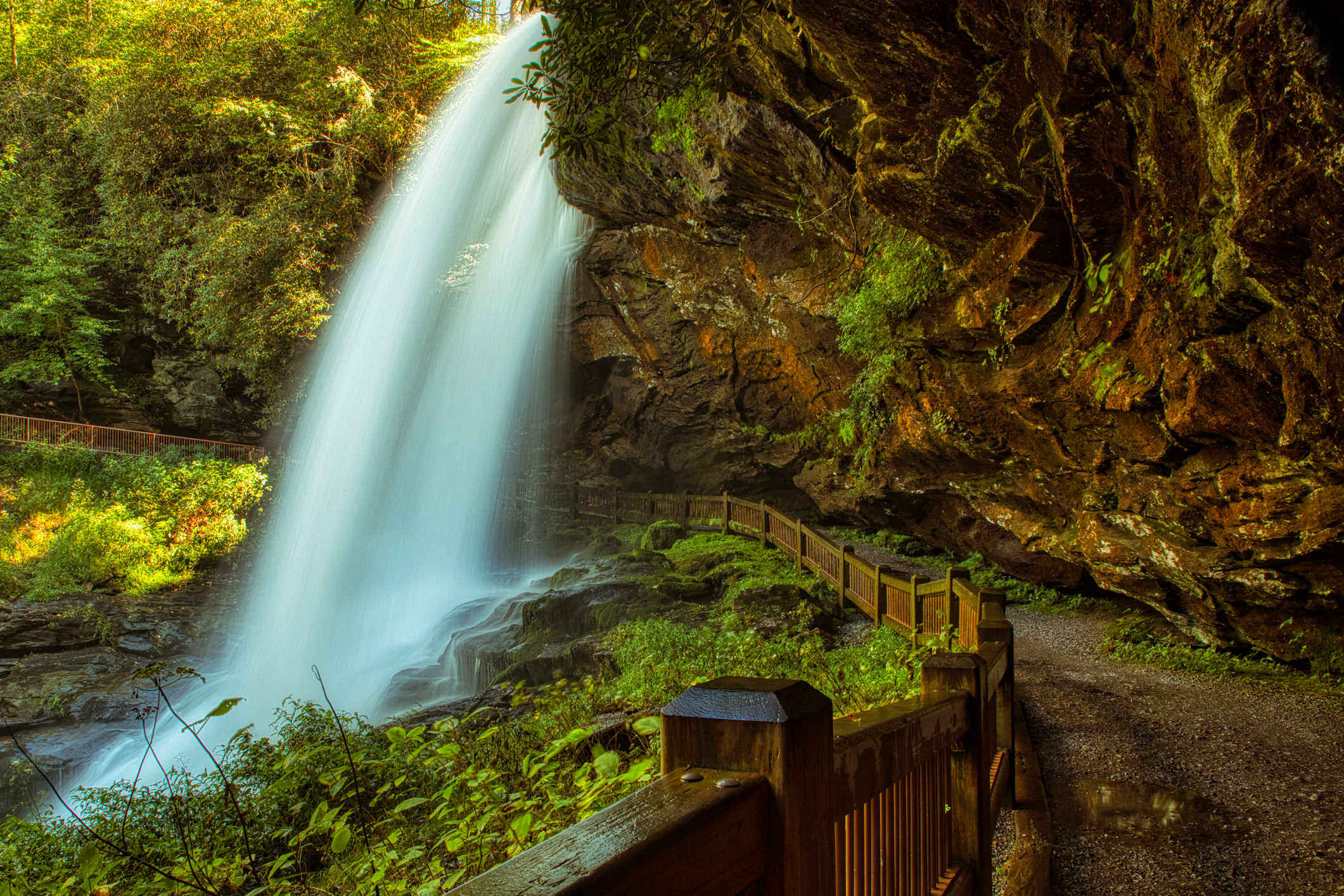
Dry Falls is one of the most famous and unique waterfalls in North Carolina. Located just outside Highlands along U.S. Highway 64, this spectacular waterfall allows visitors to walk behind the cascading water without getting completely soaked, creating one of the most memorable waterfall experiences in the Blue Ridge Mountains.
The waterfall drops approximately 75 feet over a large rock ledge along the Cullasaja River. A paved walkway leads from the parking area down to an observation area and behind the waterfall, where visitors can experience the incredible sensation of standing beneath the rushing water while remaining relatively dry.
The combination of easy access, dramatic scenery, and the ability to walk behind the waterfall makes Dry Falls one of the most popular attractions in Western North Carolina.
Dry Falls Quick Facts
Location: Near Highlands, North Carolina
Height: Approximately 75 feet
Access: Short paved walkway
Difficulty: Easy
Best For: Families, photography, all ages
Best Time to Visit Dry Falls
Dry Falls is beautiful year-round. Spring brings strong water flow, summer offers a refreshing mountain escape, fall creates a stunning backdrop of colorful leaves, and winter occasionally creates impressive ice formations around the rocks.
Because of its popularity, visitors should arrive early during summer weekends and peak fall foliage season.
Located along U.S. Highway 64 near Highlands, Bridal Veil Falls is one of the most recognizable roadside waterfalls in North Carolina. The waterfall earned its name from its delicate curtain-like appearance as water flows over a broad rock face.
Historically, visitors were able to drive behind the waterfall, creating one of the most unique waterfall experiences in the state. While access conditions have changed over time, the falls remain a popular stop for travelers exploring the Highlands area.
The waterfall is especially scenic during periods of higher water flow and provides an easy opportunity to experience the natural beauty of the Blue Ridge Mountains without a long hike.
Bridal Veil Falls Quick Facts
Location: Near Highlands, North Carolina
Access: Roadside viewing area
Difficulty: Easy
Best For: Scenic stops, photography, families
Cullasaja Falls
Cullasaja Falls is one of the most dramatic waterfalls along the scenic Mountain Waters Scenic Byway between Franklin and Highlands. The waterfall is created where the Cullasaja River plunges through a steep mountain gorge surrounded by the Nantahala National Forest.
The waterfall is best viewed from roadside overlooks along U.S. Highway 64. Because the road winds along the mountain cliffs, visitors should use caution when stopping and should only park in designated areas.
Cullasaja Falls is especially impressive after rainfall when the river is flowing strongly through the gorge.
Cullasaja Falls Quick Facts
Location: Cullasaja Gorge near Highlands
Height: Approximately 250 feet
Access: Roadside overlook
Difficulty: Easy viewing
Best For: Scenic drives and photography
Exploring Cullasaja Gorge
One of the best waterfall drives in North Carolina is the route between Franklin and Highlands. Along this scenic stretch, visitors can experience multiple waterfalls, mountain overlooks, forests, and dramatic gorge scenery.
Other nearby stops include Dry Falls, Bridal Veil Falls, and Bust Your Butt Falls.
Glen Falls
Glen Falls is one of the most beautiful waterfall hikes near Highlands. Located in the Nantahala National Forest, this waterfall features three major sections cascading down a steep mountain slope, creating a scenic series of drops surrounded by lush forest.
The Glen Falls Trail provides several viewpoints, allowing hikers to experience different perspectives of the waterfall. The trail descends through a beautiful hardwood forest filled with mountain laurel and rhododendron.
Because the hike back requires climbing uphill, visitors should allow extra time and bring water, especially during warmer months.
Glen Falls Quick Facts
Location: Near Highlands, North Carolina
Height: Multiple cascades totaling more than 70 feet
Trail Distance: Approximately 2 miles round trip
Difficulty: Moderate
Best For: Hiking, photography, nature lovers
Why Visit Glen Falls?
Glen Falls offers one of the best combinations of hiking and waterfall scenery in the Highlands area. The trail provides a true mountain adventure while remaining accessible for most visitors.
Whitewater Falls
Whitewater Falls is one of the most impressive waterfalls in the eastern United States and one of the tallest waterfalls east of the Rocky Mountains. Located near Cashiers in the Nantahala National Forest, Upper Whitewater Falls drops approximately 411 feet into the rugged mountain landscape.
The waterfall is divided into Upper and Lower sections, with the upper falls located in North Carolina and the lower falls extending into South Carolina.
A paved walkway leads visitors to an observation deck overlooking the massive waterfall. More adventurous hikers can continue to additional viewpoints for different perspectives of the falls.
Whitewater Falls Quick Facts
Location: Nantahala National Forest near Cashiers
Height: Approximately 411 feet
Access: Short walk to overlook
Difficulty: Easy to moderate
Best For: Scenic views, photography, families
Best Time to Visit Whitewater Falls
Fall is an especially spectacular time to visit when the surrounding forest becomes filled with autumn colors. Spring and after heavy rainfall are also excellent times because water flow is strongest.
Secret Falls
Secret Falls is one of the hidden gems of the Highlands-Cashiers region. Located in a secluded area near Lake Toxaway, this waterfall rewards visitors with a peaceful forest hike and a beautiful cascading waterfall surrounded by wilderness.
The trail follows a mountain stream through a lush forest before arriving at the falls. The secluded setting makes Secret Falls feel like a true discovery, especially compared to some of the more popular waterfalls nearby.
Secret Falls Quick Facts
Location: Near Lake Toxaway
Experience: Hidden forest waterfall
Difficulty: Moderate
Best For: Adventure seekers and nature lovers
Silver Run Falls
Silver Run Falls is a beautiful and easily accessible waterfall near Cashiers. The short trail leads through a peaceful forest to a wide waterfall flowing over smooth rock into a scenic pool.
Because of its accessibility and relaxing atmosphere, Silver Run Falls is a popular choice for families and visitors looking for a quick waterfall adventure.
Silver Run Falls Quick Facts
Location: Near Cashiers, North Carolina
Trail Distance: Short walk
Difficulty: Easy
Best For: Families, swimming areas, photography
Bust Your Butt Falls
Bust Your Butt Falls is a popular swimming and recreation area located along the Cullasaja River near Highlands. Unlike some waterfalls designed primarily for viewing, this destination is known for its natural swimming area and large rock formations.
During summer, locals and visitors gather here to enjoy the cool mountain water and scenic surroundings. The area should be approached carefully because rocks near waterfalls can be slippery.
Bust Your Butt Falls Quick Facts
Location: Cullasaja Gorge near Highlands
Experience: Swimming hole and cascade
Difficulty: Easy access
Best For: Summer recreation
Planning a Highlands and Cashiers Waterfall Tour
The Highlands-Cashiers area is one of the best places in North Carolina to create a waterfall road trip. Many of the region's waterfalls can be connected through scenic drives, allowing visitors to experience several unique waterfalls in one day.
Suggested Waterfall Itinerary
Morning: Start with Dry Falls and Bridal Veil Falls
Late Morning: Drive through Cullasaja Gorge and visit Cullasaja Falls
Lunch: Explore Highlands or Cashiers
Afternoon: Visit Glen Falls or Silver Run Falls
Optional: Add Whitewater Falls for a larger adventure
With its combination of waterfalls, mountain scenery, charming towns, and outdoor recreation, the Highlands and Cashiers region is one of the premier destinations for waterfall lovers in the Blue Ridge Mountains of North Carolina.
Boone, Blowing Rock & North Carolina High Country Waterfalls
The North Carolina High Country offers a unique waterfall experience unlike any other region in the Blue Ridge Mountains. Located at higher elevations than many surrounding mountain communities, the area surrounding Boone, Blowing Rock, Banner Elk, and the surrounding Blue Ridge Parkway is known for cool mountain temperatures, rushing rivers, dramatic cliffs, and beautiful forest landscapes.
The High Country is home to some of the most scenic waterfalls in North Carolina, ranging from easy roadside stops to rewarding hiking destinations. Many waterfalls are located near popular outdoor attractions including Grandfather Mountain, Julian Price Memorial Park, Moses H. Cone Memorial Park, Linville Gorge, and the Blue Ridge Parkway.
The towns of Boone and Blowing Rock provide excellent bases for exploring these waterfalls. Visitors can combine waterfall adventures with hiking, scenic drives, local restaurants, breweries, shopping, festivals, and mountain activities throughout the year.
Whether you are looking for a family-friendly waterfall near Boone, a scenic hike near Banner Elk, or a peaceful mountain cascade surrounded by forest, the High Country offers some of the most memorable waterfall experiences in North Carolina.
Elk River Falls
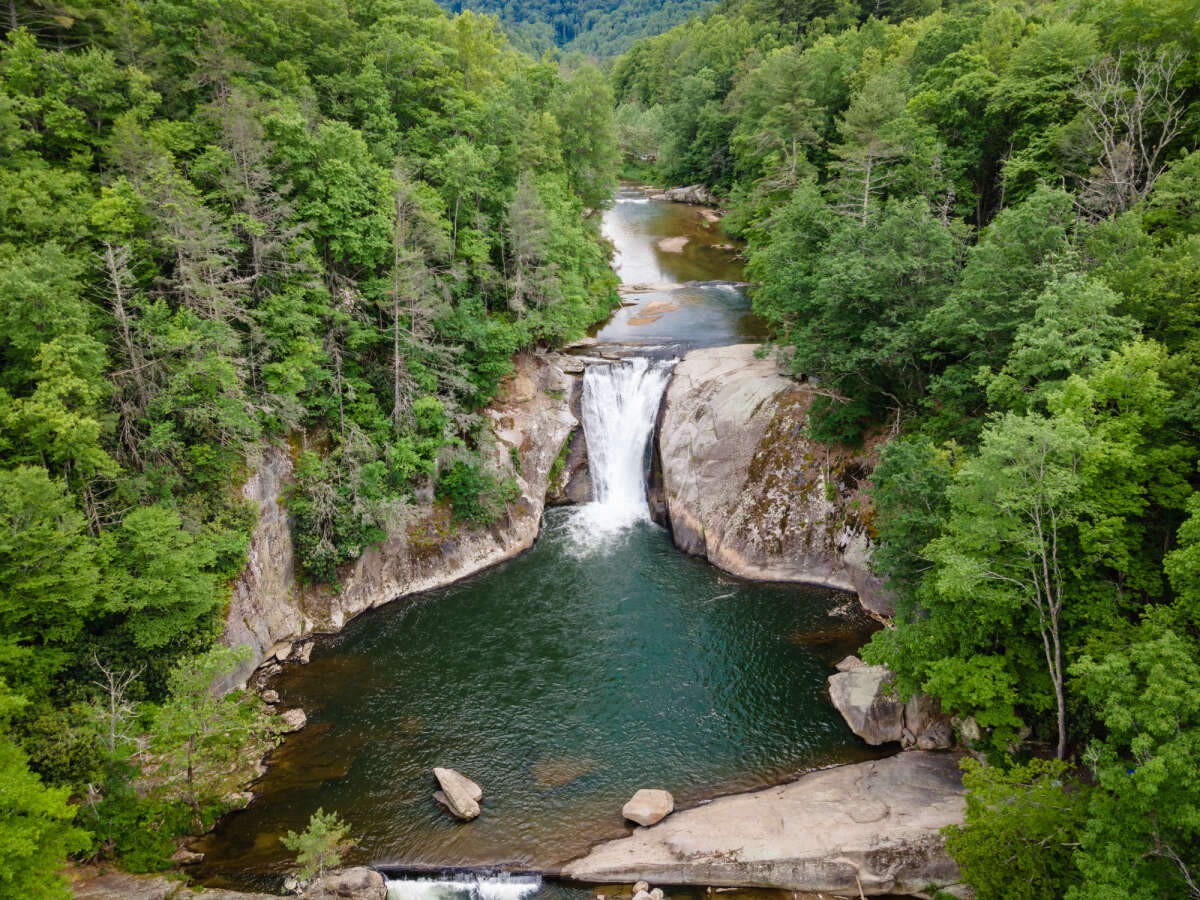
Elk River Falls is one of the most impressive waterfalls in the North Carolina High Country. Located near the community of Elk Park, north of Banner Elk, this powerful waterfall drops approximately 50 feet over a dramatic rock ledge into a large pool surrounded by rugged mountain scenery.
Unlike many waterfalls that feature a narrow cascade, Elk River Falls showcases the raw power of the Appalachian Mountains. The wide curtain of water creates a spectacular sight, especially after periods of heavy rainfall when the Elk River is flowing at its strongest.
A short trail leads visitors from the parking area to viewpoints near the base of the waterfall. The area is popular during summer because of the scenic swimming hole below the falls, although visitors should always use extreme caution around slippery rocks and strong currents.
Elk River Falls Quick Facts
Location: Near Elk Park and Banner Elk
Height: Approximately 50 feet
Trail Distance: Short walk
Difficulty: Easy
Best For: Families, photography, summer visits
Best Time to Visit Elk River Falls
Spring and after heavy rainfall provide the most impressive water flow. Summer is popular for visitors enjoying the surrounding mountain environment, while fall creates a beautiful backdrop of changing leaves.
Located near Seven Devils and Banner Elk, Otter Falls is a beautiful mountain waterfall destination that combines scenic hiking trails with peaceful High Country scenery.
The Otter Falls Trail winds through a forest landscape featuring mountain hardwoods, rock formations, and views of the surrounding valleys. The waterfall itself drops through a series of cascades, creating a relaxing destination that feels removed from the busier attractions nearby.
The trail system includes multiple overlooks, making it a great destination for visitors who enjoy both hiking and photography. During autumn, the surrounding forest becomes especially beautiful as the leaves change colors.
Otter Falls Quick Facts
Location: Seven Devils, North Carolina
Nearest Town: Banner Elk
Trail Distance: Approximately 1.2 miles round trip
Difficulty: Moderate
Best For: Hiking, photography, families
Why Visit Otter Falls?
Otter Falls is a great choice for travelers staying in the High Country who want a waterfall hike that is scenic, manageable, and less crowded than some of the area's more famous destinations.
Hebron Falls (The Cascades)
Hebron Falls, also known as The Cascades, is one of the most scenic waterfalls near Boone. Located along the Middle Fork of the New River, this beautiful cascade combines mountain scenery, easy hiking, and a peaceful forest setting.
The waterfall is located within the Boone Fork Trail system near Julian Price Memorial Park along the Blue Ridge Parkway. The hike follows the river through a beautiful mountain landscape before reaching the cascading falls.
Unlike some of the taller waterfalls in North Carolina, Hebron Falls is more about the overall experience—the sound of rushing water, the surrounding forest, and the opportunity to enjoy a peaceful mountain trail.
Hebron Falls Quick Facts
Location: Julian Price Memorial Park / Blue Ridge Parkway
Nearest Town: Boone
Trail Distance: Approximately 1.5–3 miles depending on route
Difficulty: Moderate
Best For: Hiking, nature lovers, photography
Nearby Attractions
Moses H. Cone Memorial Park
Julian Price Lake
Blowing Rock
Grandfather Mountain
Blue Ridge Parkway overlooks
Cascade Falls
Cascade Falls is one of the most accessible waterfalls in the Boone and Blowing Rock area. Located in E.B. Jeffress Park along the Blue Ridge Parkway, this waterfall offers a short scenic hike through a beautiful mountain forest.
The trail descends through a wooded landscape filled with native plants and mountain scenery before reaching overlooks of the cascading waterfall. The loop trail provides several viewpoints and is a favorite stop for visitors traveling the Parkway.
Cascade Falls Quick Facts
Location: E.B. Jeffress Park, Blue Ridge Parkway
Nearest Town: Boone
Trail Distance: Approximately 1 mile loop
Difficulty: Easy to moderate
Best For: Families, scenic walks, Parkway travelers
Best Time to Visit Cascade Falls
Spring and summer provide lush green scenery, while fall transforms the trail into a colorful mountain experience. Winter can also be beautiful when ice forms along the rocks.
Upper Creek Falls
Located near Linville Falls and the Blue Ridge Parkway, Upper Creek Falls is one of the most scenic waterfall destinations in the High Country. The waterfall area features multiple cascades, swimming holes, rock formations, and hiking opportunities.
The Upper Creek Falls Trail follows the creek through a rugged mountain landscape, offering several viewpoints along the way. Visitors can experience both upper and lower sections of the waterfall, each offering a different perspective.
The area is especially popular during summer when visitors enjoy the cool mountain water and natural scenery.
Upper Creek Falls Quick Facts
Location: Near Linville Falls
Nearest Town: Banner Elk / Linville
Trail Distance: Approximately 2 miles round trip
Difficulty: Moderate
Best For: Hiking, swimming, adventure
Safety at Upper Creek Falls
The rocks around Upper Creek Falls can be extremely slippery, especially after rainfall. Visitors should use caution near the water and avoid climbing on wet rocks.
Linville Gorge Waterfalls
The Linville Gorge Wilderness is one of the most dramatic landscapes in North Carolina. Often called the "Grand Canyon of the East," this rugged wilderness area features steep cliffs, deep forests, the Linville River, and several beautiful waterfalls.
While Linville Falls is the most famous waterfall in the area, adventurous visitors can discover additional cascades throughout the gorge region.
Nearby Waterfall Adventures Include:
Linville Falls
Upper Creek Falls
Duggers Creek Falls
Glen Marie Falls
The Linville Gorge area offers a more rugged waterfall experience compared to some of the easily accessible destinations along the Blue Ridge Parkway. Visitors should be prepared for more challenging terrain and always check trail conditions before exploring.
Planning a High Country Waterfall Adventure
The Boone, Blowing Rock, and Banner Elk area offers enough waterfalls and outdoor attractions to fill several days of exploration. Because many waterfalls are located near scenic drives and popular mountain destinations, visitors can easily combine waterfall adventures with other High Country experiences.
Suggested High Country Waterfall Itinerary
Morning: Visit Cascade Falls along the Blue Ridge Parkway
Late Morning: Explore Julian Price Memorial Park and Hebron Falls
The High Country combines waterfalls, mountain towns, scenic drives, and outdoor adventure, making it one of the best regions in North Carolina for travelers looking to experience the beauty of the Blue Ridge Mountains.
Cherokee, Great Smoky Mountains & Western North Carolina Waterfalls
The far western mountains of North Carolina offer some of the most dramatic and diverse waterfall experiences in the entire Blue Ridge Mountain region. From the cultural heritage and mountain landscapes of Cherokee to the rugged wilderness of the Great Smoky Mountains and Nantahala National Forest, this area provides endless opportunities to discover beautiful waterfalls.
Unlike some waterfall destinations where multiple falls are located close together, the western mountains often reward visitors with a deeper adventure. Many waterfalls are found along scenic drives, forest roads, hiking trails, and mountain streams surrounded by some of the oldest forests in the United States.
The towns of Cherokee, Bryson City, Maggie Valley, Waynesville, and Franklin provide excellent bases for exploring waterfalls throughout Western North Carolina. Visitors can combine waterfall adventures with scenic drives, hiking, fishing, rafting, wildlife viewing, and exploring the rich Appalachian culture of the region.
From the towering beauty of Mingo Falls to the peaceful cascades of Deep Creek, this region showcases the wild and unforgettable side of North Carolina's Blue Ridge Mountains.
Mingo Falls
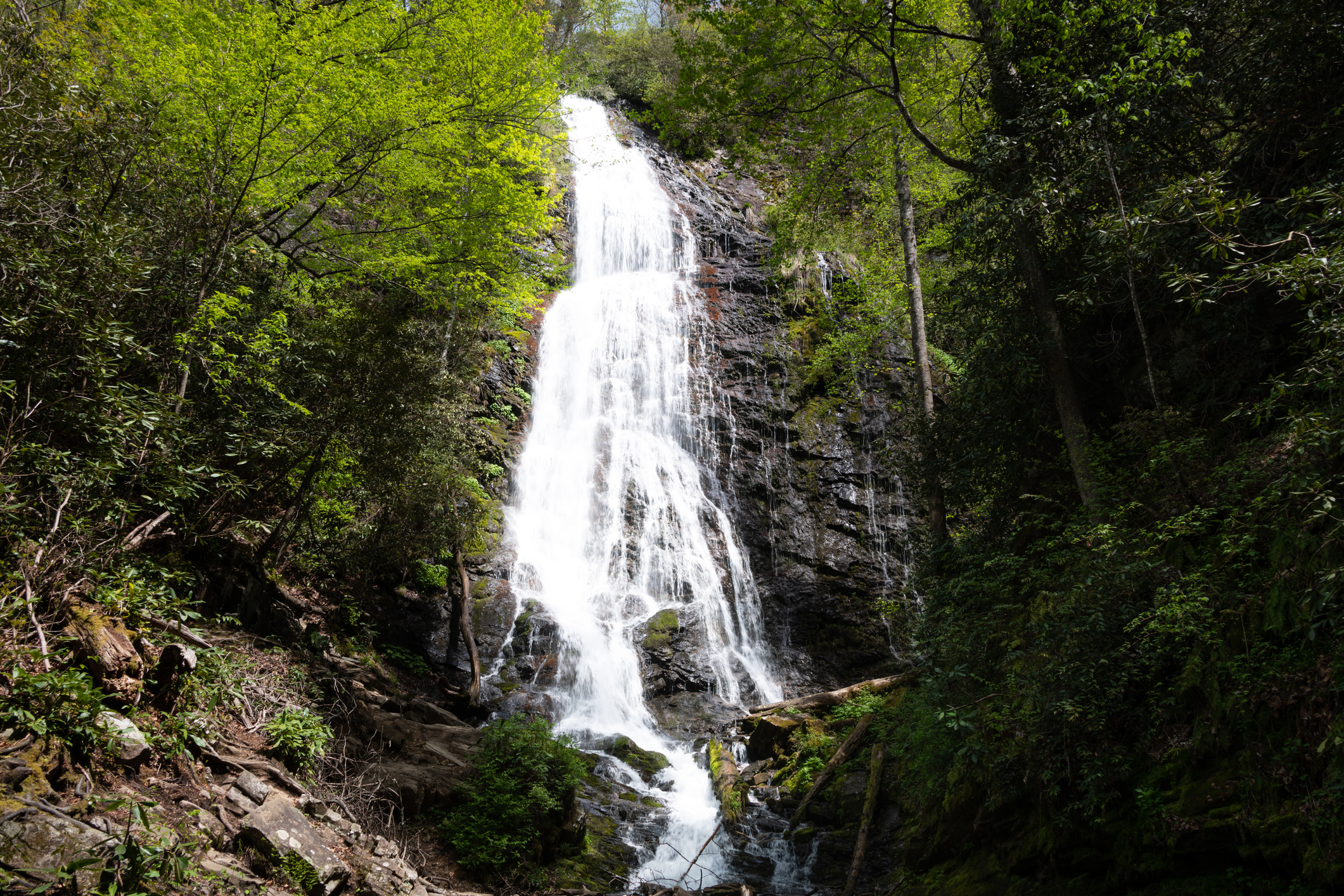
Mingo Falls is one of the most spectacular waterfalls in Western North Carolina and a top attraction near Cherokee. Located on the Qualla Boundary of the Eastern Band of Cherokee Indians, this impressive waterfall drops approximately 120 feet through a narrow mountain gorge surrounded by lush forest.
The waterfall is especially beautiful because of its unique vertical appearance. Water cascades down a series of rock ledges, creating a dramatic scene that feels much larger than many waterfalls in the region.
A short but steep staircase trail leads visitors to an observation bridge at the base of the falls. While the trail includes nearly 160 steps, the reward is one of the most beautiful waterfall views in the Smoky Mountain region.
Mingo Falls Quick Facts
Location: Near Cherokee, North Carolina
Height: Approximately 120 feet
Trail Distance: About 0.3 miles round trip
Difficulty: Easy to moderate due to stairs
Best For: Photography, families, scenic sightseeing
Why Visit Mingo Falls?
Mingo Falls offers one of the best combinations of accessibility and dramatic scenery in Western North Carolina. The short hike makes it possible for many visitors to experience a true mountain waterfall without committing to a long trail.
The waterfall is especially beautiful after rainfall when the water volume increases and the surrounding forest becomes vibrant green. Read the Complete Mingo Falls Guide
Soco Falls
Located between Cherokee and Maggie Valley, Soco Falls is one of the easiest and most unique waterfalls to visit in North Carolina. Unlike most waterfalls that feature a single cascade, Soco Falls consists of two waterfalls flowing together into a scenic mountain creek.
A short trail and viewing platform provide access to this beautiful double waterfall. The upper overlook provides the best overall view, while a short but steep path leads closer to the base for more adventurous visitors.
The waterfall is located along U.S. Highway 19 and makes an excellent stop while traveling between Cherokee, Maggie Valley, and the Blue Ridge Parkway.
Soco Falls Quick Facts
Location: Between Cherokee and Maggie Valley
Access: Short walk from parking area
Difficulty: Easy
Best For: Road trips, photography, families
Nearby Attractions
Blue Ridge Parkway
Oconaluftee Visitor Center
Cherokee attractions
Maggie Valley
Great Smoky Mountains National Park
Deep Creek Waterfalls
Located inside Great Smoky Mountains National Park near Bryson City, the Deep Creek area is one of the best waterfall destinations for visitors who want to experience multiple waterfalls in one adventure.
The Deep Creek area features three primary waterfalls connected by scenic hiking trails:
Tom Branch Falls
Indian Creek Falls
Juney Whank Falls
The trails follow beautiful mountain streams surrounded by old-growth forest, making this one of the most peaceful waterfall experiences in the Smokies.
Deep Creek is also known for tubing during warmer months, making it a popular destination for families and outdoor enthusiasts.
Tom Branch Falls
Tom Branch Falls is one of the easiest waterfalls to experience in Great Smoky Mountains National Park. Located near the Deep Creek picnic area, this waterfall can be viewed from an easy walking path alongside the creek.
The waterfall drops approximately 60 feet into Deep Creek and creates a beautiful scene surrounded by dense forest. Because of its accessibility, Tom Branch Falls is an excellent choice for visitors of all ages.
Tom Branch Falls Quick Facts
Location: Great Smoky Mountains National Park - Deep Creek
Height: Approximately 60 feet
Access: Easy walking trail
Difficulty: Easy
Best For: Families, photographers, casual visitors
Indian Creek Falls
Indian Creek Falls is one of the most popular waterfall hikes in the Deep Creek area of Great Smoky Mountains National Park. The waterfall drops approximately 25 feet over a wide rock ledge and creates a beautiful mountain setting.
The hike to Indian Creek Falls follows the creek through a peaceful forest environment. The trail is part of the larger Deep Creek waterfall loop, allowing visitors to experience multiple waterfalls during one outing.
Indian Creek Falls Quick Facts
Location: Great Smoky Mountains National Park
Height: Approximately 25 feet
Trail Distance: About 1.6 miles round trip
Difficulty: Easy to moderate
Best For: Families, hiking, nature lovers
Juney Whank Falls
Juney Whank Falls is one of the most scenic waterfalls in the Deep Creek area. A short loop trail leads hikers through the forest to a wooden bridge crossing in front of the waterfall.
The waterfall features multiple cascades flowing down a narrow mountain stream, creating a beautiful and intimate waterfall experience.
Because the trail is short and the scenery is excellent, Juney Whank Falls is one of the most rewarding quick hikes in Great Smoky Mountains National Park.
Juney Whank Falls Quick Facts
Location: Great Smoky Mountains National Park
Height: Approximately 90 feet
Trail Distance: About 0.8 miles round trip
Difficulty: Moderate
Best For: Photography and scenic hiking
Mouse Creek Falls
Mouse Creek Falls is a beautiful backcountry waterfall located in the Big Creek area of Great Smoky Mountains National Park. Unlike some of the easily accessible waterfalls in the region, reaching Mouse Creek Falls requires a longer hike, making it a rewarding destination for experienced hikers.
The trail follows Big Creek through a stunning mountain landscape filled with rushing water, forest scenery, and peaceful wilderness.
The waterfall drops approximately 45 feet and provides a beautiful destination for visitors looking for a more remote Smoky Mountain adventure.
Mouse Creek Falls Quick Facts
Location: Great Smoky Mountains National Park - Big Creek
Height: Approximately 45 feet
Trail Distance: Approximately 4 miles round trip
Difficulty: Moderate
Best For: Experienced hikers, solitude, nature lovers
Rainbow Falls
Rainbow Falls is one of the most famous waterfall hikes in Western North Carolina. Located in Pisgah National Forest near Lake Toxaway and Brevard, this powerful waterfall drops approximately 150 feet over a granite cliff along the Horsepasture River.
The waterfall gets its name from the rainbows that often appear in the mist on sunny afternoons. The combination of height, power, and surrounding mountain scenery makes Rainbow Falls one of the most spectacular waterfalls in the region.
The hike follows the river through a beautiful forest and includes several scenic viewpoints along the way.
Rainbow Falls Quick Facts
Location: Pisgah National Forest
Height: Approximately 150 feet
Trail Distance: About 3 miles round trip
Difficulty: Moderate to strenuous
Best For: Hiking, photography, adventure
Planning a Western North Carolina Waterfall Adventure
Western North Carolina waterfalls are best explored slowly. The region covers a large area, and many waterfalls are located along scenic mountain roads where the journey is just as beautiful as the destination.
Suggested Western North Carolina Waterfall Itinerary
Day 1: Cherokee - Mingo Falls, Soco Falls, Great Smoky Mountains
Day 2: Deep Creek waterfalls near Bryson City
Day 3: Nantahala National Forest and surrounding waterfalls
Day 4: Pisgah National Forest waterfalls near Brevard
The western mountains provide the perfect combination of waterfalls, scenic drives, outdoor adventure, and Appalachian culture. Whether you are planning a weekend getaway or a longer mountain vacation, this region offers some of the most unforgettable waterfall experiences in North Carolina.
Best Waterfalls in the Blue Ridge Mountains of North Carolina by Experience
With hundreds of waterfalls spread throughout Western North Carolina, choosing where to go can be overwhelming. The best waterfall depends on what type of adventure you are looking for. Some visitors want an easy waterfall they can enjoy with the entire family, while others are searching for a challenging hike, a secluded mountain escape, or the perfect photography location.
The Blue Ridge Mountains offer waterfalls for every type of traveler. From roadside cascades along the Blue Ridge Parkway to hidden waterfalls deep within national forests, these natural attractions are one of the biggest reasons visitors return to Western North Carolina year after year.
Best Easy-Access Waterfalls in North Carolina
Not every waterfall adventure requires a long hike. Several of North Carolina's most beautiful waterfalls can be enjoyed with minimal walking, making them ideal for families, older travelers, photographers, and visitors who want to experience the mountains without a strenuous trail.
Looking Glass Falls
Located in Pisgah National Forest near Brevard, Looking Glass Falls is one of the best examples of an easily accessible mountain waterfall. Visitors can view the falls from a roadside overlook or walk down a short staircase to get closer to the base.
Its accessibility, year-round beauty, and dramatic 60-foot cascade make it one of the most popular waterfalls in North Carolina.
Dry Falls
Dry Falls near Highlands provides one of the most unique waterfall experiences in the state. Visitors can walk behind the waterfall on a paved pathway, creating a memorable experience for all ages.
Its easy access and spectacular scenery make Dry Falls one of the top waterfall stops in Western North Carolina.
Mingo Falls
Near Cherokee, Mingo Falls combines accessibility with incredible scenery. Although visitors must climb a staircase trail, the short distance and dramatic 120-foot waterfall make the effort worthwhile.
Best Waterfalls for Families
Families visiting the Blue Ridge Mountains will find many waterfalls that combine beautiful scenery with manageable trails. These destinations provide opportunities for children and adults to enjoy nature together while experiencing one of North Carolina's most iconic landscapes.
Looking Glass Falls: Easy access and impressive views.
Hooker Falls: Easy trail and scenic swimming area.
Soco Falls: Short walk with dramatic double waterfall views.
Tom Branch Falls: Easy walk in Great Smoky Mountains National Park.
Cascade Falls: Family-friendly Blue Ridge Parkway hike.
When visiting waterfalls with children, always supervise closely around water and slippery rocks. Even shallow mountain streams can become dangerous after rainfall.
Best Waterfalls for Swimming in North Carolina
One of the best ways to enjoy the Blue Ridge Mountains during summer is by visiting waterfalls with natural swimming areas. The cool mountain water provides a refreshing escape from warm temperatures.
Popular Swimming Waterfalls Include:
Sliding Rock: A famous natural waterslide near Brevard.
Hooker Falls: Popular swimming area in DuPont State Recreational Forest.
Elk River Falls: Large swimming area below a powerful waterfall.
Skinny Dip Falls: Scenic swimming holes along the Blue Ridge Parkway.
Bust Your Butt Falls: Popular summer recreation area near Highlands.
Deep Creek Waterfalls: Swimming, tubing, and waterfall exploration near Bryson City.
Always check local regulations before swimming. Conditions around waterfalls can change quickly, and rocks near waterfalls are often extremely slippery.
Best Waterfalls for Photography
The Blue Ridge Mountains are a paradise for photographers. Waterfalls surrounded by old-growth forests, mountain cliffs, colorful foliage, and dramatic landscapes provide endless opportunities for capturing incredible images.
Top Photography Waterfalls:
Linville Falls: Dramatic gorge views and multiple overlooks.
High Falls: Covered bridge and waterfall combination in DuPont State Recreational Forest.
Triple Falls: One of the most recognizable waterfall scenes in North Carolina.
Whitewater Falls: Massive waterfall surrounded by mountain scenery.
Rainbow Falls: Known for mist-created rainbows on sunny days.
Crabtree Falls: Beautiful forest setting, especially during fall.
Waterfall Photography Tips
Visit early morning for softer light and fewer crowds.
Use a tripod for long exposure photographs.
Bring a lens cloth because waterfall mist can cover your camera lens.
Spring and fall often provide the best combination of water flow and scenery.
Respect trail closures and protected areas while photographing.
Best Waterfalls for Fall Foliage
Fall is one of the most magical times to visit the Blue Ridge Mountains. Waterfalls surrounded by colorful forests create some of the most beautiful scenery in North Carolina.
Best Fall Waterfall Destinations:
Linville Falls: Incredible gorge scenery surrounded by autumn colors.
Crabtree Falls: One of the best fall hikes along the Blue Ridge Parkway.
Graveyard Fields: High-elevation scenery and colorful mountain landscapes.
High Falls: Beautiful combination of water, forest, and architecture.
Glen Falls: Classic Highlands waterfall surrounded by hardwood forests.
Whitewater Falls: Spectacular mountain views during peak foliage.
Peak fall color varies each year depending on elevation and weather conditions. Higher elevations typically change first, followed by lower mountain valleys.
Best Waterfall Road Trips in North Carolina
One of the best ways to experience Blue Ridge Mountain waterfalls is by creating a scenic waterfall road trip. Many waterfalls are located near beautiful mountain towns, scenic highways, and other attractions.
Blue Ridge Parkway Waterfall Road Trip
Linville Falls
Crabtree Falls
Glassmine Falls Overlook
Skinny Dip Falls
Graveyard Fields
Mount Pisgah area waterfalls
Best Home Bases: Asheville, Boone, Blowing Rock, Brevard
Brevard Waterfall Road Trip
Brevard is one of the best waterfall destinations in North Carolina because of its location near Pisgah National Forest and DuPont State Recreational Forest.
Looking Glass Falls
Moore Cove Falls
Sliding Rock
Triple Falls
High Falls
Hooker Falls
Best Home Base: Brevard, North Carolina
Highlands and Cashiers Waterfall Road Trip
Dry Falls
Bridal Veil Falls
Cullasaja Falls
Glen Falls
Whitewater Falls
Silver Run Falls
Best Home Bases: Highlands, Cashiers, Sapphire, Lake Toxaway
Cherokee and Smoky Mountains Waterfall Road Trip
Mingo Falls
Soco Falls
Tom Branch Falls
Indian Creek Falls
Juney Whank Falls
Mouse Creek Falls
Best Home Bases: Cherokee, Bryson City, Maggie Valley, Waynesville
Tips for Exploring Waterfalls in the Blue Ridge Mountains
A successful waterfall adventure requires a little preparation. Mountain conditions can change quickly, and some waterfalls are located in remote areas.
What to Bring
Comfortable hiking shoes with good traction
Water and snacks
Weather-appropriate clothing
Camera or smartphone
Small backpack
Bug protection during warmer months
Respect the Mountains
Stay on marked trails.
Pack out all trash.
Do not climb on waterfalls.
Protect fragile plants and wildlife.
Follow posted rules and warnings.
The waterfalls of North Carolina are protected natural treasures. Responsible visitors help ensure these places remain beautiful for future generations.
Frequently Asked Questions About North Carolina Waterfalls
How many waterfalls are in North Carolina?
North Carolina has hundreds of waterfalls throughout the Blue Ridge Mountains. Western North Carolina is especially famous for its concentration of waterfalls, with many located in Pisgah National Forest, Nantahala National Forest, and surrounding mountain communities.
What is the tallest waterfall in North Carolina?
Whitewater Falls near Cashiers is one of the tallest waterfalls in the eastern United States, with the upper falls dropping approximately 411 feet.
What is the best waterfall in North Carolina?
The answer depends on what type of experience you want. Popular favorites include Looking Glass Falls for accessibility, Linville Falls for scenery, Dry Falls for uniqueness, Triple Falls for photography, and Whitewater Falls for size.
What is the best time of year to visit waterfalls in North Carolina?
Spring and fall are often considered the best seasons because waterfalls have strong water flow and surrounding landscapes are especially beautiful. Summer is ideal for swimming areas, while winter provides peaceful trails and occasional ice formations.
Are North Carolina waterfalls free to visit?
Many waterfalls located in national forests, state forests, and along the Blue Ridge Parkway are free to visit. Some recreation areas may charge parking or entrance fees to help maintain trails and facilities.
Planning Your Blue Ridge Mountain Waterfall Adventure
Exploring waterfalls in North Carolina can be as simple as pulling off the road for a quick photo stop or as adventurous as hiking several miles through remote mountain forests. Before heading out, it is helpful to understand the type of waterfall experience you are looking for.
Easy Access Waterfalls
Many of North Carolina's most famous waterfalls are surprisingly accessible. These waterfalls are perfect for families, photographers, older travelers, and visitors who want incredible views without a difficult hike.
Examples include:
Looking Glass Falls
Dry Falls
Bridal Veil Falls
Hooker Falls
Linville Falls overlooks
Waterfalls Requiring Hiking
Some of the most rewarding waterfalls require a little more effort. These trails often lead through peaceful forests, along mountain streams, and into areas where you can experience the natural beauty of the Blue Ridge Mountains away from the crowds.
Examples include:
Triple Falls
High Falls
Courthouse Falls
Moore Cove Falls
Crabtree Falls
Best Time to Visit Blue Ridge Mountain Waterfalls
Spring
Spring is one of the best seasons for waterfall viewing. Melting snow, seasonal rainfall, and rushing mountain streams create some of the strongest water flow of the year. Wildflowers also begin blooming throughout the forests, adding another layer of beauty to waterfall hikes.
Summer
Summer is a popular time to explore waterfalls because mountain temperatures are cooler than surrounding areas. Many visitors enjoy swimming holes, creekside trails, and shaded forest hikes during the warmer months.
Fall
Fall may be the most spectacular season for waterfall photography. The colorful leaves of the Blue Ridge Mountains create a dramatic backdrop of reds, oranges, and golds surrounding cascading mountain streams.
Winter
Winter provides a completely different waterfall experience. During cold periods, waterfalls can develop beautiful ice formations, creating incredible photography opportunities. Trails are often less crowded, offering a peaceful mountain experience.
Waterfall Safety Tips
While waterfalls are beautiful, they can also be dangerous. Rocks around waterfalls are often extremely slippery, and mountain streams can rise quickly after heavy rainfall.
Never climb directly on waterfalls or wet rocks.
Use caution near overlooks and steep drop-offs.
Wear proper hiking shoes with good traction.
Be aware of changing weather conditions.
Keep children and pets close near water.
Respect posted warnings and trail closures.
Practice Leave No Trace principles.
Final Thoughts: Exploring the Waterfalls of the Blue Ridge Mountains
The waterfalls of the Blue Ridge Mountains of North Carolina represent some of the most beautiful natural attractions in the Southeast. From easy roadside overlooks to challenging mountain hikes, these waterfalls offer unforgettable experiences for every type of traveler.
Whether you are planning a weekend getaway to Asheville, a mountain vacation in Boone, a romantic escape to Highlands, or a family adventure near Brevard, exploring waterfalls is one of the best ways to experience the beauty of Western North Carolina.
The sound of rushing mountain water, the peacefulness of ancient forests, and the dramatic scenery of the Appalachian Mountains create memories that bring visitors back year after year.
Start planning your Blue Ridge Mountain waterfall adventure and discover why North Carolina truly deserves its reputation as the "Land of Waterfalls."

 BOOK DIRECT
 Connect with a Manager