Mingo Falls
Mingo Falls in Cherokee, NC | One of North Carolina's Tallest Waterfalls
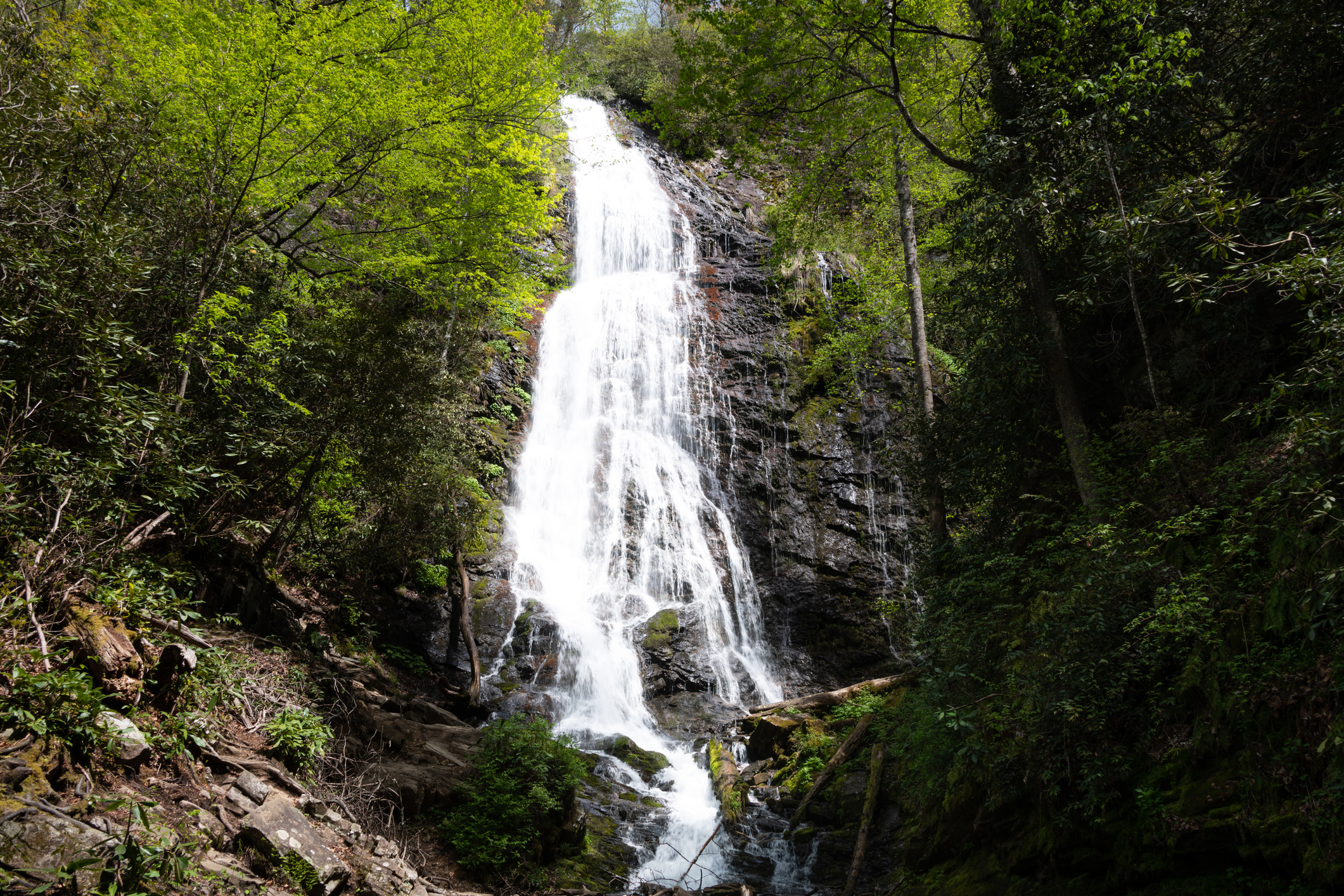
Mingo Falls is one of the tallest and most beautiful waterfalls in the southern Appalachian Mountains. Located on the Qualla Boundary near Cherokee, North Carolina, this impressive waterfall cascades more than 120 feet down a series of moss-covered rocks in a lush mountain forest.
The hike to Mingo Falls is short, but reaching the viewing area requires climbing 161 steep steps. At the top, a wooden footbridge crosses Mingo Creek and provides visitors with a direct view of the waterfall. The combination of dramatic scenery, convenient access and proximity to Cherokee and Great Smoky Mountains National Park makes Mingo Falls one of the best waterfalls to visit in Western North Carolina.
Whether you are planning a Cherokee vacation, exploring the Blue Ridge Parkway or searching for waterfalls near Great Smoky Mountains National Park, this complete Mingo Falls travel guide covers the trail, parking, directions, photography, safety, nearby attractions and everything else you need to plan your visit.
Where Is Mingo Falls?
Mingo Falls is located on the Qualla Boundary, the sovereign homeland of the Eastern Band of Cherokee Indians, near Cherokee, North Carolina. The waterfall is approximately five miles from downtown Cherokee along Big Cove Road.
Although Mingo Falls is often associated with Great Smoky Mountains National Park, it is not located inside the national park. It sits just outside the park boundary and can easily be combined with a visit to the Oconaluftee area, Newfound Gap Road or the southern entrance of the Blue Ridge Parkway.
The waterfall is convenient to several popular Western North Carolina destinations, including:
- Cherokee, North Carolina
- Bryson City, North Carolina
- Maggie Valley, North Carolina
- Great Smoky Mountains National Park
- Blue Ridge Parkway
- Oconaluftee Visitor Center
- Great Smoky Mountains Railroad
Is Mingo Falls in the Blue Ridge Mountains?
Yes. Mingo Falls is located within the southern Appalachian Mountains of Western North Carolina, in the broader Blue Ridge Mountain region. The area surrounding Cherokee is known for forested ridges, rushing mountain streams, waterfalls, scenic drives and access to both Great Smoky Mountains National Park and the Blue Ridge Parkway.
For travelers exploring the Blue Ridge Mountains, Mingo Falls provides a convenient waterfall stop near the southern end of the Blue Ridge Parkway. It can be included in a larger itinerary featuring Cherokee, Bryson City, Maggie Valley and the North Carolina side of Great Smoky Mountains National Park.
Why Visit Mingo Falls?
Mingo Falls delivers an impressive waterfall experience without requiring a long backcountry hike. Visitors can reach the viewing bridge after completing a short but steep trail from the parking area.
Reasons to visit Mingo Falls include:
- It is one of the tallest waterfalls in the southern Appalachians.
- The trail is only about one-half mile round trip.
- A viewing bridge provides a clear view of the waterfall.
- The forest surrounding the falls is beautiful throughout the year.
- It is close to downtown Cherokee and Great Smoky Mountains National Park.
- It offers outstanding waterfall and nature photography.
- There is no general admission fee to visit the falls.
- It can be combined with several other Cherokee attractions in one day.
Mingo Falls is especially appealing to travelers who want to see an impressive waterfall but do not have enough time for a longer mountain hike.
About Mingo Falls
Mingo Falls rises more than 120 feet, making it one of the tallest waterfalls in the southern Appalachian Mountains. Water flows down a long, irregular rock face rather than making a single vertical drop, creating multiple cascades as it descends toward Mingo Creek.
The waterfall can appear dramatically different depending on recent rainfall. During wetter periods, a wide curtain of water pours across the rocks. During drier weather, the cascade may separate into smaller streams that weave through the exposed rock formations.
The Cherokee name associated with Mingo Falls is often translated as Big Bear Falls. The waterfall is located in a culturally significant landscape that has been home to Cherokee people for generations. Visitors should approach the area with respect for both its natural environment and its cultural importance.
Hiking the Mingo Falls Trail
The Mingo Falls hike is approximately one-half mile round trip. Although the distance is short, the trail includes 161 steep steps and may feel more strenuous than its length suggests.
- Trail length: Approximately 0.5 miles round trip
- Route type: Out and back
- Difficulty: Moderate because of the steep staircase
- Estimated hiking time: Approximately 20 to 40 minutes
- Trail surface: Wooden steps, natural trail, rocks and roots
- Main feature: Viewing bridge in front of Mingo Falls
The trail begins directly behind the small parking area. Visitors immediately encounter the long staircase, which climbs beside the forest and Mingo Creek. A handrail assists hikers along much of the staircase.
After completing the steps, the trail continues for a short distance over natural terrain. The path may contain exposed roots, wet rocks and muddy sections, particularly following rain.
The trail ends at a wooden footbridge crossing Mingo Creek. From the bridge, visitors receive a direct view of the waterfall cascading down the mountain ahead.
How Difficult Is the Mingo Falls Hike?
The Mingo Falls trail is commonly described as a short but moderately difficult hike. Most of the challenge comes from climbing the 161 steps between the parking area and the upper portion of the trail.
Visitors who are accustomed to stairs may find the hike manageable, especially when taking their time. However, the climb may be difficult for young children, older adults, people with limited mobility or anyone with heart, breathing, knee or balance concerns.
There are places near the top where visitors can pause before continuing to the viewing bridge. Take breaks as needed, allow faster hikers to pass and avoid rushing up or down the staircase.
Is Mingo Falls Accessible?
Mingo Falls is not considered wheelchair or stroller accessible. The trail begins with a steep staircase and continues over uneven natural terrain before reaching the viewing bridge.
People with limited mobility should carefully consider whether they can safely complete the climb. Even though the trail is short, the number and steepness of the steps can present a significant challenge.
Parking at Mingo Falls
A small parking area is located at the Mingo Falls trailhead near the end of the access road. Parking is limited and can fill quickly during weekends, holidays, summer vacations and the fall foliage season.
Arriving early in the morning is one of the best ways to find a space and experience the waterfall before the trail becomes crowded. Weekdays are generally less busy than Saturdays and Sundays.
Visitors should park only in designated spaces and avoid blocking the access road, nearby properties or emergency routes. If the lot is full, return later rather than parking illegally or creating an unsafe situation.
Because Mingo Falls is on the Qualla Boundary rather than inside Great Smoky Mountains National Park, the national park's parking-tag program does not generally apply to the Mingo Falls trailhead. Regulations can change, so visitors should follow all current signs and local instructions.
Directions to Mingo Falls
From the Saunooke Village area in Cherokee, travel north on Big Cove Road for approximately five miles. Continue past the Cherokee KOA campground area and follow signs toward the Mingo Falls parking lot and trailhead.
The trailhead is located just behind the parking area. Navigation apps may identify the destination as Mingo Falls, Mingo Falls Trailhead or Sherrill Cove Road.
Cell service can become unreliable in mountain valleys. Download directions before leaving downtown Cherokee, and pay close attention to road signs as you approach the trailhead.
Best Time to Visit Mingo Falls
Mingo Falls is a beautiful destination throughout the year. Each season offers different water levels, forest scenery and trail conditions.
Spring
Spring is one of the best times to see strong water flow at Mingo Falls. Seasonal rainfall feeds the creek, while new leaves, moss and wildflowers bring fresh color to the forest.
Rain can also make the steps, bridge and natural sections of the trail slippery. Wear shoes with dependable traction and use the handrail when available.
Summer
Summer brings lush green vegetation and warm weather to Cherokee. The shade surrounding Mingo Creek can make the short hike feel cooler than open trails in the region.
Summer is also a busy travel season. Visit early in the morning to improve your chances of finding parking and enjoying a quieter view of the waterfall.
Fall
Autumn transforms the forest around Mingo Falls with shades of yellow, orange and red. The waterfall is a popular addition to a fall foliage trip through Cherokee, Great Smoky Mountains National Park and the Blue Ridge Parkway.
October weekends can be especially busy throughout the Smokies. Allow extra travel time and expect traffic on major scenic routes.
Winter
Winter can provide a peaceful waterfall experience with fewer visitors and clearer views through the bare forest. Freezing weather may produce beautiful ice formations around the rocks.
However, ice can make the staircase and trail extremely dangerous. Check weather conditions before visiting and do not attempt the hike when steps are covered with ice or snow.
Best Time of Day to Visit
Early morning is generally the best time to visit Mingo Falls. Morning visitors often encounter fewer people, cooler temperatures, softer light and occasional mist around the waterfall.
Overcast days can also be excellent for photography because clouds reduce harsh shadows and bright highlights on the water.
Visit during daylight and allow enough time to descend the staircase safely. The trail is not designed for nighttime hiking.
Photography at Mingo Falls
Mingo Falls is one of the most photogenic waterfalls near Cherokee. Its height, layered rock formations, surrounding greenery and wooden viewing bridge create several opportunities for memorable landscape photographs.
Mingo Falls Photography Tips
- Arrive early to photograph the falls before the bridge becomes crowded.
- Use a wide-angle lens to capture the height of the waterfall.
- Try a vertical composition to emphasize the long cascade.
- Use a slower shutter speed to create a smooth-water effect.
- Bring a tripod only if it can be used without blocking the bridge.
- Use a polarizing filter to reduce glare on wet rocks and foliage.
- Protect your camera or phone from mist and rain.
- Use extra caution when the bridge and trail are wet.
The viewing bridge offers the safest and most complete perspective of the waterfall. Do not leave the trail, climb the rocks or enter the creek to obtain a different camera angle.
Safety at Mingo Falls
Waterfalls and mountain streams can be dangerous even when the water appears calm. Rocks may be covered with algae, moss or moisture that makes them unexpectedly slippery.
Visitors should enjoy Mingo Falls from the trail and viewing bridge. Climbing near the waterfall, entering fast-moving water or approaching the top of a cascade can result in serious injury.
Important Mingo Falls Safety Tips
- Wear sturdy shoes with good traction.
- Use the handrail while climbing or descending the steps.
- Walk slowly when the steps are wet.
- Stay on the established trail and viewing bridge.
- Do not climb the rocks around the waterfall.
- Do not enter fast-moving water.
- Keep children under close supervision.
- Do not lean over bridge railings.
- Avoid the trail during icy conditions.
- Turn around if weather or trail conditions become unsafe.
The National Park Service warns that climbing around waterfalls and entering mountain waters can result in serious injuries or drowning. Although Mingo Falls is outside the national park, the same waterfall safety principles apply.
Can You Swim at Mingo Falls?
Mingo Falls should be treated as a sightseeing and photography destination rather than a swimming area. The creek contains rocks, uneven surfaces and moving water, and the environment around the waterfall can become slippery.
Visitors should remain on the established trail and viewing bridge instead of entering the creek or climbing toward the cascade.
Are Pets Allowed at Mingo Falls?
Pet rules and local regulations may change. Visitors planning to bring a dog should confirm current requirements with Cherokee visitor information before arriving.
Where pets are permitted, dogs should remain leashed and under control. Owners should carry out pet waste and prevent animals from approaching other visitors, wildlife, steep terrain or moving water.
What to Bring to Mingo Falls
The hike is short, but bringing a few basic items can make the visit safer and more comfortable.
- Supportive walking or hiking shoes
- Drinking water
- A lightweight rain jacket
- Sun protection
- Insect repellent during warmer months
- A camera or smartphone
- A small bag for carrying out trash
- Downloaded directions or an offline map
A large amount of hiking gear is not necessary for most visitors, but footwear is important because the staircase and natural trail can remain wet after rainfall.
Facilities at Mingo Falls
Mingo Falls is a relatively undeveloped natural attraction. Visitors should not expect the extensive facilities found at a major state park or national park visitor center.
Food, drinking water, visitor information and dependable restroom facilities may not be available at the trailhead. Stop in downtown Cherokee before traveling to the waterfall if you need supplies or services.
Leave No Trace at Mingo Falls
Mingo Falls is located in a culturally important and environmentally sensitive area. Responsible travel helps protect the waterfall and surrounding forest.
- Carry out all trash and personal belongings.
- Stay on the established trail.
- Do not damage plants, trees or rocks.
- Do not carve or paint natural surfaces.
- Keep noise at a respectful level.
- Do not disturb wildlife.
- Respect Cherokee lands, culture and local regulations.
- Leave the area as clean as you found it.
Things to Do Near Mingo Falls
Mingo Falls is close to many of the most popular attractions in Cherokee and the North Carolina Smoky Mountains. Visitors can see the waterfall in the morning and spend the rest of the day exploring Cherokee culture, scenic drives, hiking trails and nearby mountain communities.
Explore Downtown Cherokee
Downtown Cherokee offers restaurants, shops, accommodations, cultural attractions and access to the Oconaluftee River. It is a convenient place to stop before or after visiting Mingo Falls.
Visit the Museum of the Cherokee People
The Museum of the Cherokee People introduces visitors to Cherokee history, culture, language, resilience and artistic traditions. It is an important stop for travelers seeking a deeper understanding of the community they are visiting.
Experience Oconaluftee Indian Village
Oconaluftee Indian Village presents aspects of Cherokee life, history and traditional skills through demonstrations and educational experiences. Seasonal schedules and admission requirements should be checked before visiting.
See Unto These Hills
Unto These Hills is an outdoor drama presenting episodes from Cherokee history. Performances are seasonal, making advance planning and ticket reservations advisable.
Visit Qualla Arts and Crafts Mutual
Qualla Arts and Crafts Mutual showcases authentic work created by enrolled members of the Eastern Band of Cherokee Indians. Visitors can view and purchase basketry, pottery, beadwork, carvings and other traditional and contemporary art.
Explore Oconaluftee Islands Park
Oconaluftee Islands Park provides a relaxing setting along the river in Cherokee. The park is a popular place for walking, picnicking and enjoying the mountain scenery.
Hike or Bike the Fire Mountain Trails
The Fire Mountain Trail System offers routes for hiking, trail running and mountain biking near Cherokee. Trails vary in length and difficulty, providing options for several ability levels.
Visit Great Smoky Mountains National Park
The Oconaluftee entrance to Great Smoky Mountains National Park is only a short drive from Cherokee. Visitors can explore historic buildings, hiking trails, rivers, wildlife-viewing areas and scenic Newfound Gap Road.
Stop at Oconaluftee Visitor Center
Oconaluftee Visitor Center provides exhibits, maps, park information and access to the Mountain Farm Museum. The nearby fields are also known for wildlife sightings, particularly in the early morning and evening.
Drive the Blue Ridge Parkway
The southern end of the Blue Ridge Parkway is near Cherokee. Travelers can enjoy mountain overlooks, hiking trails, picnic areas and access to destinations such as Waterrock Knob.
Ride the Great Smoky Mountains Railroad
The Great Smoky Mountains Railroad operates scenic train excursions from nearby Bryson City. Routes travel through river valleys, forests and mountain landscapes in Western North Carolina.
Nearby Waterfalls
Visitors can combine Mingo Falls with other waterfalls near Cherokee, Maggie Valley and Great Smoky Mountains National Park.
Soco Falls
Soco Falls is a scenic double waterfall located along U.S. Highway 19 between Cherokee and Maggie Valley. A short trail leads from the roadside parking area to a viewing platform.
Juney Whank Falls
Juney Whank Falls is located in the Deep Creek area of Great Smoky Mountains National Park near Bryson City. The waterfall can be reached by a relatively short forest hike.
Tom Branch Falls
Tom Branch Falls is also located in the Deep Creek area. The waterfall can be viewed from the trail as it cascades into Deep Creek.
Indian Creek Falls
Indian Creek Falls can be combined with Tom Branch Falls as part of a longer hike through the Deep Creek area.
Place of a Thousand Drips
Place of a Thousand Drips is a roadside cascade located along Roaring Fork Motor Nature Trail near Gatlinburg. Access to the motor trail may be seasonal.
Where to Stay Near Mingo Falls
Cherokee is the most convenient place to stay when visiting Mingo Falls. The community offers hotels, motels, cabins, cottages, campgrounds and vacation rentals within a short drive of the trailhead.
Additional lodging can be found in:
- Bryson City
- Maggie Valley
- Whittier
- Waynesville
- Sylva
- Dillsboro
Staying near Cherokee makes it easier to visit Mingo Falls early in the morning and provides convenient access to Great Smoky Mountains National Park and the Blue Ridge Parkway.
Where to Eat Near Mingo Falls
Visitors will find restaurants, cafés and casual dining options in downtown Cherokee. Choices may include Southern cooking, barbecue, burgers, breakfast, sandwiches and regional specialties.
Bryson City, Maggie Valley, Sylva and Waynesville offer additional dining options for travelers planning a longer Western North Carolina itinerary.
Planning a Mingo Falls Day Trip
Mingo Falls can easily be included in a half-day or full-day Cherokee itinerary.
Suggested Mingo Falls Itinerary
- Early morning: Arrive at Mingo Falls before the parking area becomes busy.
- Late morning: Visit the Museum of the Cherokee People or Oconaluftee Indian Village.
- Lunch: Eat at a local restaurant in Cherokee.
- Afternoon: Explore Oconaluftee Visitor Center and the Mountain Farm Museum.
- Late afternoon: Drive part of the Blue Ridge Parkway or Newfound Gap Road.
- Evening: Return to Cherokee for dinner or attend a seasonal performance of Unto These Hills.
Travelers interested in waterfalls can replace the afternoon scenic drive with a trip to Soco Falls or the Deep Creek waterfalls near Bryson City.
Frequently Asked Questions About Mingo Falls
What town is Mingo Falls in?
Mingo Falls is located on the Qualla Boundary near Cherokee, North Carolina. The trailhead is approximately five miles from downtown Cherokee along Big Cove Road.
Is Mingo Falls inside Great Smoky Mountains National Park?
No. Mingo Falls is located outside Great Smoky Mountains National Park on the Qualla Boundary. It is close to the park's Oconaluftee entrance and is commonly included in Smoky Mountains itineraries.
How tall is Mingo Falls?
Mingo Falls rises more than 120 feet and is considered one of the tallest waterfalls in the southern Appalachian Mountains.
How long is the Mingo Falls hike?
The hike is approximately one-half mile round trip. The route is short, but it includes 161 steep steps.
How many steps are at Mingo Falls?
Visitors must climb 161 steps to reach the upper trail and viewing bridge at Mingo Falls.
Is the Mingo Falls trail difficult?
The hike is generally rated moderate because of its steep staircase. The distance is short, but the climb can be strenuous for visitors with mobility, knee, heart or breathing concerns.
Is Mingo Falls free to visit?
There is generally no admission fee to visit Mingo Falls. Visitors should follow all current local signs, parking regulations and access requirements.
Is a Great Smoky Mountains parking tag required?
Mingo Falls is on the Qualla Boundary rather than inside Great Smoky Mountains National Park, so the national park parking-tag requirement does not generally apply at the Mingo Falls trailhead. Always check current signs and local rules.
Can you swim at Mingo Falls?
Mingo Falls is best enjoyed from the established trail and viewing bridge. Visitors should not climb around the waterfall or enter fast-moving water.
Is Mingo Falls suitable for children?
Many families visit Mingo Falls, but children must be closely supervised on the steep steps, natural trail and viewing bridge. Parents should consider each child's ability to safely climb and descend 161 steps.
Can older adults hike to Mingo Falls?
The trail may be manageable for active older adults who are comfortable climbing stairs. However, the steep staircase can be challenging. Visitors should take breaks, use the handrail and avoid attempting the trail when conditions are wet or icy.
Are there restrooms at Mingo Falls?
Visitors should not depend on finding restrooms or other developed facilities at the trailhead. Use facilities in Cherokee before traveling to the waterfall.
When is the best time to visit Mingo Falls?
Spring often provides strong water flow, summer offers lush greenery and fall surrounds the waterfall with colorful foliage. Early morning is usually the best time of day for lighter crowds and easier parking.
Is Mingo Falls open year-round?
Access may be affected by severe weather, ice, road conditions, maintenance or temporary local closures. Visitors should check current conditions before traveling.
How far is Mingo Falls from Cherokee?
Mingo Falls is approximately five miles from downtown Cherokee and can usually be reached in about 10 to 15 minutes, depending on traffic and the starting location.
How far is Mingo Falls from the Blue Ridge Parkway?
Mingo Falls is within a short drive of the southern end of the Blue Ridge Parkway near Cherokee, making it an easy addition to a Blue Ridge Mountains road trip.
Tips for Visiting Mingo Falls
- Arrive early to find parking and avoid the largest crowds.
- Wear sturdy shoes with dependable traction.
- Use the handrail on the staircase.
- Take breaks while climbing the 161 steps.
- Use extra caution after rain.
- Do not climb rocks near the waterfall.
- Keep children closely supervised.
- Bring water and use restrooms before arriving.
- Download directions because mobile service may be limited.
- Respect the Qualla Boundary and Cherokee community.
- Carry out all trash.
- Avoid visiting when steps are covered with snow or ice.
Experience Mingo Falls Responsibly
Mingo Falls is one of the most rewarding natural attractions near Cherokee, North Carolina. Its impressive height, layered cascades and beautiful forest setting make it a must-see destination for travelers exploring the Blue Ridge Mountains and the North Carolina Smokies.
The trail may be short, but its 161 steps require preparation and care. Visitors who wear proper footwear, take their time and remain on the designated trail can enjoy a memorable view from the bridge at the base of the waterfall.
Combine Mingo Falls with Cherokee cultural attractions, Great Smoky Mountains National Park, Soco Falls, Bryson City or the Blue Ridge Parkway to create a complete Western North Carolina mountain adventure.
Additional Find Rentals Articles

 BOOK DIRECT
 Connect with a Manager