Park City's Hidden Mining History
Park City's Hidden Mining History: Ghost Towns, Abandoned Mines & Mountain Trails
Long before Park City, Utah, became famous for world-class skiing, luxury mountain retreats, and the lively atmosphere of Historic Main Street, the surrounding Wasatch Mountains were home to one of the American West's great silver-mining communities. Beneath today's ski slopes lies an extraordinary network of tunnels, while weathered mining structures, abandoned equipment, and historic landmarks still stand among the forests and mountainsides.
Exploring Park City's mining history offers you a completely different perspective on this celebrated Utah destination. Beyond the ski lifts and mountain resorts, you can discover the remains of once-prosperous silver mines, walk trails used by generations of miners, visit historic neighborhoods, and uncover the stories of the people who helped build Park City.
Whether you're fascinated by Old West history, enjoy hiking through mountain landscapes, or simply want to discover something unusual during your Utah vacation, Park City's historic sites offer an unforgettable journey into the past.
From Silver Boomtown to World-Famous Mountain Resort
Park City's story began in the late 1860s, when prospectors discovered valuable mineral deposits in the mountains east of Salt Lake City. What started as a rugged mining settlement quickly developed into a thriving community as silver, lead, and other minerals attracted investors, entrepreneurs, and workers from around the world.
By the late 19th century, Park City had become one of Utah's most important mining centers. The Ontario, Silver King, and Daly West mines helped generate enormous wealth, while thousands of miners worked underground in difficult and sometimes dangerous conditions.
Mining shaped nearly every aspect of daily life. Boardinghouses, saloons, churches, schools, and businesses emerged along Main Street. Immigrant communities brought traditions, food, and cultural influences that helped establish the town's distinctive character.
But mining prosperity did not last forever. Changing metal prices, rising operating costs, and declining profitability eventually brought the industry to an end. Park City's last major silver mine, the Ontario, closed in 1982.
Fortunately, the town found a remarkable second life. Beginning in the 1960s, former mining terrain was transformed into ski slopes, helping Park City evolve into one of America's premier mountain vacation destinations.
Today, you can still see reminders of that transformation throughout the mountains. Many historic mining structures remain visible from ski runs, hiking trails, and scenic overlooks.
1. The Silver King Mine: A Giant of Park City's Silver Rush
One of the most important landmarks in Park City's mining history is the Silver King Mine, whose weathered wooden structures remain among the most recognizable reminders of the region's industrial past.
Established in 1892, the Silver King Mining Company became one of Park City's most productive mining enterprises. Its operations helped generate extraordinary wealth while providing employment for generations of local miners.
The mine complex once included extensive machinery, ore-processing facilities, transportation systems, and buildings that supported workers high in the mountains.
Today, the surviving Silver King structures offer a fascinating contrast to the modern ski resort surrounding them. Weathered timbers and historic industrial remains stand against a backdrop of alpine scenery, creating one of Park City's most distinctive photographic subjects.
What Makes the Silver King Mine Special?
- It played a major role in Park City's economic development.
- Historic mining structures remain visible on the mountain.
- Its location offers scenic views of the surrounding Wasatch Mountains.
- It is a featured stop along the Park City Historic Mine Route.
- It connects the town's mining heritage directly with its modern skiing culture.
Travel Tip: Explore the Silver King area using designated public trails and official historic routes. Mining structures may be fragile, and abandoned shafts or tunnels should never be entered.
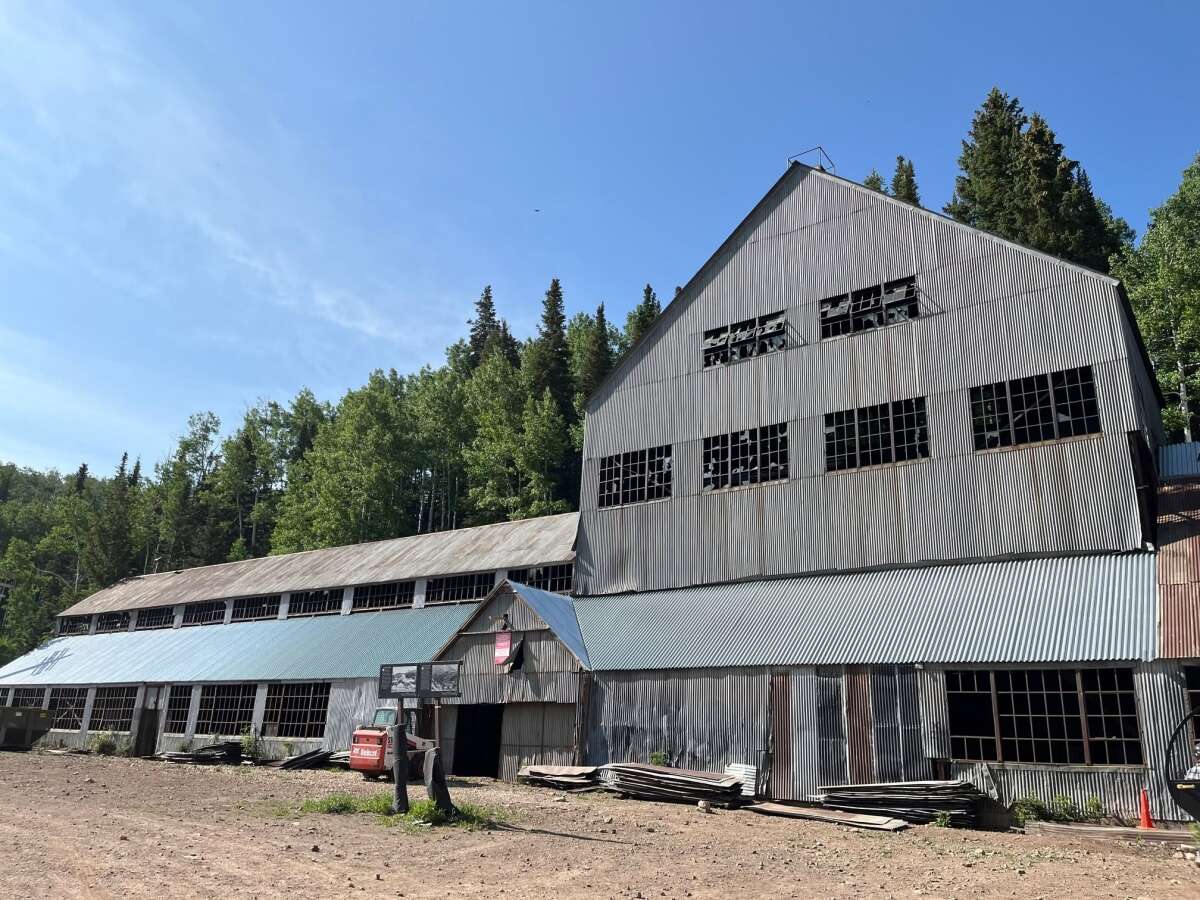
2. The Ontario Mine: The Silver Discovery That Helped Build a Fortune
The Ontario Mine is another essential chapter in Park City's history. Developed during the 1870s, the mine became one of the most successful silver-producing operations in the American West.
Mining entrepreneur George Hearst acquired the Ontario claim in 1872, helping establish the foundation of a fortune that would become closely associated with the influential Hearst family.
Ontario's underground operations eventually extended thousands of feet beneath the mountains. Engineers constructed shafts, drainage tunnels, and complex transportation systems to extract ore and control the groundwater that constantly threatened mining operations.
Water management was one of the greatest engineering challenges. The Ontario drainage tunnels became important not only to mining but also to Park City's long-term water infrastructure.
Although the original mine is no longer operating, remnants of the Ontario mining and milling operations can be explored through historic interpretation sites in the Empire Canyon area.
Interesting Fact: Park City's mining legacy extends far beneath the surface. More than 1,000 miles of historic mine tunnels have been documented beneath the surrounding mountains and community.
3. Daly West Mine: The Dangerous Reality of Underground Mining
Not every chapter of Park City's silver boom was prosperous or glamorous. The Daly West Mine tells a much darker story about the risks miners faced underground.
In 1902, an underground explosion at the Daly West Mine triggered a deadly disaster. Poisonous gases traveled through connected mine workings, killing miners in both the Daly West and neighboring Ontario operations.
The tragedy remains one of the most devastating events in Park City's mining history and illustrates the extraordinary dangers associated with underground mining at the turn of the 20th century.
Historic mining remains in Empire Canyon help tell the story of these operations, including structures associated with the Daly-Judge Mining Company.
As you explore the area, it's worth remembering that the picturesque wooden structures and rusted equipment represent an industry built through demanding physical labor, technological innovation, and significant personal sacrifice.
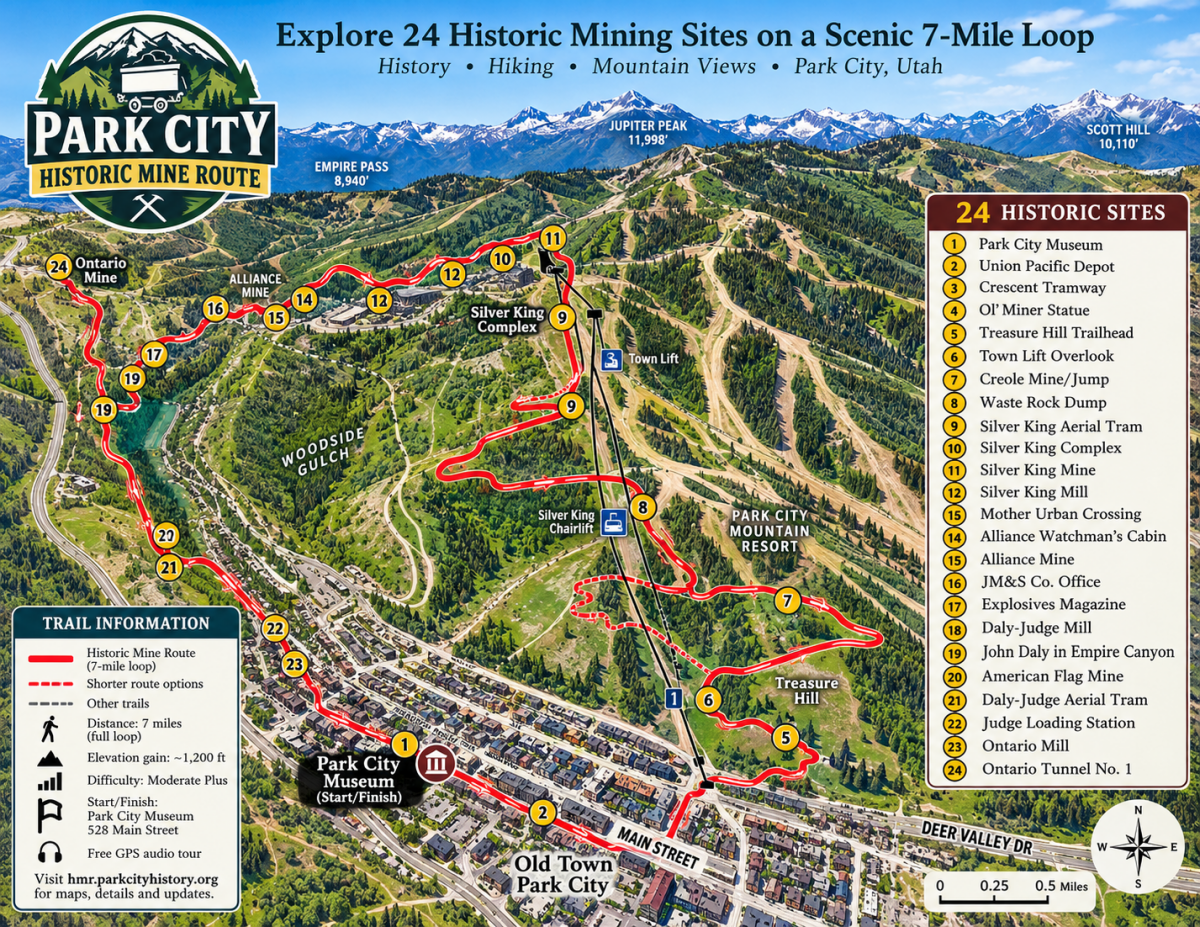
4. The Historic Mine Route: Walk Through 24 Chapters of Park City's Past
One of the most exciting ways to experience Park City's mining heritage is the Park City Historic Mine Route, a self-guided trail experience introduced in September 2026.
This approximately seven-mile loop connects 24 historic sites, combining mountain hiking, preserved mining structures, interpretive signs, and a free GPS-triggered audio tour.
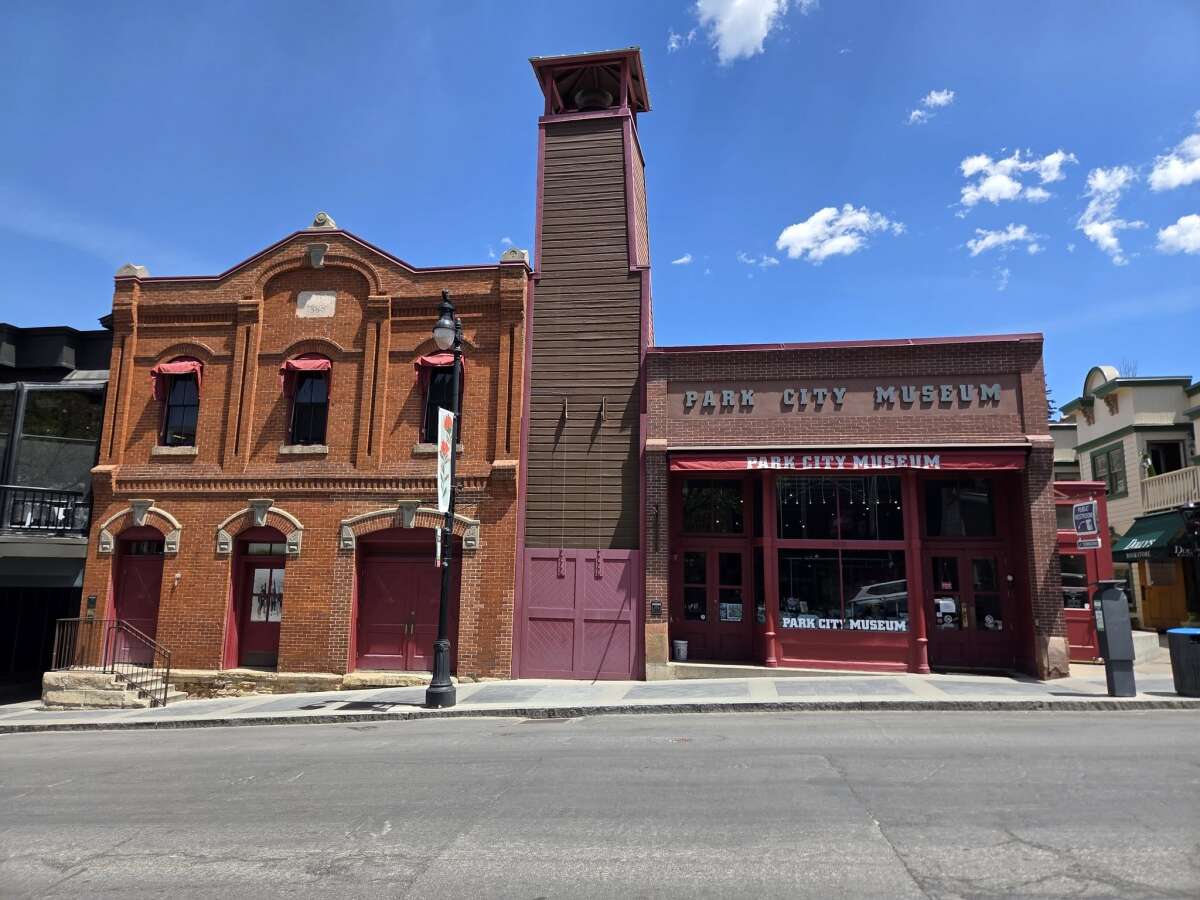
The route begins and ends at the Park City Museum on Historic Main Street, making it possible to explore the town's history and surrounding mountain landscape in one memorable outing.
Historic Mine Route Highlights
- Distance: Approximately 7 miles for the complete loop.
- Elevation Gain: Approximately 1,200 feet.
- Difficulty: Moderate Plus, with shorter and easier alternatives available.
- Starting Point: Park City Museum, 528 Main Street.
- Historic Sites: 24 locations associated with Park City's mining history.
- Interpretation: Historic signs and a free GPS-enabled audio guide.
Along the route, you can discover landmarks such as the Silver King Mine Complex, Alliance Mine, historic mining offices, explosives storage facilities, and remnants of ore transportation systems.
The experience is especially appealing because it brings history into the landscape itself. Rather than simply reading about Park City's past, you can stand near the locations where miners worked and see how mining infrastructure once spread across the mountains.
The full route typically requires several hours, depending on your pace and how much time you spend exploring the historic sites. Shorter options are available for those who prefer a less demanding outing.
Plan Your Hike: Visit the official Park City Historic Mine Route website for maps, route descriptions, audio tour information, and current trail guidance.
5. Keetley: The Lost Mining Town Beneath Jordanelle Reservoir
One of the most unusual stories in the Park City region belongs to Keetley, a former mining community whose original townsite now lies beneath the waters of Jordanelle Reservoir.
Keetley developed east of Park City in connection with the region's mining operations and the Ontario drainage tunnel system. The settlement became home to mining families and workers associated with the surrounding industry.
As the mining economy changed, the community gradually declined. Decades later, construction of Jordanelle Reservoir transformed the landscape, submerging the former townsite.
Today, Jordanelle Reservoir is known for boating, fishing, paddleboarding, and outdoor recreation. Yet beneath its waters lies a fascinating piece of Summit County history.
Unlike Park City's preserved mining structures, Keetley is not a ghost town where you can walk among abandoned buildings. Its story is best appreciated through historical records, regional exhibits, and the landscape surrounding Jordanelle Reservoir.
Travel Tip: Combine a visit to Jordanelle State Park with an afternoon exploring Park City's mining history. The contrast between the reservoir's modern recreational setting and the lost community beneath it makes for an interesting historical perspective.
6. Historic Main Street: Where Park City's Mining Past Still Lives
Park City's Historic Main Street may be famous today for restaurants, boutiques, art galleries, and nightlife, but its origins are rooted in the silver-mining boom.
During the late 1800s, Main Street served as the commercial and social center of the mining community. Miners gathered in saloons and boardinghouses, purchased supplies, attended community events, and built the businesses that supported the growing town.
Although a devastating fire in 1898 destroyed much of the original business district, Park City rebuilt, leaving behind many of the historic buildings and architectural details that contribute to Main Street's character today.
Walking along the street, you'll notice an appealing combination of restored storefronts, historic architecture, and mountain scenery.
Historic Main Street Highlights
- Park City Museum: Explore exhibits about mining, community life, historic transportation, and the town's transformation into a ski destination.
- Historic Storefronts: Discover architecture reflecting Park City's late-19th-century development.
- Miners Park: A small public gathering space celebrating the town's mining heritage.
- Historic Walking Tours: Learn about early businesses, residents, and important events that shaped the community.
- Local Restaurants and Galleries: Experience the modern culture that now fills the historic commercial district.
For a deeper introduction, visit the Park City Museum at 528 Main Street before exploring the historic mining trails.
7. Empire Canyon: Mining Ruins Surrounded by Mountain Scenery
Empire Canyon, located in the mountains above Park City near Deer Valley, is one of the region's most interesting areas for discovering historic mining remains.
During the silver-mining era, the canyon supported an extensive network of mining operations, transportation systems, and industrial buildings.
Today, its historic structures sit within a landscape better known for skiing, mountain biking, and hiking.
Among the area's notable historic features are remains associated with the Daly-Judge operations, Alliance Mine, and Ontario mining infrastructure.
The combination of mountain scenery and industrial history makes Empire Canyon especially rewarding for photographers and history enthusiasts.
When exploring, follow designated trails and respect any restricted areas or preservation barriers. Many mining relics are protected historic resources.
8. King Con and the Mining Structures Hidden Among the Ski Slopes
One of the most surprising things about Park City is how closely its ski terrain overlaps with former mining operations.
The King Con Mine, along with other historic operations such as Jupiter, Thaynes, and Silver King, helped shape the landscape that would eventually become part of Park City's recreational mountain environment.
Remnants of ore-processing facilities, wooden mine buildings, and transportation equipment can still be found across portions of the mountain.
During the warmer months, designated hiking and mountain biking routes provide opportunities to appreciate this unusual combination of industrial history and outdoor recreation.
In winter, some historic structures can be seen from ski terrain, although access depends on resort operations, snow conditions, and trail restrictions.
These landmarks are reminders that Park City's mountains were places of work long before they became places of recreation.
9. The McPolin Barn: A Different Chapter of Park City's History
Not every historic landmark around Park City is a silver mine. The picturesque McPolin Barn, located along State Route 224, tells the story of the area's agricultural heritage and its connections to the mining community.
The McPolin family acquired the farmstead in 1896, and the large white barn was constructed in 1921 using salvaged timber from an old mining-related mill.
Today, the barn is one of Park City's most photographed landmarks, especially during autumn when golden aspen trees brighten the surrounding hillsides.
The historic farmstead provides a peaceful place to enjoy the scenery, walk designated paths, and learn about the families who helped sustain the community beyond the mines.
Interpretive signs explain the property and its role in local history, while nearby trails offer views of the valley.
Photography Tip: Visit during early morning or late afternoon for beautiful light across the barn, open fields, and surrounding mountains.
10. Park City's Mining Ghost Stories and Old West Legends
With its history of underground accidents, isolated mountain settlements, and dramatic fortunes, Park City has accumulated its share of ghost stories and local legends.
Some tales are associated with former mining buildings and historic businesses, while others reflect the hardships and dangers experienced by the town's earliest residents.
Although these stories should be enjoyed as local folklore rather than established historical fact, they add another intriguing dimension to Park City's past.
Guided ghost tours of Historic Main Street offer an entertaining way to hear about the town's more mysterious traditions, historic personalities, and reported paranormal encounters.
For a different kind of evening activity, consider combining dinner on Main Street with a guided historical or ghost-themed walking tour.
Best Time of Year to Explore Park City's Historic Mining Trails
Park City's mining history can be appreciated throughout the year, but the experience changes significantly with the seasons.
Summer: Hiking and Historic Exploration
Summer is one of the best times to explore designated mining trails. Warmer temperatures, generally accessible mountain routes, and long daylight hours create favorable conditions for hiking and sightseeing.
Fall: Golden Aspens and Historic Landscapes
Autumn offers spectacular photography opportunities as the mountains turn shades of gold, orange, and red. Historic mining buildings framed by colorful aspen groves create a particularly memorable scene.
Winter: Mining History Beneath the Snow
During winter, Park City's ski resorts provide views of selected historic mining structures. Many hiking routes become snow-covered or inaccessible, so check resort guidance and seasonal access restrictions.
Spring: A Quieter Time to Discover the Town
Spring can be an excellent time to explore the Park City Museum and Historic Main Street. Higher-elevation trails may remain muddy or snow-covered, making lower-elevation attractions a better choice.
Safety Tips for Exploring Abandoned Mining Areas
Park City's historic mining structures are fascinating, but abandoned mines can be extremely dangerous. Hidden shafts, unstable ground, deteriorating timbers, and hazardous underground conditions may exist even when an area appears safe.
- Never enter an abandoned mine shaft, tunnel, or unsecured building.
- Stay on designated public trails and official historic routes.
- Respect preservation barriers, warning signs, and private property boundaries.
- Do not climb on historic mining equipment or structures.
- Carry water, appropriate footwear, sun protection, and navigation tools.
- Check weather forecasts and trail conditions before heading into the mountains.
- Leave historic artifacts in place so future generations can appreciate them.
The safest and most rewarding way to explore Park City's mining heritage is through preserved sites, interpretive trails, guided tours, and museum exhibits.
Plan a Park City Mining History Adventure
If you're spending several days in Park City, you can easily combine historic attractions with hiking, dining, and mountain sightseeing.
Day One: Historic Main Street and the Park City Museum
Begin your adventure at the Park City Museum to learn about the town's silver-mining era. Explore historic exhibits, stroll along Main Street, visit Miners Park, and enjoy dinner in one of the district's restaurants.
Day Two: The Historic Mine Route
Dedicate a day to exploring the Historic Mine Route. Follow the self-guided trail to discover historic mining structures, scenic overlooks, and fascinating stories about the workers and entrepreneurs who shaped Park City.
Day Three: Empire Canyon and Jordanelle Reservoir
Explore accessible historic sites in the Empire Canyon area before heading toward Jordanelle Reservoir to learn about the former community of Keetley. Finish your day with a scenic drive through the surrounding Wasatch Mountains.
Where to Stay: Park City Vacation Rentals Near Historic Attractions
One of the best ways to experience Park City's mining heritage is to stay in a vacation rental that gives you convenient access to Historic Main Street, mountain trails, and the surrounding Wasatch Mountains.
Park City offers a wide variety of accommodations, including historic homes, luxury mountain properties, ski-in/ski-out condominiums, spacious family retreats, and private vacation homes with mountain views.
Staying near Old Town puts you close to the Park City Museum, restaurants, shopping, and the starting point of the Historic Mine Route. Properties around Deer Valley provide convenient access to mountain scenery and portions of the area's historic mining landscape, while accommodations in other Park City neighborhoods offer additional options for families and groups.
When planning your visit, consider booking directly with a professional vacation rental manager. Local property managers can help you find accommodations that match your travel plans while offering firsthand knowledge of the area, personalized service, and local recommendations.
Explore Find Rentals to discover professionally managed vacation rentals and connect directly with local rental management companies.

Discover the Park City That Existed Before the Ski Resorts
Park City's silver-mining history is more than a collection of old buildings and forgotten tunnels. It is the foundation of the mountain community you experience today.
From the enormous wealth generated by the Ontario and Silver King mines to the tragic stories of underground workers, the region's history reveals a remarkable transformation from rugged frontier settlement to internationally recognized vacation destination.
Whether you're walking the Historic Mine Route, photographing weathered structures above the ski slopes, exploring Historic Main Street, or learning about the lost town of Keetley, you'll discover that Park City's most fascinating attractions are not always its most famous.
On your next visit, venture beyond the ski lifts and luxury resorts. The mountains still hold stories of silver, ambition, hardship, and adventure, waiting to be discovered.
Additional Find Rentals Articles

 BOOK DIRECT
 Connect with a Manager