Cape Coral Burrowing Owls
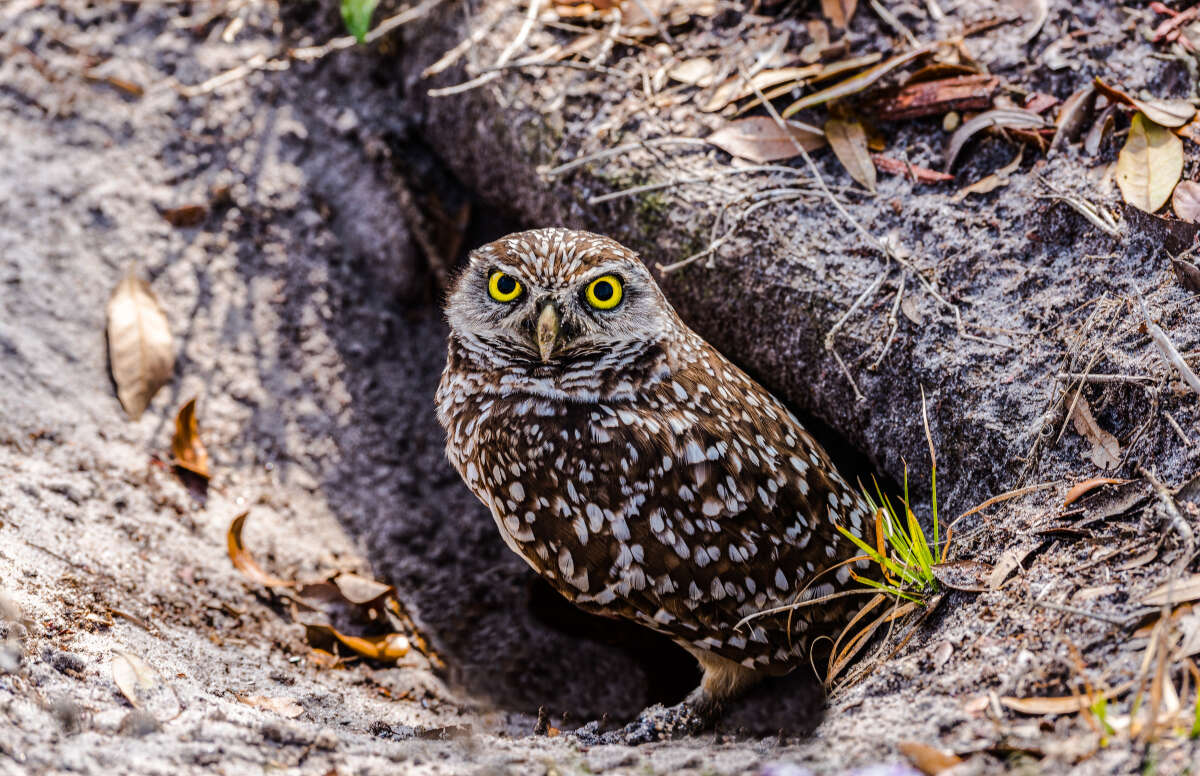
The Owls Beneath Our Feet: Discovering Cape Coral's Burrowing Owls
Imagine walking through a quiet neighborhood in Cape Coral, Florida, when you notice a tiny owl standing beside a sandy hole in someone's front yard. With bright yellow eyes, long legs, and a curious expression, the bird watches its surroundings from just a few inches above the ground. Instead of flying into a tree, it suddenly disappears underground. You've just encountered one of Southwest Florida's most fascinating residents: the Florida burrowing owl.
While Cape Coral is famous for its 400 miles of canals, waterfront homes, boating, and access to the Gulf Coast, the city is also home to an extraordinary population of burrowing owls. These small birds have adapted to living alongside people, making their homes in vacant lots, grassy fields, parks, and residential neighborhoods throughout the community.
Unlike most owls that nest in trees, Florida burrowing owls live in underground burrows. They can often be spotted standing near their entrances, watching for predators, searching for food, or caring for their young. Their unusual lifestyle has made them one of Cape Coral's most beloved natural attractions.
Whether you're planning a Cape Coral vacation, exploring Southwest Florida's wildlife, or simply looking for something different to do beyond the beaches and waterways, discovering these remarkable little birds offers a memorable glimpse into the natural side of the city.
Why is Cape Coral Famous for Burrowing Owls?
Cape Coral has become one of Florida's most recognizable communities for burrowing owl conservation. The city officially adopted the Florida burrowing owl as its city bird in 2005, recognizing the species' unusual relationship with the local landscape.
According to the City of Cape Coral, more than 3,500 burrowing owl burrows have been documented within the community. These underground homes can be found in open grassy areas, undeveloped residential lots, parks, and other places where the owls have suitable sandy soil and low vegetation.
The city's development pattern has created an unusual environment for the birds. Large areas of cleared land and vacant residential lots resemble the open habitats that burrowing owls naturally prefer. Instead of nesting in dense forests, these birds seek places where they can see across the ground and detect approaching predators.
As a result, you might encounter a burrowing owl near a sidewalk, beside a neighborhood street, or on a grassy lot surrounded by houses. Few urban wildlife experiences are quite like seeing a protected owl species living so closely alongside a growing Florida city.
Meet the Florida Burrowing Owl
The Florida burrowing owl (Athene cunicularia floridana) is a small, ground-dwelling owl found primarily in open habitats throughout peninsular Florida. It is a distinct subspecies of the burrowing owl and remains in Florida throughout the year rather than undertaking the long seasonal migrations associated with some western populations.
Standing approximately nine inches tall with a wingspan of around 21 inches, these birds are much smaller than many people expect. Their sandy-brown and white feathers provide camouflage against dry grass and soil, while their long legs help them see above low vegetation.
Perhaps their most recognizable features are their bright yellow eyes and alert expressions. Unlike many woodland owls, burrowing owls do not have prominent ear tufts.
They also behave differently from the owls you might hear calling in a forest at night. Burrowing owls are active during both daylight and nighttime hours, making them easier to observe than many other owl species.
Why Do Burrowing Owls Live Underground?
Most owls rely on trees, cavities, or abandoned nests for shelter. Burrowing owls have developed a very different strategy: they use underground tunnels as homes, nesting sites, and protection from predators and extreme weather.
Florida burrowing owls often dig their own burrows in sandy soil, although they may also use abandoned burrows created by other animals, including gopher tortoises and armadillos.
A typical burrow entrance is only a few inches across, but the tunnel may extend several feet underground. The underground chamber provides a sheltered location where adult owls can rest and raise their young.
These burrows are not simply temporary nesting sites. Cape Coral's burrowing owls use underground shelters throughout the year, and established burrows may be maintained and reused across breeding seasons.
Why Do Some Owl Burrows Have Decorations?
One of the more curious behaviors of burrowing owls is their tendency to collect materials around the entrances to their burrows.
You may notice pieces of grass, feathers, shells, paper, or other small objects scattered near an entrance. These materials are associated with the birds' nesting behavior and can make a burrow look surprisingly decorated.
Although these collections may seem amusing, they are part of the birds' natural behavior. Never remove objects, place decorations near a burrow, or attempt to improve the entrance yourself.
Why Cape Coral's Residential Neighborhoods Attract Owls
One of the most unusual aspects of Cape Coral's wildlife is the way burrowing owls have adapted to the city's residential environment.
Burrowing owls naturally prefer open landscapes with short vegetation, where they can watch for approaching predators and hunt insects and other small animals. Historically, suitable habitats included dry prairies, grasslands, and other relatively treeless environments.
In Cape Coral, undeveloped lots, maintained grassy areas, and open spaces can provide similar conditions. Sandy soils make burrow construction possible, while low vegetation allows the owls to maintain a clear view of their surroundings.
That doesn't mean development is always beneficial. As vacant lots are converted into homes and commercial properties, existing burrows and feeding areas may be lost or disturbed. Protecting suitable habitat has therefore become an important conservation issue for Cape Coral.
The relationship between the city's residents and its owls is a remarkable example of wildlife adapting to an urban environment, but it also requires careful management to ensure the birds continue to thrive.
Burrowing Owl Nesting Season in Cape Coral
One of the most interesting times to observe Cape Coral's burrowing owls is during their breeding season, when adults are actively caring for eggs and raising their young.
The Florida Fish and Wildlife Conservation Commission identifies the typical breeding season as February 15 through July 10, although nesting activity can begin earlier or continue later depending on conditions.
During courtship and nesting, pairs spend considerable time near their burrows. A female may lay several eggs in an underground nesting chamber and incubate them for approximately four weeks.
After hatching, the young remain underground during their earliest stages of development. Within a few weeks, fluffy juvenile owls may begin appearing near the burrow entrance under the watchful eyes of their parents.
Watching Baby Burrowing Owls
Seeing a family of burrowing owls is a memorable wildlife experience. Young owls may stand near the burrow entrance, explore the immediate surroundings, and gradually learn to hunt and fly.
However, nesting season is also the time when the birds are particularly vulnerable to disturbance. Getting too close can interrupt feeding, alarm adults, or cause young birds to retreat underground.
Use binoculars or a camera with a telephoto lens to observe from a respectful distance. The goal is to watch their natural behavior without changing it.
Where Can You See Burrowing Owls in Cape Coral?
One of the advantages of visiting Cape Coral is that burrowing owls can be found in a variety of open habitats throughout the city. Unlike wildlife species that require a remote wilderness excursion, these birds sometimes live surprisingly close to everyday neighborhood activity.
Look for them in suitable grassy environments, designated public viewing areas, and places where burrows are marked for protection. You may notice small posts, signs, or protective barriers near known owl habitats.
Because many burrows are located on private residential property, it is important to avoid entering vacant lots, lawns, or other private areas without permission.
Saratoga Lake Park
Saratoga Lake Park, located at 170 SE 4th Terrace, is identified by the City of Cape Coral as a location where burrowing owls may be observed.
The park provides a public setting for enjoying local wildlife, although sightings are never guaranteed. Observe posted rules, remain on permitted public areas, and give any nesting birds plenty of space.
Guided Wildlife and Birding Tours
For a more educational experience, consider participating in a guided wildlife outing offered by local conservation organizations.
Guided tours can help you understand the owls' habitat, behavior, conservation challenges, and relationship with Cape Coral's neighborhoods while emphasizing responsible viewing practices.
Check with Cape Coral Friends of Wildlife for current educational programs, events, and wildlife-viewing opportunities.
How to Photograph Burrowing Owls Responsibly
Burrowing owls are popular subjects for wildlife photographers because of their expressive faces, interesting behavior, and relatively accessible habitats.
However, a great photograph should never come at the expense of the birds' safety.
Use a telephoto lens or binoculars instead of moving close to the entrance. Stay on public paths and permitted viewing areas, never block access to a burrow, and avoid surrounding the birds with groups of people.
As a conservative viewing practice, remain at least 33 feet away from burrows and farther whenever necessary to avoid disturbing the birds. Follow any larger posted buffers or directions from wildlife authorities.
If an owl begins reacting to your presence, retreat immediately. Head-bobbing, alarm calls, or other signs of agitation can indicate that you're too close.
Never feed the owls, use bait to attract them, play recorded calls to provoke a response, or attempt to handle an owl or its young.
What Do Cape Coral's Burrowing Owls Eat?
Despite their small size, burrowing owls are skilled predators that help maintain the balance of local ecosystems.
Their diet includes insects such as beetles and grasshoppers, along with small reptiles, frogs, rodents, and occasionally other small animals.
They often hunt from the ground or a low perch, scanning the surrounding area before moving toward prey. Their long legs allow them to run across open ground, while their ability to fly and hover gives them additional hunting options.
Because they feed on insects and small animals, burrowing owls are an important part of Cape Coral's local food web.
Cape Coral's Annual Burrowing Owl Festival
Cape Coral's affection for its burrowing owls is celebrated each year through the Burrowing Owl Festival Wildlife and Environmental Expo, organized by Cape Coral Friends of Wildlife.
Held at Rotary Park, the festival brings together wildlife enthusiasts, conservation organizations, families, photographers, and people interested in protecting Southwest Florida's natural environment.
Activities may include wildlife presentations, educational exhibits, guided birding experiences, family activities, environmental organizations, and opportunities to learn about local conservation efforts.
The festival also introduces participants to other wildlife found in Cape Coral, including gopher tortoises, butterflies, birds of prey, and species associated with the region's wetlands and waterways.
When Is the Next Burrowing Owl Festival?
The 25th Annual Burrowing Owl Festival is scheduled for Saturday, February 27, 2027, from 10 a.m. to 4 p.m. at Rotary Park Environmental Center, 5505 Rose Garden Road in Cape Coral.
Festival dates, activities, admission details, and guided tour availability may change. Visit the official Burrowing Owl Festival event page for current information before planning your visit.
Ground Owl Day: Cape Coral's Unusual Wildlife Tradition
Cape Coral also celebrates its official city bird through an event known as Ground Owl Day, a playful local tradition inspired by Groundhog Day.
Instead of waiting for a groundhog to predict the weather, the community celebrates a burrowing owl and uses the occasion to promote wildlife education and conservation.
The event provides another opportunity to learn about the species and the volunteers who help protect its habitat.
Check the Cape Coral Friends of Wildlife events calendar for upcoming dates and details.
Protecting Cape Coral's Burrowing Owls
Although burrowing owls are relatively easy to encounter in Cape Coral, they face serious conservation challenges.
The Florida burrowing owl is classified as a state-threatened species. Owls, their eggs, and protected burrows are subject to state wildlife protections, with additional federal protections applying in relevant circumstances.
One of the greatest challenges is habitat loss. As Cape Coral continues to develop, open lots that once supported owl burrows may be cleared or converted into residential and commercial properties.
Vehicle traffic, domestic animals, landscaping equipment, and human disturbance can also create risks for birds living close to neighborhoods and roads.
Conservation efforts focus on identifying and protecting burrows, maintaining suitable habitat, educating residents, and helping property owners understand the requirements for living alongside protected wildlife.
The Role of Cape Coral Friends of Wildlife
Cape Coral Friends of Wildlife is a local nonprofit organization dedicated to wildlife conservation, habitat protection, and environmental education.
Its volunteers help monitor and maintain suitable owl habitats, support educational programs, organize community events, and encourage responsible coexistence between wildlife and residents.
The organization's work also extends to other important Southwest Florida species, including gopher tortoises, eagles, manatees, and butterflies.
Visitors interested in conservation can support these efforts through educational events, donations, or approved volunteer opportunities.
Why Burrowing Owls Matter to Cape Coral
For many communities, wildlife is something you travel outside the city to experience. Cape Coral's burrowing owls challenge that idea.
These birds live within the everyday landscape, sharing space with homes, roads, parks, and neighborhoods. Their presence has become part of the city's identity and a reminder that urban environments can still support remarkable natural ecosystems.
They also offer an important opportunity for environmental education. Seeing a burrowing owl standing outside its underground home can inspire curiosity about habitat conservation, native wildlife, and the relationship between development and nature.
For families visiting Cape Coral, learning about the owls can turn an ordinary outing into an engaging introduction to Southwest Florida's wildlife.
Other Wildlife Experiences to Enjoy in Cape Coral
Burrowing owls are only one part of Cape Coral's diverse natural environment. The city's canals, mangrove forests, tidal waterways, parks, and conservation areas provide additional opportunities for wildlife observation.
Rotary Park Environmental Center
Rotary Park is a popular destination for birdwatching, environmental education, nature walks, and learning about Southwest Florida's ecosystems.
The park is also associated with the Tom Allen Memorial Butterfly House, making it an appealing stop for families and nature enthusiasts.
Four Mile Cove Ecological Preserve
Four Mile Cove Ecological Preserve protects a coastal wetland environment with mangroves, boardwalks, and opportunities to observe birds and other wildlife.
It's an excellent complement to a burrowing owl outing because it introduces you to the very different habitats associated with Cape Coral's tidal waterways.
Sirenia Vista Park
Sirenia Vista Park is known for its waterfront setting and opportunities for observing manatees during favorable conditions, particularly in cooler months.
The park provides another example of the diverse wildlife experiences available within Cape Coral.
When Is the Best Time to See Burrowing Owls in Cape Coral?
Because Florida burrowing owls live in the area throughout the year, sightings are possible in any season.
Late winter through spring is especially interesting because of courtship, nesting activity, and the possibility of observing young owls from an appropriate distance.
Early morning and late afternoon can be rewarding times for wildlife observation, although burrowing owls may also be visible during other daylight hours.
Remember that the owls are wild animals, and their presence above ground cannot be guaranteed. Weather, temperature, nesting activity, and human disturbance can all influence when they emerge from their burrows.
Where to Stay in Cape Coral for a Wildlife Vacation
Cape Coral offers a wide variety of vacation accommodations, from waterfront homes along its famous canal system to spacious family properties with private pools, outdoor living areas, and convenient access to local parks and attractions.
Staying in a Cape Coral vacation rental provides a comfortable base for exploring the city's natural attractions, including burrowing owl habitats, Four Mile Cove Ecological Preserve, Rotary Park, and the waterways of Southwest Florida.
You can spend the morning observing wildlife, explore the canals by boat or kayak in the afternoon, and return to your vacation home for a relaxing evening.
For the best experience, consider booking directly with a professional Cape Coral vacation rental management company. Local managers can help you choose accommodations that fit your vacation plans, provide recommendations for nearby attractions, and offer direct communication and expert service throughout your stay.
Booking direct may also help you avoid additional third-party booking fees while supporting the local vacation rental community.
A Small Owl with a Big Place in Cape Coral's Identity
Among Cape Coral's waterfront homes, canals, palm-lined streets, and tropical landscapes lives one of Florida's most distinctive birds. The burrowing owl may stand only nine inches tall, but its presence has become an important part of the city's character.
From its underground nesting habits and curious expressions to the community-wide efforts to protect its habitat, the Florida burrowing owl offers a wildlife story unlike almost anything else you'll encounter on a typical Southwest Florida vacation.
The next time you're exploring Cape Coral, take a moment to notice the open grassy spaces and protected natural areas around you. With patience, a respectful distance, and a little luck, you may discover one of the city's most remarkable residents watching the world from just outside its underground home.
Sometimes the most memorable discoveries aren't found along the waterfront or high above the trees. In Cape Coral, they may be waiting right beneath your feet.
Additional Find Rentals Articles

 BOOK DIRECT
 Connect with a Manager