
 Connect with a Manager
by Kelly Reed
Keys to Designing a Vacation Rental Property
If you are interested in investing in a vacation rental property, there are key ways to help make the property succeed. Design a vacation home to…
 BOOK DIRECT
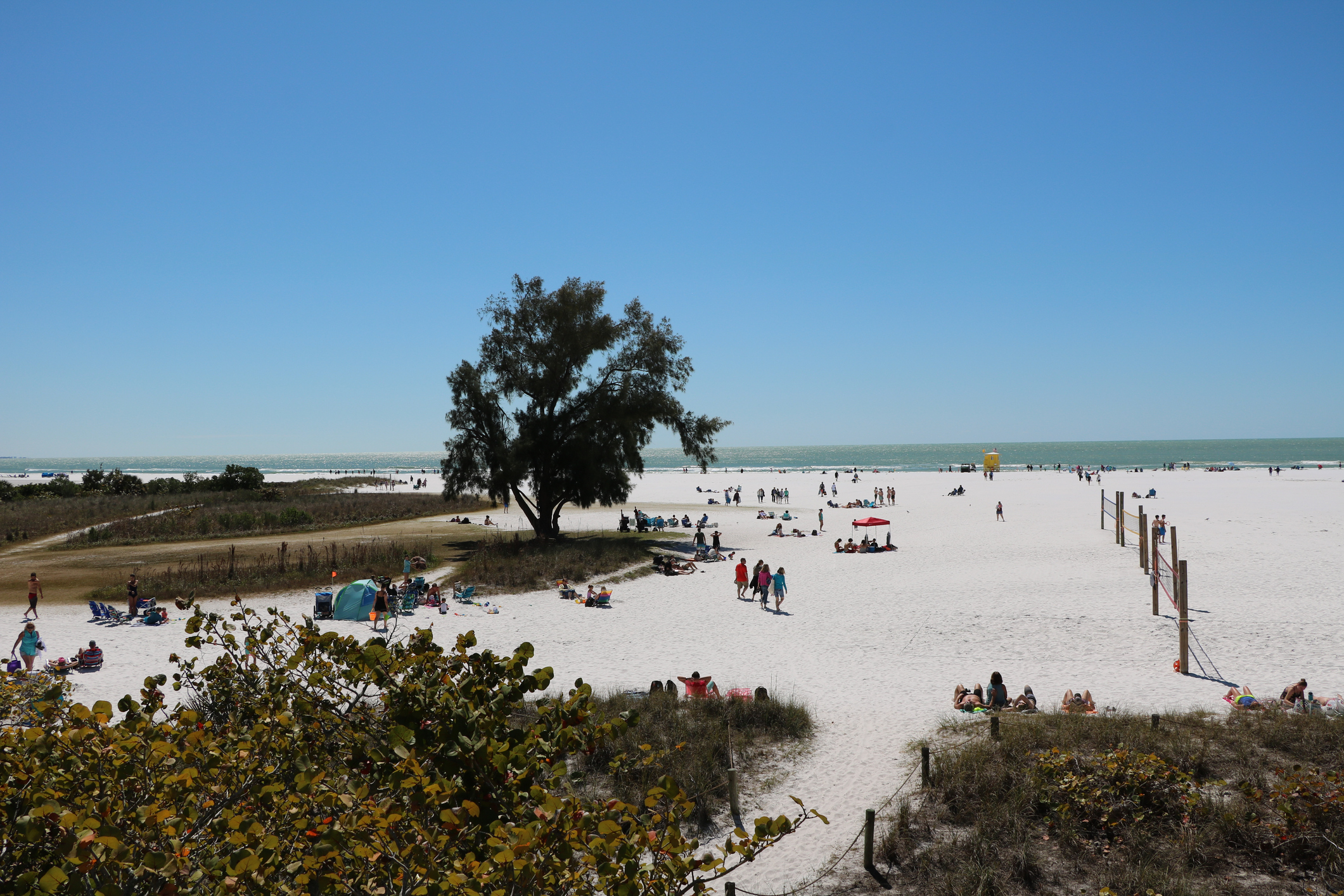
Walk onto Siesta Beach in Siesta Key, Florida, and one of the first things you notice isn't necessarily the Gulf of Mexico. It's what's underneath your feet.
The sand is extraordinarily white, remarkably fine, and soft enough that it is often compared to powdered sugar or flour. Even more surprising is how comfortable it can feel beneath bare feet under the Florida sun.
This isn't ordinary beach sand.
The famous shoreline at Siesta Beach is composed of approximately 99% quartz, giving it characteristics that distinguish it from many of the shell rich, coral derived, or mineral mixed beaches found elsewhere in Florida and around the world.
The story of that sand is also much older than Siesta Key as we know it today. It involves ancient mountains, rivers, changing sea levels, waves, currents, and thousands upon thousands of years of natural sorting along Florida's coastline.
The brilliant white sand found along Siesta Beach consists overwhelmingly of quartz, one of Earth's most common and durable minerals.
Quartz is composed of silicon and oxygen and is extremely resistant to physical and chemical weathering. While many other minerals gradually break down or chemically alter as rock fragments travel through rivers, waves, and coastal environments, quartz has an exceptional ability to survive.
That durability is important to understanding Siesta Beach.
The grains beneath your feet are not simply fragments of shells that recently washed ashore. They are mineral grains that have endured a remarkably long geological journey.
Siesta Beach's sand is often described as approximately 99% quartz, while the northern portion of Siesta Key is characterized by nearly pure white quartz sand.
This is perhaps the most interesting part of the story.
The quartz did not originate on Siesta Key itself.
Florida's geological history includes the movement of quartz rich sediments derived from areas to the north, including the southern Appalachian Mountains and coastal plain. Rivers carried siliciclastic sediment toward Florida, and coastal processes subsequently moved quartz sand along the peninsula.
Over immense periods of geologic time, quartz originating from the Appalachian region was transported by ancient rivers before eventually accumulating along Florida's west coast and Siesta Key.
From there, waves, currents, changing shorelines, and repeated reworking of coastal sediment helped sort and refine the material.
So when you pick up a handful of Siesta Beach sand, you're holding the end product of a geological process far older than the beach communities surrounding it.
Not all sand is the same color because not all sand is made from the same material.
A beach's color depends largely on the minerals, rocks, shells, coral, and biological material that have been broken down and deposited there.
Some beaches contain considerable amounts of dark minerals. Others are dominated by shell fragments. Tropical beaches can contain sand derived substantially from coral, shells, and other calcium carbonate material.
Siesta Beach is different.
Its exceptionally high concentration of quartz produces its famous bright white appearance.
Individual quartz grains can be translucent or clear, but enormous quantities of tiny grains scatter and reflect incoming light. Across Siesta Beach's broad shoreline, the result is the brilliant white landscape that has become synonymous with the destination.
Against the blue green Gulf of Mexico, the contrast can be striking.
Composition is only part of what makes Siesta Beach special.
Grain size and texture matter too.
The sand has been repeatedly transported, weathered, sorted, and reworked by natural forces. The resulting fine grains give portions of Siesta Beach their famously smooth, powder like consistency.
That fine texture creates a noticeably different barefoot experience from beaches covered in coarse shell fragments or larger mineral grains.
Walk from a shell heavy beach onto Siesta Beach and the difference can be immediately apparent.
This is probably the characteristic visitors talk about most.
On many beaches, dry sand exposed to strong sunlight can become extremely hot. Siesta Beach's light colored quartz sand reflects a substantial amount of incoming solar radiation instead of absorbing it as efficiently as darker materials.
That helps the surface remain comparatively cooler underfoot.
That doesn't mean the sand can never become warm. Temperature still depends on sunlight, moisture, weather conditions, and time of day.
But compared with darker or more heat absorbing beach material, the bright quartz creates the famous cool under your feet experience associated with Siesta Beach.
The easiest way to understand what makes Siesta Beach unusual is to compare it with other types of beaches.
Siesta Beach: Dominated by very fine, bright white quartz.
Shell rich beaches: Contain significant amounts of crushed mollusk shells and other calcium carbonate material. They may feel coarser underfoot.
Coral derived beaches: Common in some tropical environments, where much of the sand comes from broken coral, shells, and other biological material.
Dark mineral beaches: Contain greater concentrations of darker volcanic or heavy minerals and absorb more solar energy.
Even beaches located relatively close together can have dramatically different sand.
In fact, you don't have to leave Siesta Key to see this phenomenon.
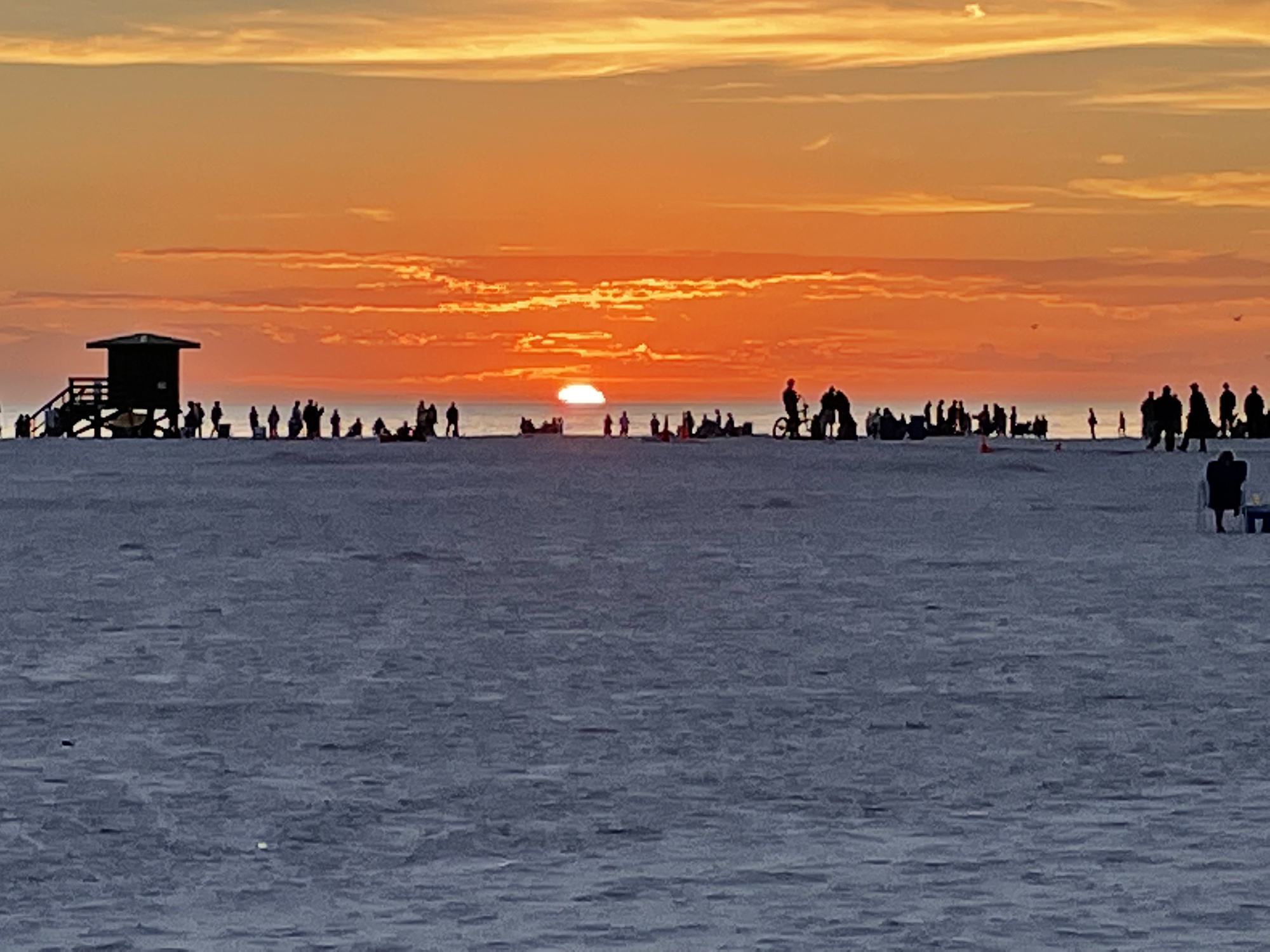
One of the most interesting things travelers can do is compare Siesta Beach with Turtle Beach.
The northern portion of Siesta Key contains the extraordinarily white, quartz rich sand for which the island is famous. Travel south toward Turtle Beach, however, and the shoreline changes.
Turtle Beach has darker, coarser, more shell rich sand.
This makes Siesta Key almost like a natural outdoor lesson in coastal geology.
At Siesta Beach, your feet sink into fine white quartz.
At Turtle Beach, the grains become noticeably coarser and shells are more prominent.
Same barrier island. Very different beach experience.
Florida has an enormous coastline, but the geological ingredients and coastal processes are not identical everywhere.
Currents transport sediment differently. Rivers supply different minerals. Waves sort grains according to their size and density. Shell producing organisms contribute biological material. Ancient shorelines shift as sea levels rise and fall.
Over time, each combination creates a different beach.
Some Florida beaches are famous for shells. Others are known for shark teeth. Some contain darker mineral grains. Florida Keys beaches can contain significant amounts of material derived from coral, shells, and algae.
Siesta Beach happens to have an extraordinary concentration of very fine quartz.
That's what makes it unusual.
The sand is only one chapter in a much larger geological story.
Siesta Key itself is a barrier island, formed and reshaped by the interaction of waves, currents, sediment, inlets, storms, and changing sea levels.
Geological research indicates that Siesta Key contains multiple generations of beach ridges and coastal deposits that formed over thousands of years.
The island visitors see today is therefore not a permanent geological structure.
Like barrier islands throughout Florida, Siesta Key continues to exist within an active coastal environment where sand is continually being transported, deposited, removed, and redistributed.
The beautiful beach is essentially a landscape in motion.
Walk south along Crescent Beach and Siesta Key reveals another side of its geology at Point of Rocks.
Instead of an uninterrupted shoreline of soft sand, visitors encounter exposed and submerged rock formations.
Geological research into Siesta Key's coastal deposits has shown that some of these formations were deposited thousands of years ago before being cemented by freshwater moving through the sediments.
Today, Point of Rocks creates a dramatically different coastal environment and, when conditions permit, is a popular place for snorkeling and observing marine life.
Within a relatively short distance, visitors can therefore experience powdery quartz sand, coarser southern beaches, and ancient cemented coastal deposits.
Siesta Key's sand isn't only enjoyable to walk on.
It has also become the foundation for one of the island's signature events: the Siesta Key Crystal Classic International Sand Sculpting Festival.
Professional sand sculptors transform the beach into enormous temporary works of art, demonstrating just how much can be created from sand, water, skill, and imagination.
The brilliant white quartz provides an especially dramatic canvas. Shadows reveal intricate details against the pale sand, allowing sculptors to create remarkably complex figures, architecture, and scenes.
The festival has become another way Siesta Key celebrates the natural resource that helped make the island famous.
Most travelers arrive at Siesta Beach thinking about swimming, sunshine, and the Gulf of Mexico.
But take a moment to look down.
Pick up a handful of sand.
Feel how fine the grains are. Notice the brilliant white color. Walk across it barefoot and compare the texture with beaches you've visited elsewhere.
That handful of sand tells a story that began far beyond Sarasota.
Quartz weathered from ancient rocks survived because of its extraordinary durability. Sediments were transported toward Florida, moved through coastal environments, and repeatedly sorted and reworked. Eventually, enormous quantities of exceptionally fine quartz accumulated along this portion of Florida's Gulf Coast.
The result is the remarkable shoreline travelers experience today.
Calling Siesta Beach a "white sand beach" doesn't really explain what makes it special.
Its beauty comes from an unusual combination of mineral composition, grain size, color, texture, geological history, and coastal processes.
The sand is overwhelmingly quartz. It is exceptionally fine. Its brilliant color reflects sunlight and helps it remain comparatively cool beneath bare feet. And its geological story reaches far beyond Siesta Key to ancient sediments originating hundreds of miles away.
That helps explain why walking onto Siesta Beach feels different from walking onto an ordinary beach.
You're not simply stepping onto Florida sand.
You're walking across the final chapter of a geological journey that has unfolded over immense spans of time, one tiny quartz grain at a time.
And when that powdery white shoreline meets the blue green waters of the Gulf of Mexico, the result is one of the natural features that makes Siesta Key, Florida genuinely distinctive.