Northern Lights in Lutsen MN | Stargazing Guide
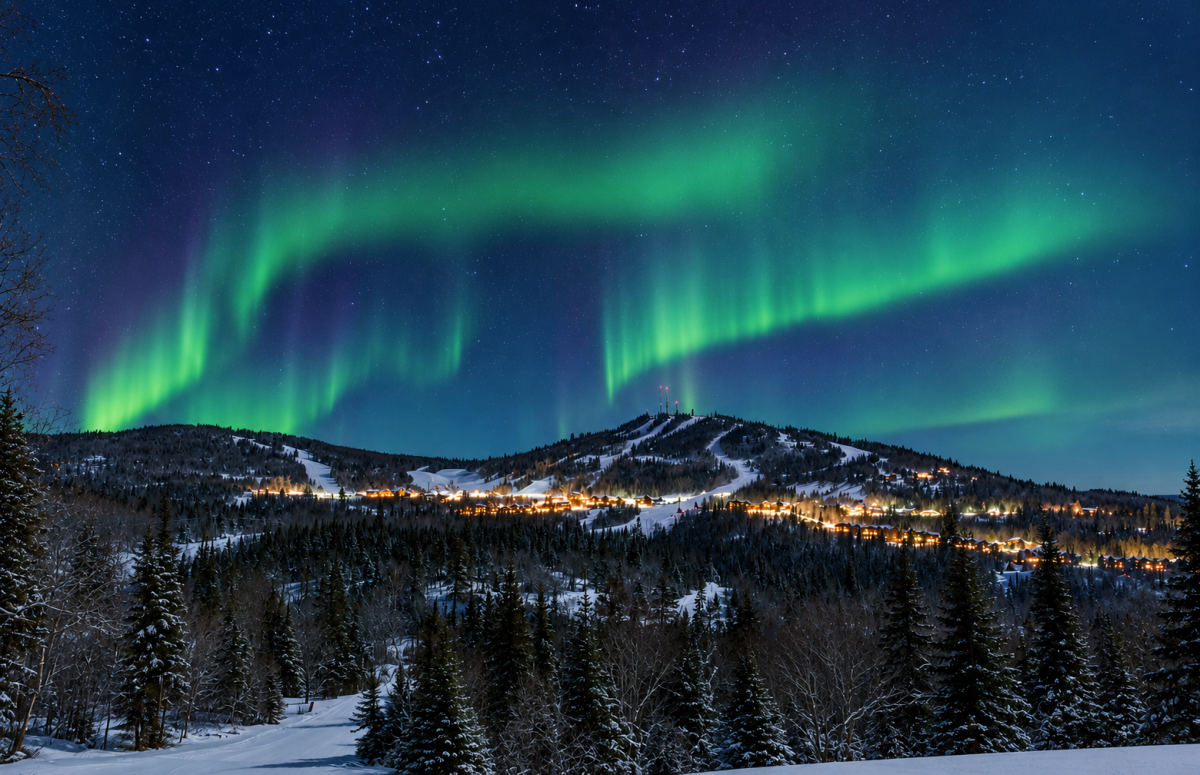
After Dark in Lutsen: Northern Lights, Starry Skies and the Wild Side of Lake Superior
When the sun disappears beyond Minnesota's Sawtooth Mountains and the last colors of twilight fade over Lake Superior, an entirely different side of the North Shore begins to emerge. The forests grow quiet, stars appear above the darkened ridgelines, and on certain nights, shimmering curtains of green, purple, and red light dance across the northern sky. Welcome to Lutsen after dark, where some of the most memorable experiences happen long after the day's hiking, skiing, and sightseeing adventures have ended.
Far removed from the bright lights of major cities, Lutsen offers remarkable opportunities to experience the natural beauty of Minnesota's northern night sky. Here, the vast waters of Lake Superior meet the rugged Sawtooth Mountains, creating an extraordinary setting for stargazing, northern lights photography, and peaceful evenings surrounded by wilderness.
Whether you're hoping to witness the aurora borealis, photograph the Milky Way, listen to the waves along Lake Superior, or simply enjoy a sky filled with stars, the Lutsen area invites you to discover a quieter and more mysterious side of Minnesota's North Shore.
Why Lutsen is a Remarkable Destination for Stargazing
One of the greatest advantages of visiting Lutsen is its distance from major metropolitan areas. Located along Lake Superior's North Shore between Tofte and Grand Marais, the community is surrounded by the Superior National Forest and extensive areas of relatively undeveloped wilderness.
Compared with brightly illuminated cities, many locations around Lutsen experience significantly less artificial light pollution. On clear, moonless nights, this creates opportunities to see thousands of stars, familiar constellations, bright planets, and the Milky Way stretching across the sky.
Lake Superior also contributes to the experience. Open shoreline viewpoints can provide broad views of the horizon, while nearby forest clearings and inland lakes offer different perspectives of the night sky.
However, not every location is equally dark or suitable for viewing. Resort lighting, nearby buildings, dense forest cover, and local terrain can affect visibility. Finding a safe, publicly accessible location with an unobstructed view is an important part of planning your evening.
The Northern Lights: Nature's Greatest Nighttime Show
Few natural experiences are as captivating as witnessing the northern lights above Minnesota's North Shore. Also known as the aurora borealis, these colorful displays occur when charged particles from the sun interact with Earth's magnetic field and atmosphere.
The result can be an extraordinary display of glowing arcs, shimmering curtains, and moving ribbons of light. Green is the most commonly observed color, although stronger displays may produce shades of pink, purple, and red.
Lutsen's northern latitude and relatively dark surroundings make the area a promising destination for aurora viewing when geomagnetic conditions are favorable.
Unlike destinations farther north, however, the northern lights are not visible every night. Their appearance depends on solar activity, cloud cover, darkness, and the strength of geomagnetic disturbances.
Even when a forecast suggests favorable conditions, a display is never guaranteed. Part of the adventure is the anticipation of watching the northern sky and waiting to see what nature reveals.
When is the Best Time to See the Northern Lights Near Lutsen?
The northern lights can occur throughout the year, but the darker nights of fall, winter, and early spring provide longer viewing opportunities.
September through March is a particularly appealing period for aurora watching because darkness arrives earlier and the nights are longer. Around the spring and fall equinoxes, geomagnetic activity can also favor aurora displays.
Winter offers especially long nights, along with the striking contrast of northern lights above snow-covered forests and frozen landscapes. However, cold temperatures and rapidly changing weather require careful preparation.
Summer auroras are possible, but the shorter nights around the summer solstice reduce the amount of true darkness available for viewing.
For the best experience, check aurora forecasts from the NOAA Space Weather Prediction Center, review local cloud forecasts, and look for clear skies away from artificial lighting.
Where to Watch the Northern Lights Around Lutsen
Lake Superior Shoreline Near Lutsen
Lake Superior provides one of the region's most dramatic settings for nighttime photography and stargazing. From safe, open shoreline locations, you can enjoy broad views of the sky while listening to waves moving across the rocky coast.
For northern lights viewing, look for a location with a clear view toward the northern horizon. Because Lake Superior lies generally southeast of much of the Lutsen shoreline, some lakeside viewpoints face away from the most common direction of weaker aurora displays.
Strong auroras can spread across much of the sky, but an unobstructed northern view is especially valuable when activity is more modest.
Inland Clearings of the Superior National Forest
The Superior National Forest surrounds Lutsen with extensive areas of relatively dark wilderness. Inland lakes, designated recreation areas, and accessible clearings may provide excellent opportunities to view the stars and northern lights.
Open areas with northern exposure can be particularly rewarding because they reduce the visual obstruction created by dense forest and mountain ridges.
Always verify public access, parking regulations, road conditions, and seasonal restrictions before traveling into the forest after dark.
Grand Marais and the Gunflint Trail
Approximately 20 miles northeast of Lutsen, Grand Marais serves as the gateway to the Gunflint Trail, a scenic route leading deep into the Superior National Forest.
As you travel inland away from the lights of Grand Marais, the surrounding landscape becomes increasingly remote. Designated public recreation areas and lakeside viewpoints along the Gunflint Trail can offer exceptional dark-sky experiences.
The region is also associated with the Boundary Waters Canoe Area Wilderness, where remote lakes and forests create some of Minnesota's most impressive nighttime landscapes.
If you're exploring the Gunflint Trail after dark, plan your route in advance, remain alert for wildlife, and avoid stopping along narrow roads or unsafe shoulders.
Dark Skies Near the Boundary Waters Canoe Area Wilderness
The Boundary Waters Canoe Area Wilderness is recognized for its extraordinary natural darkness. Together with neighboring Voyageurs National Park, the region is among Minnesota's most celebrated destinations for experiencing the night sky.
The Boundary Waters is designated as an International Dark Sky Sanctuary, reflecting the exceptional quality of its nighttime environment.
While the wilderness itself requires careful planning and permits for certain activities, accessible locations in the surrounding Superior National Forest offer opportunities to appreciate the region's remarkable darkness.
Discovering the Milky Way Above the Sawtooth Mountains
Even when the northern lights are absent, the skies above Lutsen can provide an unforgettable display. On clear, moonless nights, the Milky Way may appear as a luminous band stretching across the sky.
Our galaxy contains billions of stars, and from a sufficiently dark location, their combined light creates the cloudy appearance that gives the Milky Way its name.
Late spring through early fall is particularly appealing for photographing the bright central region of the Milky Way during suitable nighttime hours. The exact position and visibility change throughout the season.
The Sawtooth Mountains provide beautiful foregrounds for night photography. Silhouettes of evergreen trees, exposed rock formations, and quiet inland lakes can transform a simple photograph of the stars into a memorable North Shore landscape.
Choose accessible locations with open skies, and remember that forested mountain trails can become difficult to navigate after sunset.
Stargazing: Constellations, Planets and Meteor Showers
You don't need specialized equipment to enjoy the night sky around Lutsen. On a clear evening, familiar constellations such as the Big Dipper, Cassiopeia, and Orion can be visible at different times of the year.
Bright planets may also be visible depending on their positions in the sky, while occasional meteors create brief streaks of light overhead.
Several annual meteor showers provide additional reasons to visit the North Shore after dark. The Perseids, typically active during July and August, are a favorite summer event. The Geminids in December can also produce impressive displays under favorable conditions.
For the best viewing, choose a dark location, allow your eyes approximately 20 to 30 minutes to adjust, and avoid looking at bright phone screens or vehicle headlights.
A reclining chair, warm blanket, and thermos of coffee or hot chocolate can turn an evening of stargazing into one of the most relaxing experiences of your vacation.
The Sounds of Lake Superior After Sunset
Not every nighttime adventure requires looking toward the sky. Sometimes the most memorable part of an evening along Lake Superior is simply experiencing the shoreline after the daytime crowds have disappeared.
As darkness settles over the North Shore, waves continue to move across rocky beaches, wind rustles through the trees, and the distant horizon slowly disappears into the night.
On calm evenings, the atmosphere can feel remarkably peaceful. During windy conditions, Lake Superior takes on a more dramatic character, with powerful waves and shifting clouds reminding you of the lake's immense size.
Enjoy the shoreline only from safe, accessible areas. Avoid slippery rocks, steep cliffs, and exposed locations during high waves or severe weather.
Wildlife and the Northern Forest After Dark
The forests surrounding Lutsen support a variety of wildlife, including white-tailed deer, black bears, foxes, snowshoe hares, and numerous nocturnal birds and mammals.
As daylight fades, some animals become more active. You may hear owls calling from the forest, small mammals moving through the undergrowth, or the distant sounds of wildlife across an inland lake.
Although wolves and moose inhabit the broader North Shore region, encounters are uncommon and should never be expected.
Nighttime wildlife observation is best enjoyed quietly and from a respectful distance. Avoid approaching or feeding animals, and use minimal lighting to reduce disturbance.
Photographing the Northern Lights and Night Sky
Capturing the northern lights or Milky Way can be one of the most rewarding photography experiences in Minnesota.
A camera with manual exposure controls, a sturdy tripod, and a wide-angle lens are helpful for nighttime photography. Modern smartphones with night photography settings can also capture impressive images under favorable conditions.
For aurora photography, begin with a relatively wide aperture, a moderate ISO setting, and a short exposure of a few seconds, then adjust based on the brightness and movement of the lights.
Fast-moving auroras may require shorter exposures to preserve their shape, while faint stars and darker landscapes may benefit from longer exposures.
Include recognizable North Shore features in your composition, such as evergreen silhouettes, a quiet inland lake, or a forested ridgeline. These foreground elements help convey the distinctive atmosphere of Lutsen after dark.
Tips for a Safe and Memorable Nighttime Adventure
Exploring the North Shore after sunset requires additional preparation. Temperatures can drop quickly, especially near Lake Superior, and nighttime conditions in the surrounding forests can be significantly different from those experienced during the day.
Bring warm layers, sturdy footwear, a flashlight or headlamp, a fully charged phone, and appropriate navigation tools. In remote areas, cell service may be limited or unavailable.
Use designated parking areas, respect private property, and check whether the location you're visiting permits nighttime access. Many scenic overlooks and trails are not suitable for exploring in darkness without specialized preparation.
For aurora viewing, monitor both space weather and local cloud conditions. A strong aurora forecast means little if thick clouds obscure the sky.
Where to Stay for a Lutsen Stargazing Getaway
One of the best ways to experience Lutsen after dark is by staying in a comfortable vacation rental surrounded by the beauty of Minnesota's North Shore.
Cabins, mountain chalets, lakeside cottages, and vacation homes throughout Lutsen, Tofte, and nearby communities offer opportunities to enjoy quiet evenings away from major city lights.
Imagine returning from a day of hiking the Sawtooth Mountains, preparing dinner in your vacation rental, and stepping outside later to see a sky filled with stars. On especially fortunate nights, you may even witness the northern lights from a suitable outdoor viewing area near your accommodations.
When selecting a vacation rental, consider outdoor lighting, nearby buildings, tree cover, and access to open views of the sky. A property advertised as secluded does not necessarily have an unobstructed northern horizon.
Explore Find Rentals to connect directly with professional vacation rental managers serving Minnesota's North Shore. Booking direct can help you avoid unnecessary third-party fees while benefiting from local expertise and personalized service.
Experience the Magic of Lutsen After Dark
Lutsen's natural beauty doesn't disappear when the sun sets. It transforms into something quieter, more mysterious, and sometimes extraordinary.
Whether you're watching the northern lights shimmer above a forested horizon, photographing the Milky Way, listening to waves along Lake Superior, or enjoying a peaceful evening beneath thousands of stars, the North Shore offers unforgettable experiences beyond its daytime attractions.
Plan your next Minnesota getaway, explore the wild beauty of Lake Superior, and discover why some of Lutsen's most memorable moments happen after dark.
Additional Find Rentals Articles

 BOOK DIRECT
 Connect with a Manager